Counting the waves…
Counting the waves…
A refined fusion of water purity, environmental stability, and communal vibrancy for Prora Beach.
View MethodologyAnalyzed via live sensors and environmental data.
Wave height, wind, and atmospheric stability.
Live footfall and crowd balance metrics.
Community reviews and curated sentiment.
“The beach at Prora refuses to let you forget where you are. Behind the dunes, the Koloss stretches for four kilometers—eight identical concrete blocks that once promised 20,000 holidaymakers a Nazi vision of leisure.…”
Higher weekend density may affect water purity and crowd scores temporarily.
Prora's beach runs wide and uncommonly straight, backed by a natural dune system that separates swimmers from the architectural elephant on shore. The sand here is fine-grained and pale, tracked by gulls and the occasional red deer that wanders down from the Granitz forest. You spread your towel, wade into water that reaches 18°C on a good July day, and try to reconcile the pleasure of sun and salt with the concrete weight of history behind the marram grass.
The complex itself—the Koloss von Prora—looms as a deliberate presence. Some blocks stand empty and crumbling, windows like missing teeth. Others have been converted: a youth hostel, a museum documenting the site's past, even holiday apartments where tourists now sleep in rooms once designed for strength-through-joy vacationers. The beach access cuts through the buildings, a sudden passage from shadow to light, history to holiday.
 Credit: Unsplash
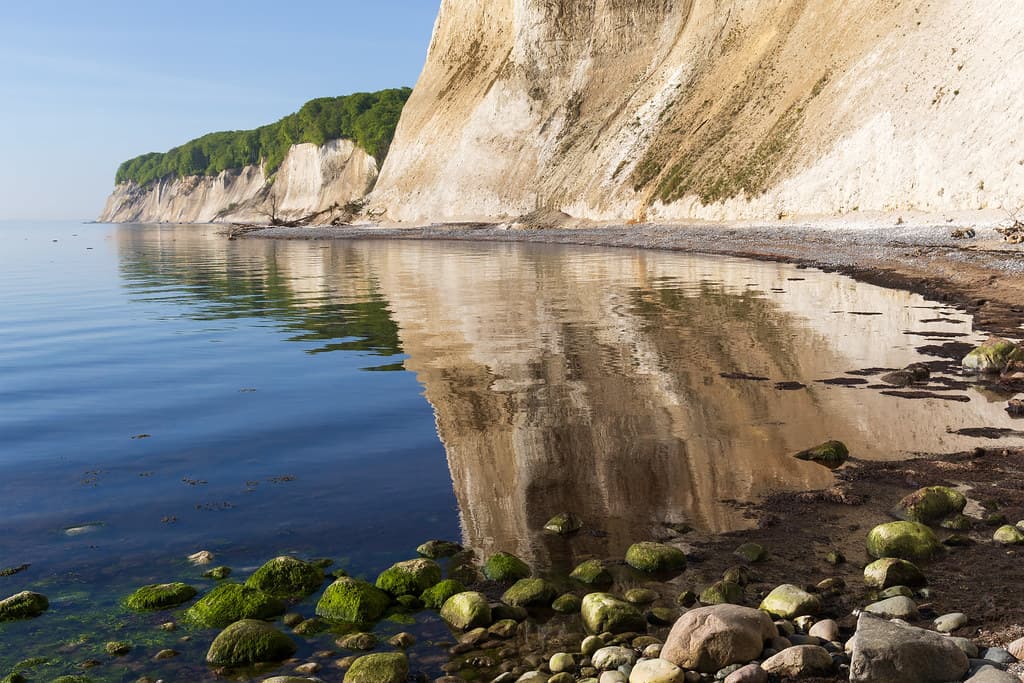
green trees near blue sea under blue sky during daytime
 Credit: Unsplash
people walking on beach during daytime
Supervised beach with lifeguards
Protected coastal ecosystem paths
Nazi-era resort history museum
Prime Visitation
Best Weather|Less Crowds
Where it is
Prora Beach
Sassnitz, Mecklenburg-Vorpommern, Germany
54.438000°, 13.569000°
Weather
Loading…
Swell
—
Temp
Warm · Restorative
UV Index
Moderate
Wind
—
Tidal State
Last known
Max Sunlight
—
Ideal Shade
—
May - Sep (Peak)
Jan - Dec (Off-season)
Best Weather|Less Crowds
Near Prora Beach
Explore dining, stays, nightlife, and activities near Prora Beach in Sassnitz, Germany. Every listing below is a real place linked to this beach — open a card for reviews, maps, and booking options.
Food, cafés, and dining close to Prora Beach — curated from places linked to this beach.
Stays and lodging options near Prora Beach for your beach trip.
Bars and evening spots near Prora Beach.
Activities, tours, and attractions near Prora Beach.
Select a category to load nearby places.
Unlock restaurants, luxury stays and curated maritime experiences within 2km
Prora Beach is safe for swimming and very family-friendly, featuring fine sandy shores and gently sloping entry into the Baltic Sea. The beach is typically monitored by lifeguards during summer months at designated swimming areas. Wide sandy expanses provide plenty of room for beach activities and games. The natural dune landscape behind the beach offers some shelter from wind. Families appreciate the spacious beach with less crowding than some neighboring resorts. Standard Baltic Sea precautions apply: supervise children, observe warning flags, and be aware that water temperatures remain cool even in summer. Facilities including toilets are available along the beach.
June through August offers the warmest weather and best swimming conditions, though this is also the busiest period. Prora Beach's advantage is its length and width, meaning even in peak season you can find less crowded sections. May and September provide pleasant temperatures with significantly fewer visitors, ideal for those seeking a more peaceful experience. The shoulder seasons are perfect for long beach walks and enjoying the unique landscape. Off-season visits reward those interested in the historical Prora complex and dramatic coastal scenery without crowds. Most beach services operate primarily during the main summer season.
Prora is located on Rügen's northeast coast between Binz and Sassnitz. By car, take the B196 coastal road with parking available at several access points along the beach (fees typically apply in summer). Regular bus services connect Prora with Binz, Sassnitz, and other Rügen towns. The beach is also accessible via coastal walking and cycling paths from neighboring resorts. Train travelers can reach nearby Binz or Sassnitz, then continue by bus or bike. Multiple beach access points exist along the several-kilometer stretch, with the Prora complex itself serving as a central landmark for orientation.
Prora's accommodation scene is evolving, with parts of the historic complex converted into hotels, hostels, and vacation apartments offering unique stays with historical significance. Nearby Binz to the south provides extensive lodging and dining options within easy reach. Prora itself has growing restaurant and cafe options, though selection remains more limited than major resorts. Small beach kiosks and seasonal cafes operate during summer. Many visitors base themselves in Binz or Sassnitz and visit Prora for the day. The area continues developing tourism infrastructure while preserving its distinctive character and natural dune landscape.
The Prora complex is a massive historical structure built during the Nazi era as a planned beach resort, stretching approximately 4.5 kilometers along the coast. This monumental seafront building is one of the longest structures in the world and represents a significant piece of 20th-century German history. Today, portions house museums, documentation centers, and art exhibitions explaining its history, while other sections have been converted to modern accommodations. The contrast between this imposing architectural legacy and the natural beauty of the wide sandy beach and dune landscape creates a uniquely thought-provoking setting unlike any other Baltic beach destination.
Photos