Counting the waves…
Counting the waves…

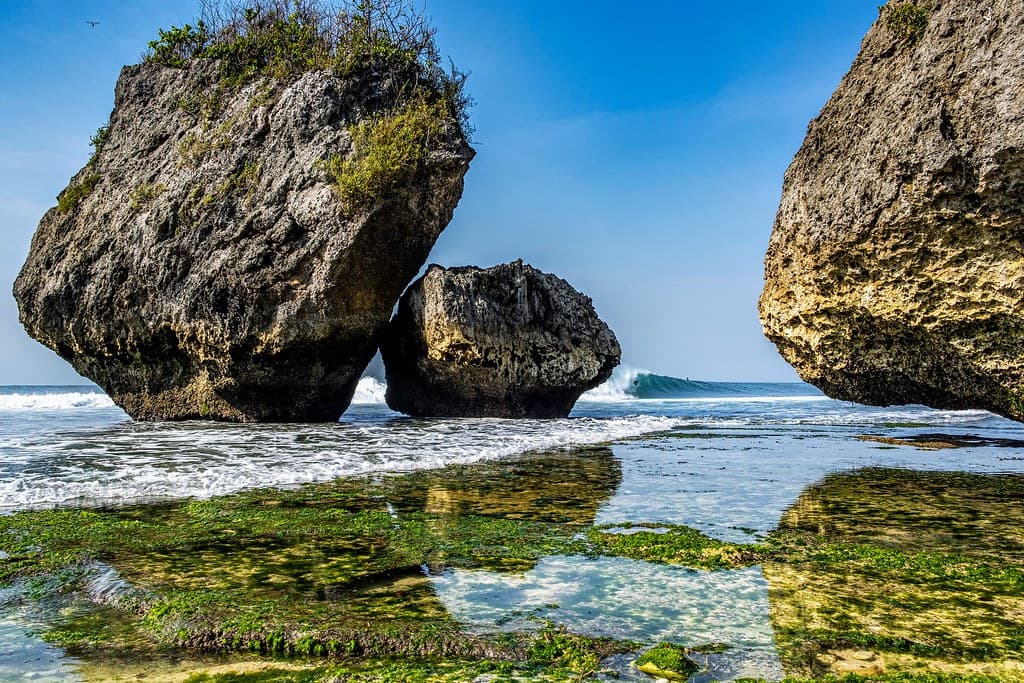
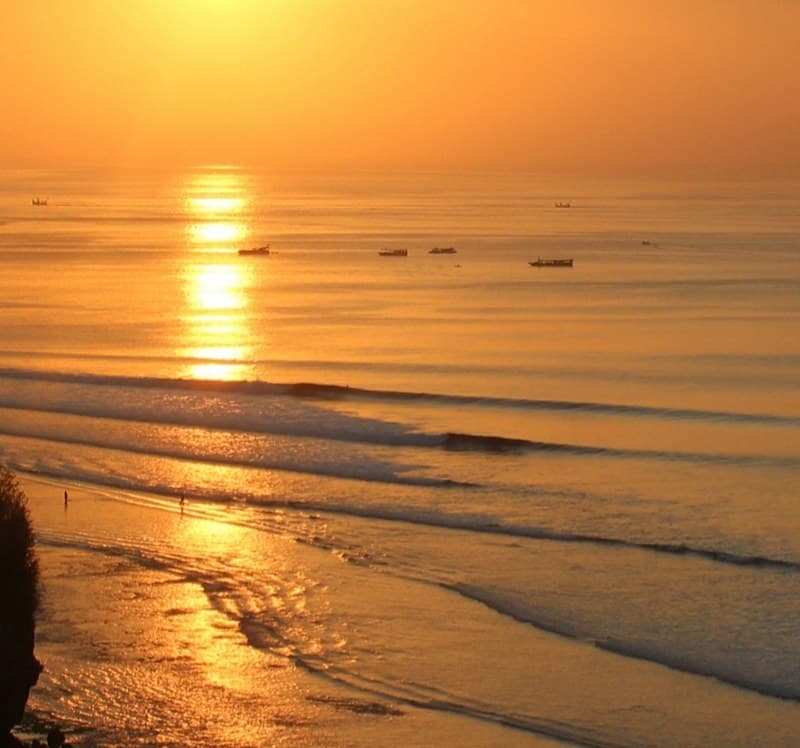
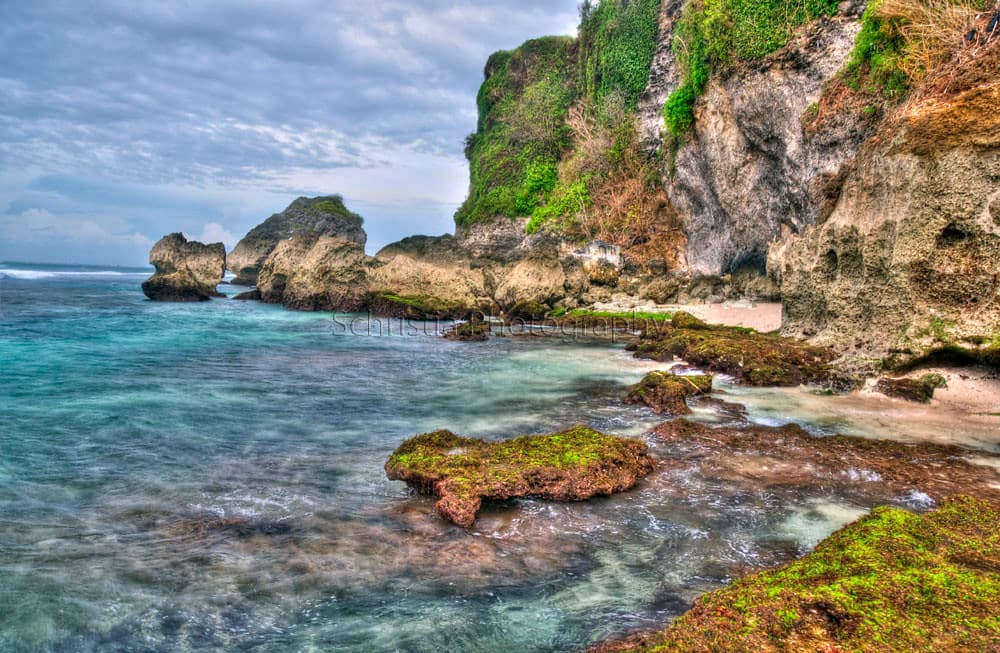
The entrance alone warns you this isn't another postcard cliché. You duck through a split in the headland—a tunnel worn smooth by centuries of monsoon runoff—then navigate steep stairs slick with ocean spray. When the rock opens up, you step onto a crescent of blonde sand hemmed in by caramel-colored cliffs that rise thirty meters on three sides. The surf here is mercurial: glassy lefts peel across the reef during dry season, drawing shortboarders from Uluwatu and Canggu who paddle out before the tour vans arrive. By mid-morning the cove fills with a United Nations of beachgoers—surf photographers perched on boulders, Russian honeymooners wading in thigh-deep pools, Jakartan families picnicking under rented umbrellas. The sand gets crowded, but the vibe stays mellow, amplified by the natural acoustics of stone. You hear every whoop, every shutter click, every slap of fiberglass on water. Small warungs tucked into the cliff base sell cold Bintang and nasi goreng, their blue tarps flapping in the onshore breeze. This is the beach that launched a thousand Instagram accounts after appearing in *Eat Pray Love*, but its real currency is the light. Late afternoon sun ignites the western rim, casting the entire cove in amber. Surfers become silhouettes. The reef sharpens into black lace. You climb back through the keyhole as the tide rises, saltwater pooling at your ankles, already planning your return at dawn.
Places, rentals, tours and events within walking and driving distance of Padang Padang Beach.
Photos
Swimming conditions at Padang Padang vary considerably with tides and seasons. During low tide and calmer months (April-October), the sheltered cove offers relatively safe swimming for confident swimmers. However, strong currents, sharp rocks, and powerful waves make it challenging during high tide and the wet season. The beach is primarily known for surfing rather than casual swimming. Always check tide times, observe local conditions before entering the water, and be aware that there are no lifeguards on duty. Children and inexperienced swimmers should exercise extreme caution.
Padang Padang Beach is accessible year-round, but the dry season (April-October) offers the best overall experience with sunny weather and calmer seas ideal for swimming. Surfers prefer June-August when swells are most consistent, though crowds peak during these months. The wet season (November-March) brings occasional rain and larger, more powerful waves suited only for experienced surfers. Visit early morning (7-9am) to avoid crowds and secure parking, especially during peak tourist season. Mid-week visits are generally quieter than weekends when locals frequent the beach.
Padang Padang Beach is located off Jalan Labuan Sait in Pecatu, approximately 30-40 minutes from Seminyak and 20 minutes from Uluwatu Temple. Most visitors arrive by scooter or private car, as public transport is limited in this area. There's a small parking area near the entrance (parking fee typically 5,000-10,000 IDR). From the parking area, you'll descend a steep staircase through a rocky crevice to reach the beach. Grab and Gojek ride-hailing services operate in the area, offering convenient drop-off and pick-up options.
Padang Padang has limited facilities directly on the beach. You'll find a few small warungs (local eateries) selling drinks, snacks, and simple Indonesian meals near the entrance and stairway. Basic bathroom facilities and changing rooms are available for a small fee. There are no hotels at the beach itself, but numerous accommodations ranging from budget guesthouses to luxury resorts are available within 5-10 minutes in nearby Pecatu and Uluwatu areas. Several beach clubs and restaurants line the clifftops above, offering more extensive dining options with ocean views.
Yes, Padang Padang gained international fame as a filming location for the 2010 movie "Eat Pray Love" starring Julia Roberts. The beach's dramatic natural rock formations and turquoise cove provided the backdrop for several scenes. This Hollywood exposure significantly increased its popularity among tourists, though it was already well-known in surfing circles for hosting the Rip Curl Cup competition. While the movie boosted visitor numbers, the beach remains relatively small and can feel crowded during peak hours. The stunning scenery that attracted filmmakers remains its main draw today.