Counting the waves…
Counting the waves…

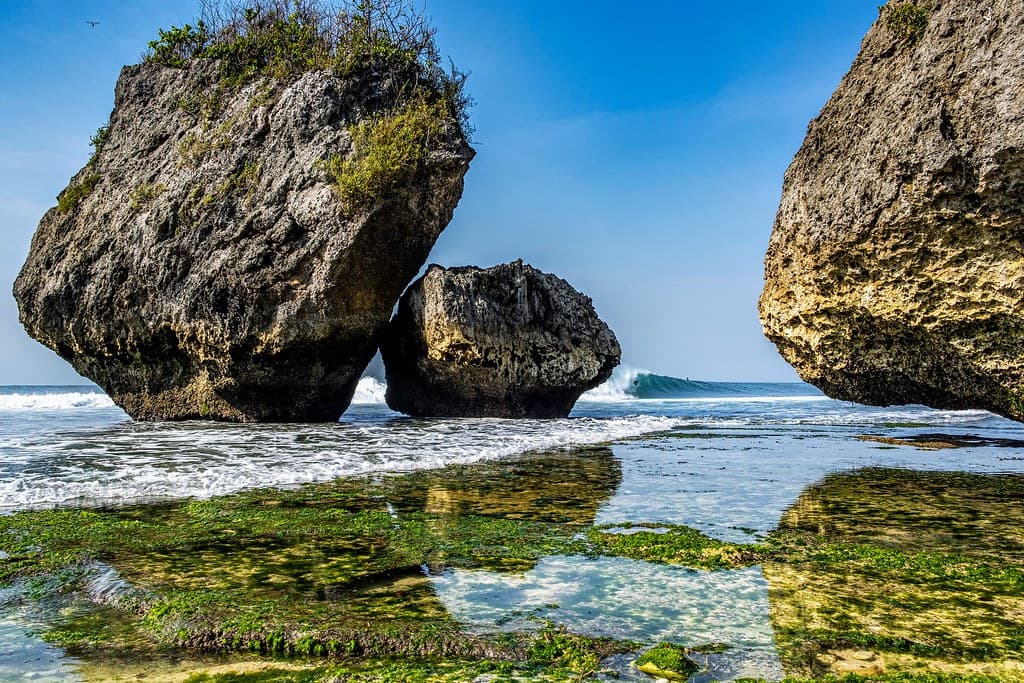
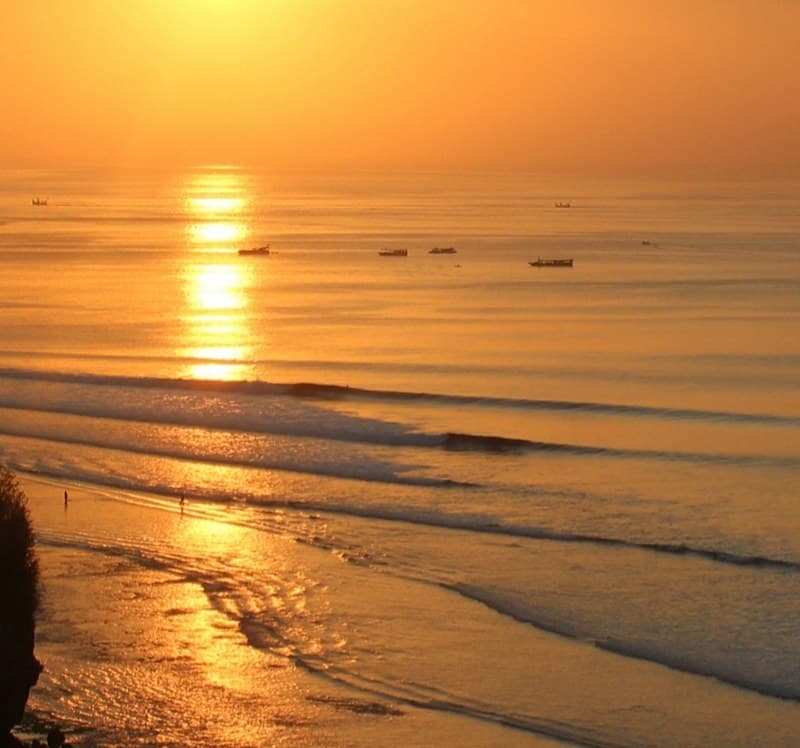
The staircase carved into Pecatu's southern cliffs delivers you into shadow first—a labyrinth of caves worn smooth by centuries of tide and footfall. Sarongs and board shorts hang from makeshift lines; the sound of gamelan drifts from a warung speaker somewhere above. When you duck through the final archway, the light changes: blinding white foam, iron-dark rock, the turquoise churn of the Indian Ocean funneling into a narrow cove barely fifty meters wide. Suluban reveals itself only at low tide, when the water retreats to expose a ribbon of coarse sand pressed against the cliff base. At high tide, waves swallow the beach entirely, turning the caves into thundering echo chambers. Surfers paddle out through a keyhole in the reef, their silhouettes tiny against the limestone walls that rise thirty meters on either side. You'll share the space with Balinese families who come to collect seaweed, backpackers nursing Bintangs at the cave-mouth cafés, and the occasional troupe of long-tailed macaques eyeing unattended bags. The name translates to "broken boat," a reference to shipwrecks that once littered this unforgiving stretch of coast. Today the danger is more benign: slippery rocks, rogue sets, the vertigo of standing at the cave entrance while swells detonate below. Come in the late afternoon when the sun backlights the spray and the cliffs glow amber, and you'll understand why surfers have been making the pilgrimage here for decades.
Places, rentals, tours and events within walking and driving distance of Suluban Beach.
Photos
Swimming at Suluban Beach can be challenging and is generally not recommended for inexperienced swimmers. The beach experiences strong currents, powerful waves, and rocky conditions, making it more suitable for experienced surfers than casual swimmers. During high tide, the beach area becomes very limited or completely submerged. If you plan to enter the water, check tide schedules beforehand, stay close to shore, and be extremely cautious of the sharp limestone formations. Lifeguards are not always present, so swim at your own risk and consider safer beaches nearby for swimming.
Suluban Beach can be visited year-round, but the best experience depends on your purpose. For surfing, the dry season (April-October) brings consistent swells, with peak surf conditions from June to August. However, this is also the busiest period. For easier beach access and cave exploration, visit during low tide when more sand is exposed. The wet season (November-March) sees fewer crowds but larger, more unpredictable waves. Early morning or late afternoon visits offer the best lighting for photography and smaller crowds, regardless of season.
Suluban Beach is located in Pecatu, about 30 minutes south of Seminyak and 20 minutes from Uluwatu Temple. You can reach it by scooter, car, or taxi via Jalan Mamo. Parking is available at the top of the cliff near the Single Fin bar for a small fee (usually 5,000-10,000 IDR). From the parking area, you'll descend steep stairs through a dramatic limestone cave, which takes about 5-10 minutes. The steps can be slippery, so wear appropriate footwear and take care, especially when carrying surfboards.
Facilities at Suluban Beach itself are minimal—there are no restaurants directly on the sand, though small warungs occasionally operate near the cave entrance selling drinks and snacks. The main amenities are located at the clifftop, where you'll find Single Fin, a popular bar and restaurant with stunning sunset views, and several other cafes. Basic toilets and changing rooms are available near the parking area. For accommodation, numerous guesthouses, villas, and hotels are scattered throughout Pecatu and nearby Uluwatu, ranging from budget to luxury options, all within a short drive.
Suluban Beach's defining feature is its dramatic access through natural limestone caves and crevices carved by ocean erosion. The descent involves navigating narrow passages between towering rock formations, creating a sense of adventure before reaching the beach. These caves provide natural shelter and create unique photo opportunities with light filtering through openings in the rock. The name 'Suluban' means 'to bow down' in Balinese, referring to how visitors must duck through low cave passages. During high tide, waves crash directly into these caves, creating spectacular displays but making access impossible or dangerous.