Counting the waves…
Counting the waves…

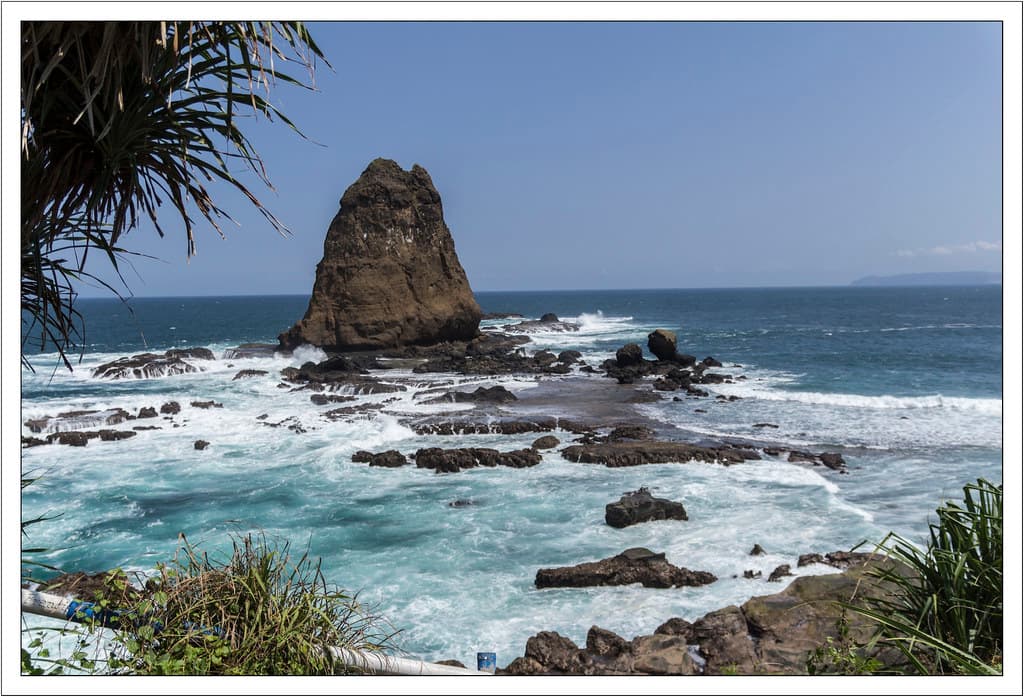
The rust-colored outcrop rising from Pulau Merah's eastern flank looks almost Martian against the cobalt swells—a volcanic island no bigger than a soccer field, connected to shore by a sand bridge at low tide. You'll wade across at dawn, seawater warm as bathwater around your calves, to reach the temple where local fishermen leave offerings before heading out. From the island's summit, the entire bay spreads below: a crescent of caramel sand framed by coconut palms and the serrated peaks of Ijen Plateau smoking faintly in the distance. The waves here break with mechanical consistency from April through October, when southern hemisphere swells funnel into the bay and peel along the reef in shoulder-high sets. You'll share the water with Banyuwangi fishermen hauling nets from wooden outriggers and a rotating cast of international surfers who've heard whispers about this break on the Bali-to-G-Land overland route. Between sessions, warungs under palm-thatch roofs serve iced kelapa muda and nasi campur so fresh the sambal still steams. The beach empties by late afternoon when the onshore wind kicks in, leaving you alone with hermit crabs scuttling across tide pools and the rhythmic thud of volleyball games organized by university students from Surabaya. As the sun drops behind Java's spine, the red island earns its name—the entire formation glowing like a ember against the darkening strait.
Places, rentals, tours and events within walking and driving distance of Pulau Merah Beach.
Photos
Pulau Merah Beach has strong currents and waves, making it more suitable for experienced surfers than casual swimmers. The beach is known for its powerful surf breaks, which can be challenging even for intermediate surfers. If you're not confident in the water, it's safer to enjoy the beach from the shore or wade in shallow areas during calmer conditions. Always observe local conditions, check with lifeguards if present, and avoid swimming alone. The waves are typically strongest during peak surf season from April to October.
Pulau Merah Beach can be visited year-round, but conditions vary by season. For surfers, April to October offers the best waves with consistent swells, though conditions can be rougher. The dry season from May to September provides the most reliable weather with less rainfall and calmer seas, ideal for general beach activities and photography. November to March sees more rain and variable surf conditions. Early mornings typically offer the best light for viewing the iconic red island and fewer crowds, regardless of season.
Pulau Merah Beach is located about 60 kilometers south of Banyuwangi city center, roughly a 1.5 to 2-hour drive. You can rent a motorbike or car in Banyuwangi, or hire a local driver for the day. The route follows the coastal road through Pesanggaran district. Parking is available near the beach in designated areas, typically for a small fee. Public transportation options are limited, so private transport is recommended. The journey offers scenic coastal views, making the drive part of the experience.
Basic amenities are available at Pulau Merah Beach, including small warungs (local food stalls) serving Indonesian dishes and fresh seafood along the beachfront. Accommodation options range from simple guesthouses to surf camps catering to visiting surfers, though facilities are generally modest compared to major tourist areas. For more dining variety and hotel options, Banyuwangi city offers wider choices. It's advisable to bring cash, as many local vendors don't accept cards. Some surf camps offer packages including meals and board rentals.
Yes, you can walk to the small red island (which gives the beach its name) during low tide when a natural sand bridge emerges connecting it to the mainland. The timing depends on daily tidal patterns, so check local tide schedules or ask locals about the best time. The walk takes just a few minutes across the sandbar. At high tide, the island is surrounded by water and inaccessible on foot. The island offers panoramic views of the beach and is a popular spot for photos, especially at sunrise or sunset.