Counting the waves…
Counting the waves…

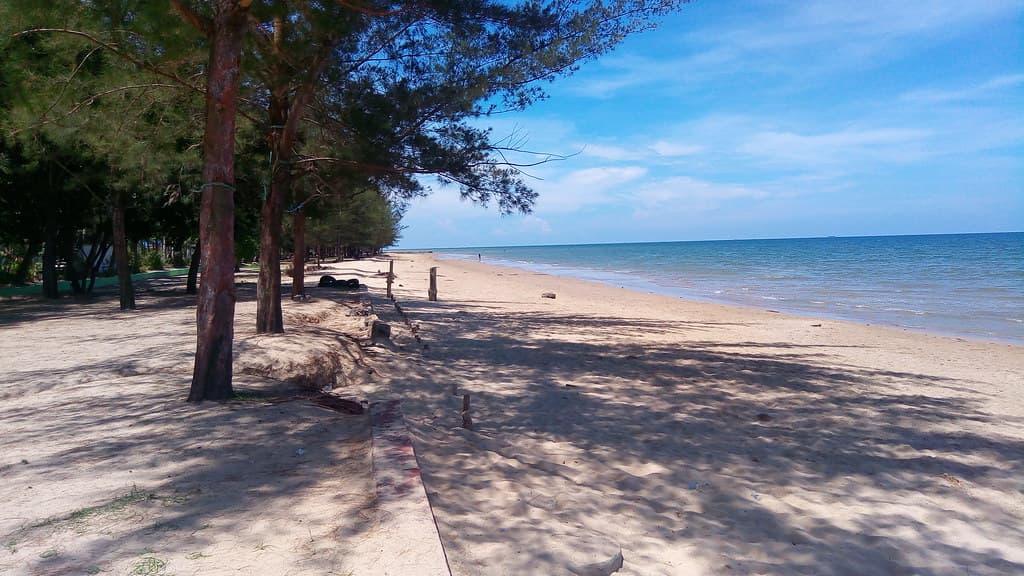
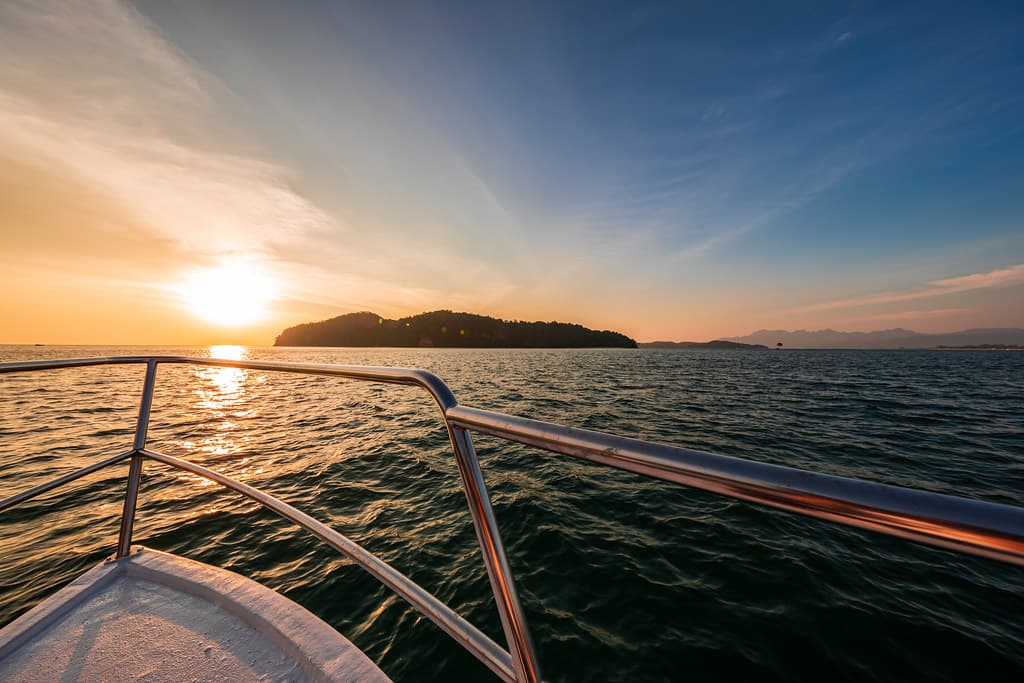
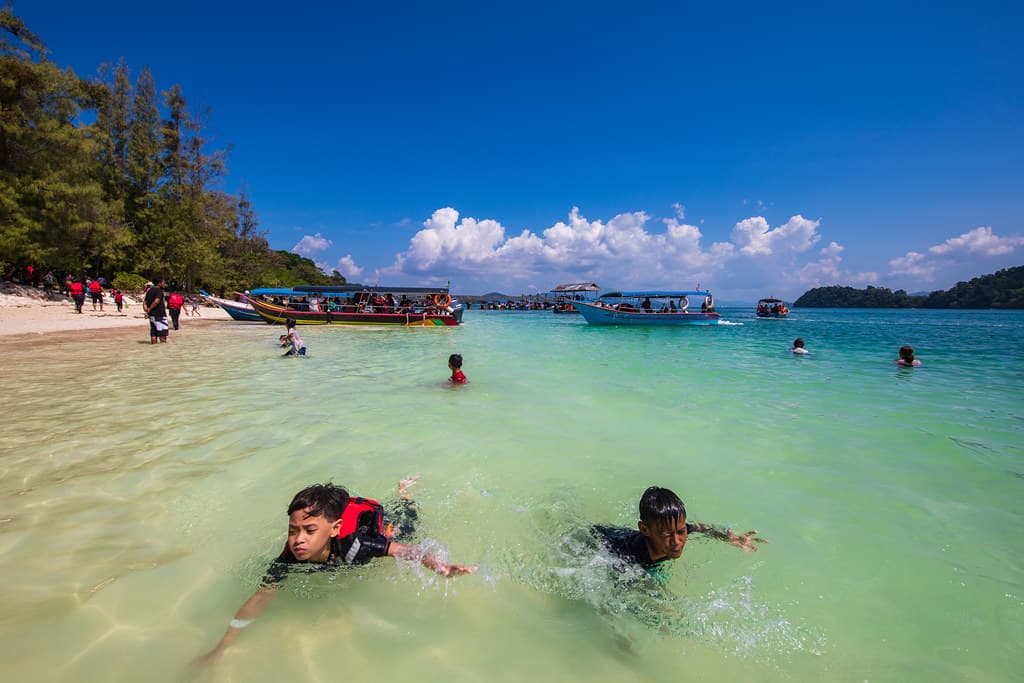
The boat ride from Bontang's industrial harbor takes twenty minutes, but the transformation feels absolute. Beras Basah Island rises from the Makassar Strait as a thin crescent of white sand flanked by casuarina trees, their needle-like leaves rattling in the sea breeze. You step onto shore and the sand compresses with an audible crunch—dry and impossibly fine, it piles in wind-sculpted drifts above the tide line and spreads in a wide apron where the water barely ripples. The shallows extend fifty meters out, warm enough that you'll forget you're swimming. Local families arrive by chartered boat on weekends, spreading sarongs under rented beach umbrellas and wading with toddlers who shriek at hermit crabs. Snorkelers drift along the eastern point where coral heads appear in patches, though the real draw here is simply the expanse: uninterrupted views across open water, the hazy silhouette of Kalimantan's coast behind you, and sand so bright it forces you to squint even through sunglasses. By late afternoon, the light turns golden and the island empties. You'll hear only the wind in the casuarinas and the soft collapse of knee-high waves. There's a small warung selling grilled fish and cold Bintang, and a handful of basic gazebos if you want shade. Most visitors come for the day and leave before dusk, when the water glows pink and the industrial skyline of Bontang becomes a string of distant lights.
Places, rentals, tours and events within walking and driving distance of Beras Basah Beach.
Photos
Beras Basah Beach generally offers calm, shallow waters suitable for swimming, particularly during dry season. The beach's island location provides natural protection from strong currents in most areas. However, conditions can vary with tides and weather, so check local conditions before entering the water. The white sand gently slopes into the sea, making it relatively safe for families. As with any beach, supervise children closely and avoid swimming during storms or rough weather. Basic safety facilities may be limited, so exercise standard precautions.
Beras Basah Beach can be visited year-round due to its equatorial location, though the dry season from May to September typically offers the most favorable conditions with less rainfall and calmer seas. East Kalimantan experiences a tropical climate with warm temperatures throughout the year. The wet season runs from November to March, bringing occasional heavy showers but also fewer crowds. Weekdays are generally quieter than weekends when local visitors increase. Early mornings provide cooler temperatures and beautiful light for photography before midday heat.
Reaching Beras Basah Beach requires a boat trip from Bontang, as it's located on a small island off the coast. Boats typically depart from Bontang's main harbor or designated jetties. The journey usually takes 15-30 minutes depending on sea conditions and boat type. Many visitors arrange transportation through local tour operators or hotels in Bontang. Some boats operate on regular schedules while others require advance booking, especially for groups. Return trips should be confirmed beforehand. Parking is available at the mainland departure points in Bontang.
Beras Basah Beach has basic facilities including small warungs (food stalls) selling Indonesian snacks, fresh seafood, and drinks. Amenities are modest compared to major tourist beaches, so bring essentials like sunscreen and extra water. Toilet facilities are available but basic. There's no formal lodging directly on the island; most visitors stay in Bontang city where hotels and guesthouses are available, making this primarily a day-trip destination. Some visitors bring picnic supplies, though local vendors provide simple, affordable meals showcasing regional flavors and fresh catches.
Beras Basah Beach stands out for its distinctive white sand, which is relatively rare in Kalimantan where most beaches feature darker sand. The name 'Beras Basah' translates to 'wet rice,' reflecting the beach's fine, white granular appearance. Its island setting offers clearer waters than many mainland beaches in the region. The beach provides a tropical island experience without extensive development, maintaining a more natural, peaceful atmosphere. It's become one of East Kalimantan's most photographed coastal spots, popular with both locals and visitors seeking pristine shorelines.