Counting the waves…
Counting the waves…

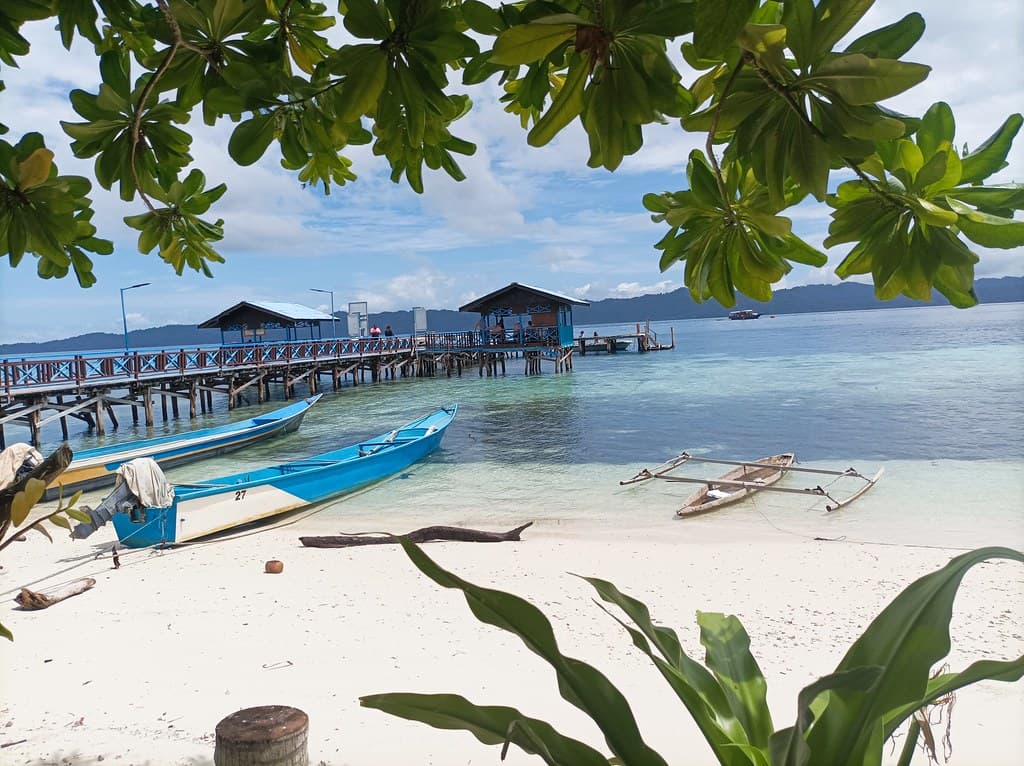
The climb up the weathered wooden staircase demands thirty minutes of steady effort through humid air thick with salt and jungle rot. Your reward materializes at the platform: a panorama of limestone karsts jutting from lagoons so blue they seem digitally enhanced, their reflections doubling the drama. This is the viewpoint that adorns every Raja Ampat postcard, but standing here with wind cooling your sweat-soaked shirt, you'll understand why no photograph does it justice. Descending means trading the aerial view for an aquatic one. You'll board a wooden longboat to explore the labyrinth of channels between those same karsts, where the water shifts from sapphire to jade depending on depth and coral density below. Slip beneath the surface and you're surrounded: damselfish dart through staghorn thickets, parrotfish scrape algae from boulders, and the occasional blacktip glides past with unsettling calm. The beach itself—a slim crescent of coarse sand tucked beside the jetty—serves mainly as a launching point and rest stop. You'll spread your towel between boat trips, watching guides prepare grilled fish over driftwood coals while frigatebirds wheel overhead. The isolation is real: no resorts, no beach bars, just the rhythmic slosh of waves against limestone and the knowledge that you've reached one of the archipelago's most coveted corners.
Places, rentals, tours and events within walking and driving distance of Piaynemo Beach.
Photos
Swimming conditions at Piaynemo Beach are generally calm and safe, as the area is sheltered within Raja Ampat's karst island formations. The waters are clear with minimal currents near shore, making it suitable for swimming and snorkeling. However, always check conditions with your boat operator, as currents can vary between channels. Watch for sharp coral and sea urchins when entering the water. Since there are no lifeguards or rescue services, swim with a buddy and stay close to your boat.
Piaynemo can be visited year-round, but October through April offers the best conditions with calmer seas and clearer skies. The dry season (October-April) provides optimal weather for photography from the famous viewpoint and smoother boat rides. May through September brings occasional rain and rougher seas, though visibility for snorkeling remains good. Early morning visits (sunrise to 9 AM) offer the best light for the iconic viewpoint photos and fewer crowds, as most liveaboards arrive mid-morning.
Piaynemo is only accessible by boat from Waisai (Raja Ampat's main port) or via liveaboard diving vessels. The journey takes 3-4 hours by speedboat from Waisai. There are no roads or parking facilities, as Piaynemo sits among uninhabited limestone islands. Most visitors book tours through Raja Ampat homestays or join liveaboard itineraries. You'll need to climb approximately 320 wooden steps to reach the famous panoramic viewpoint overlooking the karst formations.
Piaynemo has no facilities, restaurants, or accommodations. It's an uninhabited natural site with only basic wooden stairs to the viewpoint. Bring all food, water, and supplies from Waisai or your homestay. The nearest lodging options are homestays on Kri Island or Gam Island, about 2-3 hours away by boat. Most visitors come on day trips or as part of liveaboard cruises. There are no toilets or shelters, so come prepared and pack out all waste.
The climb involves ascending roughly 320 wooden steps built into the karst hillside, taking 15-20 minutes at a moderate pace. While not technically difficult, the stairs are steep, uneven in places, and can be slippery when wet. The climb is definitely worth it—the viewpoint offers one of Raja Ampat's most iconic panoramas of turquoise channels weaving between mushroom-shaped limestone islands. Bring water, wear sturdy shoes, and go early morning for the best photography light and temperatures.