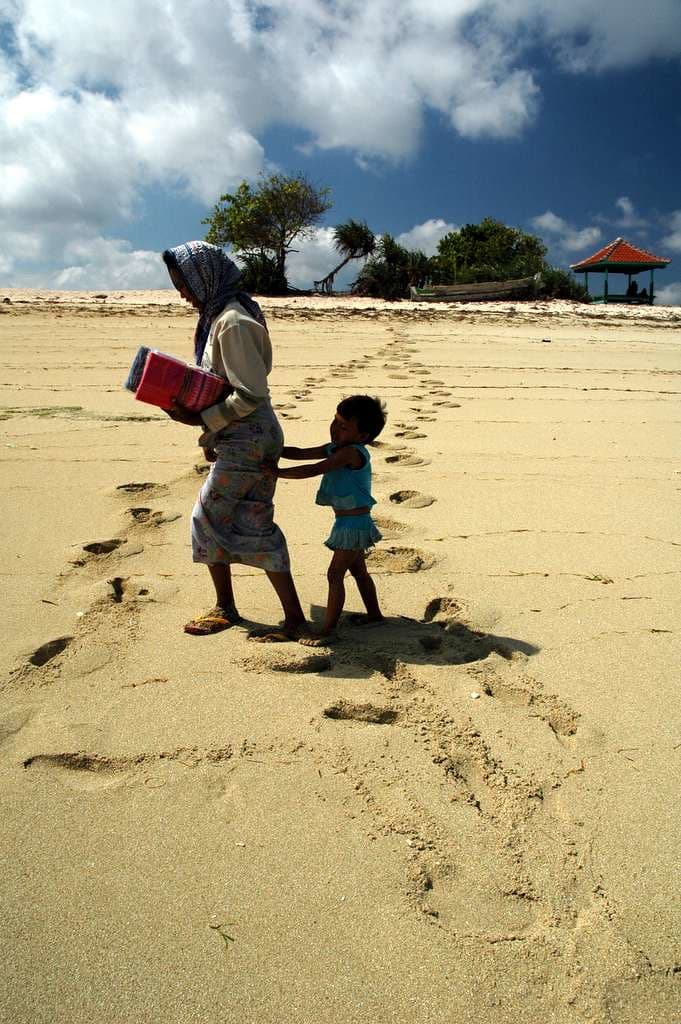
Counting the waves…
Counting the waves…

The sand beneath your feet looks like it's been dusted with crushed rose petals, but the color comes from Foraminifera—tiny red organisms whose calcium carbonate shells mix with white coral debris and volcanic minerals. The effect is most vivid along the waterline in morning light, where wet sand catches the sun and glows like smoked salmon. Behind you, scrubby hillsides drop sharply to the beach; ahead, the Flores Sea stretches toward Komodo in shades of cobalt and turquoise. Snorkeling here means finning out over coral bommies that rise from sandy channels twenty feet down. Parrotfish crunch on coral heads, triggerfish patrol the shallows, and if you drift east toward the rocky point, you'll find barrel sponges and schooling fusiliers. The beach itself curves for roughly three hundred meters, framed by volcanic boulders on each end. A handful of local warungs sell grilled fish and cold Bintang under palm-thatch shelters. Timing matters: arrive before ten to beat the tour groups bused in from Kuta and Senggigi, or come late afternoon when the light turns honeyed and the pink intensifies. The road in is rough but passable by scooter in dry season. Pack reef-safe sunscreen—the coral gardens here are worth protecting, and they're the reason you're standing on pink sand in the first place.
Places, rentals, tours and events within walking and driving distance of Pink Beach.
Photos
Pink Beach generally offers calm, safe swimming conditions, particularly during the dry season (April-October) when seas are calmer. The beach has gentle waves and no strong currents in most areas, making it suitable for swimmers of moderate ability. However, always check conditions before entering the water as currents can vary. There are no lifeguards on duty, so swim at your own risk. Snorkeling is popular here due to the excellent visibility and vibrant coral reefs just offshore. Bring water shoes as some areas have rocky patches near the shoreline.
Pink Beach can be visited year-round, but the dry season from April to October offers the best conditions with sunny skies, calm seas, and minimal rainfall. The pink sand appears most vibrant in bright sunlight, making midday ideal for photography despite the heat. July and August are peak tourist months, so expect more visitors. The wet season (November-March) brings occasional rain and rougher seas, though mornings often remain clear. Visit early morning (7-9am) to avoid crowds and intense heat, or late afternoon for softer light and pleasant temperatures.
Pink Beach is located in southeastern Lombok, approximately 2.5-3 hours by car from Lombok International Airport or Mataram. Most visitors hire a private driver or join organized tours, as public transport is limited. The final approach involves a rough, unpaved road requiring a 4WD vehicle or motorbike. Basic parking is available near the beach for a small fee. Alternatively, many tourists reach Pink Beach by boat from Tanjung Luar harbor or as part of multi-island snorkeling tours. The boat journey takes 30-45 minutes and offers scenic coastal views.
Pink Beach has minimal facilities, reflecting its remote location. Basic warungs (local food stalls) near the beach serve simple Indonesian meals, fresh grilled fish, and cold drinks, though options are limited and inconsistent. There are no major restaurants or hotels directly at the beach. Most visitors stay in nearby towns like Tanjung Luar, Jerowaru, or popular areas like Kuta Lombok or Senggigi, then visit Pink Beach as a day trip. Bring snacks, drinking water, and sun protection, as shops are scarce. No formal lodging exists beachside.
The sand's distinctive pink hue comes from microscopic red coral fragments and Foraminifera, tiny marine organisms with reddish-pink shells that live in the surrounding coral reefs. When these organisms die, waves and weathering break down their shells into tiny particles that mix with the white sand, creating the signature pink color. The intensity of the pink varies depending on lighting, time of day, and the wet or dry state of the sand—it appears most vibrant when slightly damp under direct sunlight. This natural phenomenon occurs at only a handful of beaches worldwide.