Counting the waves…
Counting the waves…
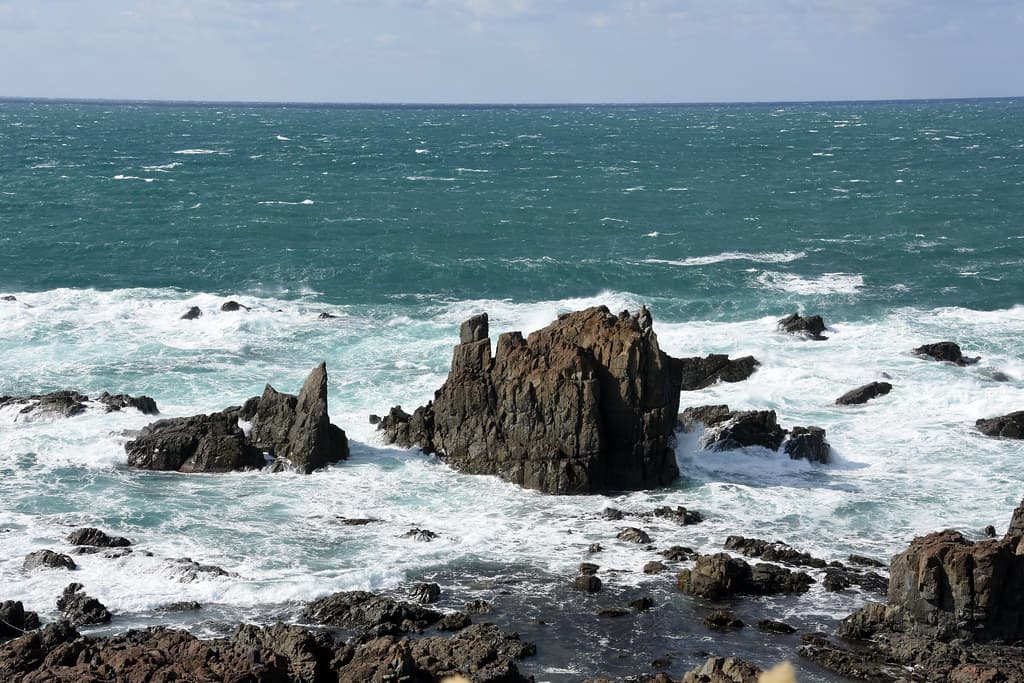
Nyudozaki North Beach clings to the westernmost tip of the Oga Peninsula, where the coastline pivots sharply and the full fetch of the Sea of Japan slams into layered volcanic rock. The beach is a tight arc of coarse black sand and water-smoothed cobbles, flanked by stratified cliffs that glow amber in late-afternoon light. Pines grow sideways here, sculpted by relentless offshore winds that carry salt and the faint smell of kelp even on calm days. You'll find almost no infrastructure—no umbrellas, no vendors, no lifeguard towers. A narrow access road threads through a handful of weathered homes where fishermen repair nets in gravel driveways. The beach faces due west, so sunset here is theatrical: molten light spills across the water, silhouetting offshore rock stacks and turning the wet sand into a mirror. In winter, the wind is fierce enough to sting your face; in summer, it's a welcome coolness that keeps the heat at bay. The isolation is the point. You'll hear waves, wind, and the occasional cry of black-tailed gulls. The nearest town, Monzen, is a ten-minute drive through forested hills. Bring what you need—water, snacks, a windbreaker—because Nyudozaki offers only the essentials: space, solitude, and an unobstructed view of the horizon where weather is born.
Places, rentals, tours and events within walking and driving distance of Nyudozaki North Beach.
Photos
Swimming conditions at Nyudozaki North Beach can be challenging due to its remote, exposed location on the Oga Peninsula. The beach faces open waters with potentially strong currents and waves, particularly during typhoon season and winter months. There are no lifeguards on duty, and facilities are minimal. The rocky coastline requires caution when entering the water. This beach is better suited for beachcombing, photography, and scenic walks rather than swimming. Always check local weather and sea conditions before visiting, and exercise extreme caution if you choose to enter the water.
While technically accessible year-round, late spring through early autumn (May to October) offers the most pleasant conditions for visiting Nyudozaki North Beach. Summer months provide warmer temperatures ideal for coastal walks and photography. However, the dramatic winter seascapes and rugged beauty attract photographers seeking stormy ocean scenes. Be prepared for strong winds regardless of season, as the Oga Peninsula's northern coast is quite exposed. Early morning and sunset hours provide particularly stunning light for photography. Avoid typhoon season (August-September) when conditions can be hazardous, and always check weather forecasts before making the journey.
Reaching Nyudozaki North Beach requires a car, as public transportation options are extremely limited in this remote area of the Oga Peninsula. From Akita city, drive approximately 90 minutes northwest via Route 101 and local roads toward the peninsula's northern tip. The beach is located near Cape Nyudozaki. Limited informal parking areas are available near the beach access points, though facilities are basic. Roads can be narrow and winding. GPS coordinates are helpful as signage may be limited. Rental cars are available in Akita city for visitors arriving by train to Akita Station.
Nyudozaki North Beach is extremely remote with virtually no facilities directly at the beach—no restaurants, restrooms, or shops. The nearest services are in the town of Oga, approximately 30-40 minutes away by car, where you'll find restaurants, convenience stores, and accommodation options including ryokans and minshuku (guesthouses). It's essential to bring food, water, and any supplies you need for your beach visit. The closest significant town is Akita city, about 90 minutes away, which offers full amenities and wider accommodation choices. Plan accordingly and ensure you have fuel and provisions before heading to this isolated coastal area.
Nyudozaki North Beach stands out for its wild, untouched character and dramatic isolation on the Oga Peninsula's rugged northern coast. Unlike Japan's more developed beaches, this remote stretch offers solitude and raw natural beauty with minimal human intervention. The location provides stunning views across the Sea of Japan, particularly dramatic during winter storms. The area is part of the Oga Peninsula's volcanic coastline, featuring distinctive rock formations and geology. Its remoteness means you'll likely have the beach largely to yourself, offering a rare escape from crowds and a genuine sense of being at Japan's northern edge—perfect for contemplative walks and nature photography.