Counting the waves…
Counting the waves…

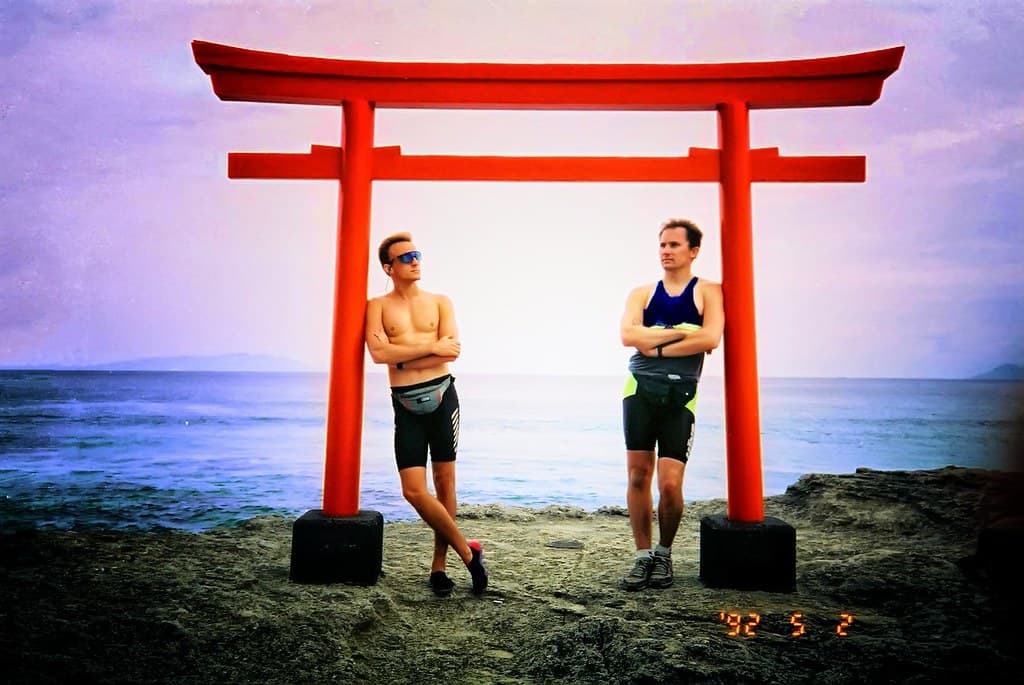
The first thing that strikes you at Kabushima Beach isn't the sand or the surf—it's the cacophony. Black-tailed gulls nest in the thousands on this volcanic island, their cries bouncing off the vermillion shrine torii that rises improbably from the rocky outcrop. You walk a paved path that hugs the coastline, Pacific breakers churning white foam below, while gulls hover at eye level, utterly indifferent to your camera. The shrine itself feels like an afterthought to the birds, though locals have worshipped here for centuries. You'll spot fishermen's wives leaving offerings of dried fish, the scent mingling with brine and seaweed drying on the rocks. The beach below is narrow, hemmed in by tetrapods and breakwaters that protect Hachinohe's industrial port to the north, but at low tide you can scramble across tide pools where sea urchins cling to basalt. Come during breeding season—March through July—and the island transforms into a feathered metropolis, every ledge and crevice claimed. Outside those months, the birds scatter, but the setting remains: a working-class beach where spirituality, industry, and raw Pacific weather collide. No one comes here to sunbathe. You come because nowhere else in Japan offers this particular convergence of devotion and din.
Places, rentals, tours and events within walking and driving distance of Kabushima Beach.
Photos
Kabushima Beach is primarily known as a scenic coastal observation area rather than a swimming beach. The rocky shoreline and strong currents typical of this part of Japan's Pacific coast make swimming conditions generally challenging and potentially unsafe. Most visitors come to view the dramatic coastal scenery and visit the nearby Kabushima Shrine, famous for its black-tailed gull colony. If you're seeking swimming opportunities in Hachinohe, consider checking with local tourism offices for designated swimming beaches with lifeguard supervision during summer months.
Kabushima Beach can be visited year-round, but late March through July offers a unique experience when thousands of black-tailed gulls nest around Kabushima Shrine. Spring and early summer provide mild weather ideal for coastal walks and photography. Summer brings warmer temperatures but also humidity. Autumn offers clear skies and comfortable conditions for sightseeing. Winter visits are possible but expect cold winds off the Pacific. Weekday mornings generally have fewer crowds. The area's accessibility and urban location make it convenient regardless of season, though weather conditions vary significantly.
Kabushima Beach is located about 20 minutes by car from central Hachinohe. From Hachinohe Station, take the JR Hachinohe Line to Samemachi Station (approximately 25 minutes), then it's a 15-20 minute walk or short taxi ride to the beach. Alternatively, local buses serve the area from Hachinohe city center. Free parking is available near Kabushima Shrine, making it convenient for those with rental cars. The beach and shrine area are well-signposted in Japanese, and the location's proximity to urban Hachinohe means access is straightforward year-round.
Dining options near Kabushima Beach include local seafood restaurants in the surrounding Same neighborhood, known for fresh catches from Hachinohe's fishing industry. The nearby town offers small eateries serving regional specialties. For more extensive dining and accommodation choices, central Hachinohe (about 20 minutes away) provides numerous hotels, business hotels, and restaurants. Some visitors choose to stay in Hachinohe city and make Kabushima a half-day trip. Basic facilities like restrooms are available near the shrine, but amenities directly at the beach are limited compared to resort beaches.
Yes, Kabushima is one of Japan's most accessible seabird colonies, hosting over 30,000 black-tailed gulls (umineko) during breeding season from late March through July. The gulls nest directly around and on the shrine buildings, creating a remarkable spectacle. Visitors can observe these birds up close as they tend their nests and chicks. The gulls are generally accustomed to human presence. Peak nesting activity occurs in May and June. Outside breeding season, fewer birds are present as many migrate. This unique coexistence of shrine and seabird colony makes Kabushima nationally significant and visually striking.