Counting the waves…
Counting the waves…
A refined fusion of water purity, environmental stability, and communal vibrancy for Hotokegaura South Beach.
View MethodologyAnalyzed via live sensors and environmental data.
Wave height, wind, and atmospheric stability.
Live footfall and crowd balance metrics.
Community reviews and curated sentiment.
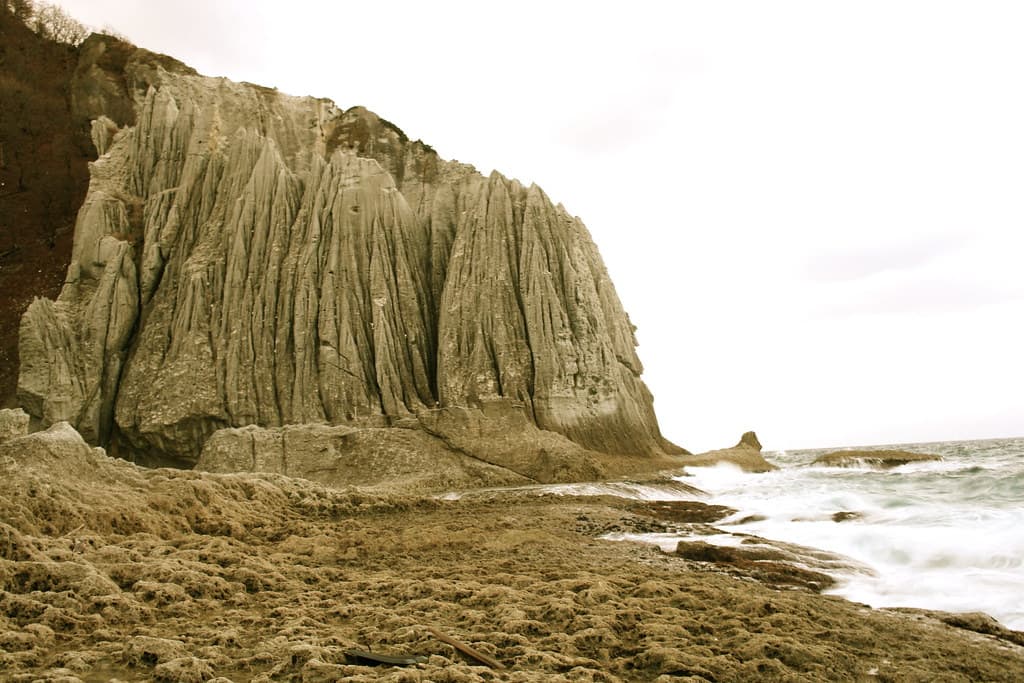
“You'll find this extension of Hotokegaura's famed coastline nearly to yourself—waves polish smooth stones the color of bone, salt hangs thick in the air, and those iconic tuff cliffs loom overhead without the tour-bus…”
Limited recent visitor reports — live OBI telemetry is your best guide for current conditions.
Hotokegaura South Beach unfolds where most visitors never venture, a pebbled shoreline that stretches beyond the main viewing platforms frequented by sightseers snapping photos of the dramatic rock formations. You reach it by following the coastal path past the cluster of souvenir stalls, where the scent of grilled squid fades and the only sound becomes the rhythmic pull of the Tsugaru Strait dragging stones back into its depths. The beach itself is a study in textures: rounded white pebbles that click underfoot, kelp-draped boulders slick with sea spray, and those towering green-tuff cliffs carved by millennia of winter storms.
The water here runs frigid year-round, fed by currents sweeping down from Hokkaido across the strait. In summer, brave swimmers wade in briefly before retreating to sun-warmed rocks. Autumn brings fog banks that erase the horizon, turning the beach into a monochrome study of gray sea meeting gray sky. Winter storms scatter driftwood and sea glass across the upper strand, treasures left by waves that can reach four meters high.
 Credit: Unsplash
Photograph Cliff Patterns
 Credit: Unsplash
Coastal Path Walking
Morning light reveals tuff striations
Trace shoreline beyond tour zones
Smooth pebbles radiate afternoon heat
Where it is
Hotokegaura South Beach
Sai, Aomori, Japan
41.418700°, 140.872900°
Weather
Loading…
Swell
—
Temp
Warm · Restorative
UV Index
Moderate
Wind
—
Tidal State
Last known
Max Sunlight
—
Ideal Shade
—
May - Sep (Peak)
Jan - Dec (Off-season)
Historical data suggests peak visibility and stable sea temperatures occur during the prime visitation window.
Select a category to load nearby places.
Unlock restaurants, luxury stays and curated maritime experiences within 2km
Swimming conditions at Hotokegaura South Beach require caution due to strong currents and rocky shorelines typical of this rugged coastline. The beach is primarily known for sightseeing rather than swimming. Always check local weather conditions before visiting, as the Sea of Japan can be unpredictable. There are no lifeguards on duty, and facilities are minimal. If you do enter the water, stay close to shore and be aware of sudden weather changes. The dramatic cliffs and rock formations make this location better suited for photography and scenic walks.
While accessible year-round, late spring through early autumn (May to October) offers the most pleasant conditions for visiting Hotokegaura South Beach. Summer months provide warmer weather and calmer seas, ideal for exploring the coastline. However, the dramatic scenery is striking in different seasons—autumn brings vibrant foliage contrasts, while winter offers a stark, moody atmosphere. Be prepared for cool temperatures even in summer along this northern coast. Early morning visits often provide the best light for photography and fewer crowds on this already quiet beach extension.
Hotokegaura South Beach is located in the remote Shimokita Peninsula and is best accessed by car. From Mutsu city, drive along Route 338 toward the Hotokegaura area. Parking is available near the main Hotokegaura sightseeing area, though facilities are limited. The south beach section requires walking from the main parking area. Public transportation is extremely limited in this region, making a rental car essential. Roads can be narrow and winding, so allow extra travel time. The journey offers spectacular coastal views along the way.
Amenities near Hotokegaura South Beach are minimal due to its remote location. There may be small shops or seasonal vendors near the main Hotokegaura area during peak tourist season, but don't count on them. The nearest substantial services, including restaurants and accommodations, are in Sai village or Mutsu city, approximately 30-40 minutes away by car. It's advisable to bring your own food, water, and supplies when visiting. Plan your trip as a day excursion and arrange lodging in larger nearby towns where more reliable services are available.
Hotokegaura South Beach serves as a quieter extension of the main Hotokegaura area, which itself is already relatively unknown outside Japan. Most visitors concentrate around the primary viewpoints and don't venture to the southern section. The walk required to reach this area, combined with minimal signage and facilities, naturally limits visitor numbers. This makes it ideal for travelers seeking solitude and unspoiled coastal scenery. The dramatic rock formations and turquoise waters remain just as spectacular, offering a more intimate experience of this stunning coastline without the distraction of crowds.
Photos