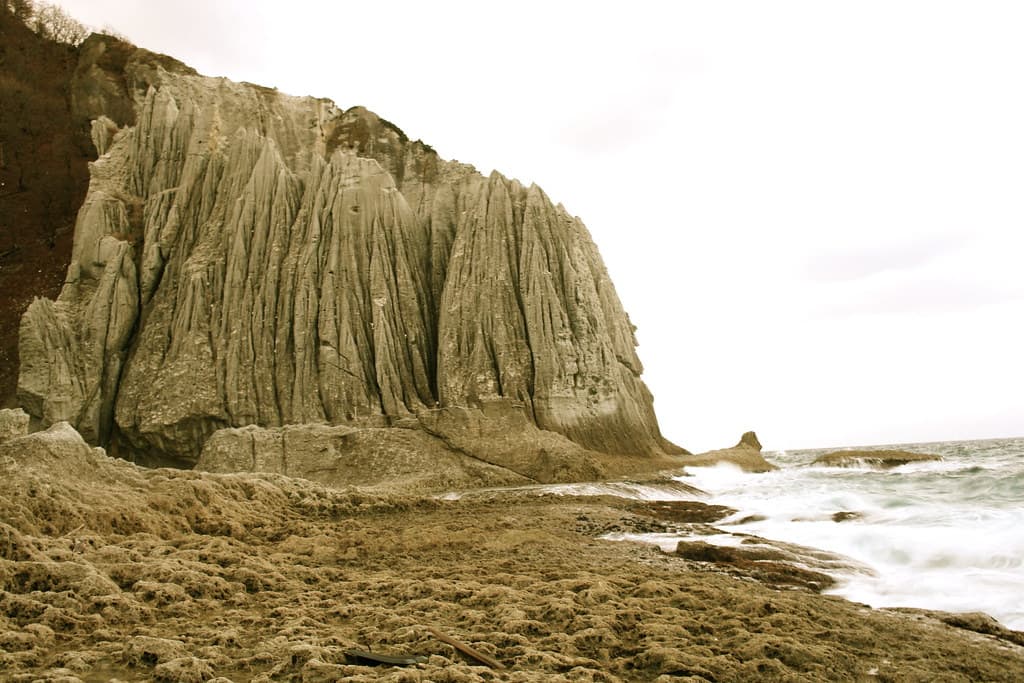
Counting the waves…
Counting the waves…

Sai Village Beach unfolds along a shoreline where the Tsugaru Strait narrows to meet Hokkaido's southern edge. The sand here carries the deep charcoal hue of volcanic origins, darker than any beach you've walked south of Tokyo, and it crunches underfoot with a satisfying coarseness. Fishing boats bob in the harbor adjacent to the swimming area, their nets drying on wooden racks that smell of brine and decades of use. You'll hear the low horn of ferries crossing to Hakodate, a sound that punctuates the rhythm of village life. The beach serves as Sai's main gathering point—families arrive with Coleman coolers and vinyl beach mats, grandmothers wade knee-deep in cotton pants, children hunt for sea glass along the tide line. Unlike Honshu's Pacific resorts, there are no beach clubs or umbrella rentals. You bring what you need, stake out a spot near the stone breakwater, and settle into the cadence of a place where tourism remains incidental rather than intentional. Year-round access means you can experience the beach through Aomori's dramatic seasonal shifts: summer's brief warmth draws swimmers, autumn winds carry the scent of drying kelp, winter transforms the sand into a study in monochrome grays. The village provides context—a post office, a handful of weathered storefronts, roads that dead-end at the water. This is functional coastline, beautiful because it remains utterly itself.
Places, rentals, tours and events within walking and driving distance of Sai Village Beach.
Photos
Sai Village Beach generally offers calm waters suitable for swimming during summer months, making it popular with families. However, conditions vary with weather and seasons. The Sea of Japan can experience strong currents and colder temperatures, even in summer. Always check local conditions before entering the water and supervise children closely. Facilities are limited, so exercise caution and swim only when conditions appear favorable. Winter swimming is not recommended due to very cold water temperatures and potential rough seas.
Late June through August offers the warmest weather for beach activities, with temperatures reaching 20-25°C (68-77°F). The beach is accessible year-round, but swimming is most comfortable during these summer months. Spring and autumn provide scenic coastal views with fewer crowds, ideal for walks and photography. Winter visits can be dramatic but expect cold winds and rough seas. Aomori's climate means even summer can be cooler than southern Japan beaches, so bring layers regardless of season.
Sai Village Beach is located in rural Aomori Prefecture, best accessed by car. From Aomori City, drive approximately 30-40 minutes along coastal roads. Public transportation options are limited in this rural area, making a rental car highly recommended. Parking is typically available near the beach, though facilities may be basic and unmarked. The village is small, so follow signs toward the coast. GPS coordinates or a Japanese navigation system will help ensure you find the correct beach access point.
Sai is a small coastal village with limited commercial facilities. You'll find a few local guesthouses and minshuku (family-run inns) offering traditional Japanese hospitality and home-cooked meals featuring fresh seafood. Small shops may sell basic supplies, but don't expect extensive amenities. For wider dining and shopping options, plan to visit nearby towns or Aomori City. It's advisable to bring supplies, especially if visiting for a day trip. The limited development preserves the beach's quiet, authentic character.
Sai Village Beach stands out as one of the few easily accessible beaches along Aomori's rugged coastline. Its setting offers an authentic, uncommercialised experience of coastal Japan, far from tourist crowds. The area provides genuine insight into traditional fishing village life in northern Japan. Visitors can enjoy relatively unspoiled natural beauty and potential interactions with local fishermen. The beach serves as a peaceful base for exploring Aomori's dramatic Sea of Japan coastline, which features fewer developed beaches than the Pacific side.