Counting the waves…
Counting the waves…
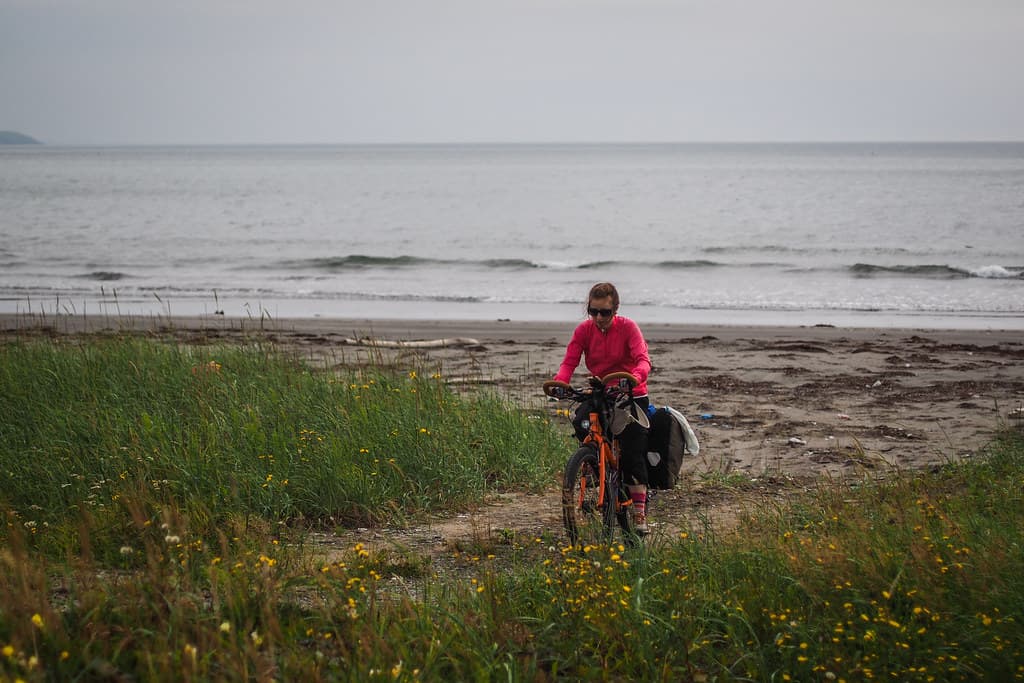
The drive east from Kushiro city takes you past dairy farms and reed beds, then suddenly the road dead-ends at a pocket of coast where lagoons pool behind narrow barrier beaches. Biwase Beach sits at this strange threshold: on one side, brackish lagoon water dimpled by wind; on the other, the cold Pacific rolling gray-green under the fog. The sand is dark volcanic grey, scattered with driftwood smoothed to bone-white, and in summer the only footprints belong to foxes and shorebirds. This is wetland coast, which means the landscape shape-shifts with the tide. Low water reveals mud flats slick with algae; high tide narrows the beach to a thin margin. The lagoon ecosystem behind you—part of the greater Kushiro Wetlands—hosts white-tailed eagles in winter and warblers in the warmer months. You won't find swimmers here; the Pacific current off Hokkaido's southeast coast is punishingly cold even in July. Instead, you'll walk, watch, and breathe air that tastes of salt and peat. Come in autumn when the fog thickens and the beach belongs entirely to you, or brave the February wind to spot sea eagles perched on ice-edged rocks. The emptiness is the point. Biwase rewards those who trade comfort for solitude, who understand that not every coast needs to be swimmable to matter.
Places, rentals, tours and events within walking and driving distance of Biwase Beach.
Photos
Biwase Beach is primarily known for its scenic lagoon coastline rather than swimming. The waters can be cold year-round due to Hokkaido's northern location, and ocean conditions in this area can be unpredictable with strong currents. The beach lacks lifeguard services and designated swimming areas. Most visitors come for walking, photography, and observing the unique lagoon landscape rather than swimming. If you plan to enter the water, exercise extreme caution, stay close to shore, and check local conditions first.
While Biwase Beach can be visited year-round, summer months (June-August) offer the mildest weather with temperatures around 15-20°C, ideal for beach walks and photography. Autumn brings beautiful coastal colours, while winter transforms the area with ice formations and potential views of drift ice. Spring offers fewer crowds and migrating birds. Kushiro experiences frequent fog, especially in summer, which creates atmospheric conditions but may limit visibility. Each season offers distinct scenery, so choose based on your preferred experience and cold tolerance.
Biwase Beach is located approximately 20-30 kilometers east of central Kushiro. The most practical way to reach it is by rental car, as public transportation options are limited in this rural coastal area. From Kushiro Station, drive east along Route 44 toward the coast. Parking availability is generally informal along the roadside near beach access points, as this is a relatively undeveloped area. Navigation apps may have limited information, so having a detailed map or GPS coordinates is recommended.
Biwase Beach is a remote, undeveloped location with no facilities, restaurants, or accommodations directly at the beach. Visitors should bring their own food, water, and supplies. The nearest services are in Kushiro city, about 20-30 minutes away by car, which offers various hotels, guesthouses, and restaurants featuring Hokkaido seafood. Plan ahead by packing essentials and filling your gas tank in Kushiro. The isolation is part of the beach's hidden charm, offering peaceful natural scenery away from tourist infrastructure.
Biwase Beach features a distinctive lagoon-style coastline where freshwater and saltwater systems meet, creating unique ecological conditions. This geography results in calm, sheltered waters separated from the open Pacific Ocean, producing scenic views different from typical ocean beaches. The area's relatively untouched nature makes it ideal for observing coastal wildlife and vegetation. The lagoon setting creates photogenic reflections and peaceful atmospheres, particularly during sunrise and sunset. This hidden location offers an authentic, undeveloped coastal experience rare in more tourist-focused areas.