Counting the waves…
Counting the waves…
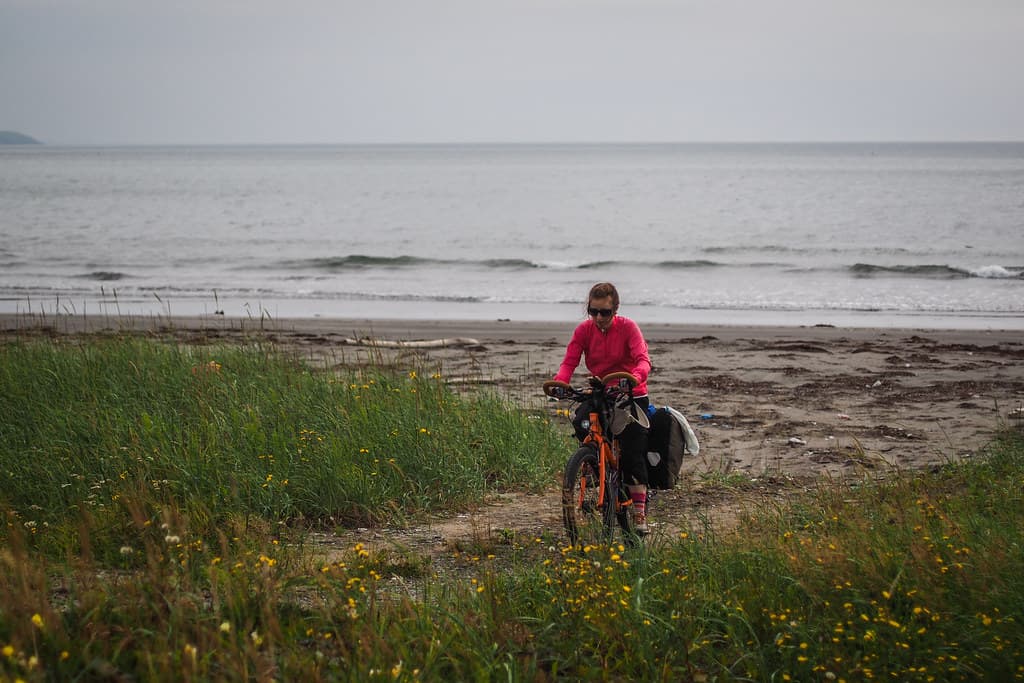
Hichirippu Beach curves along Kushiro's southeastern edge, where the Pacific chews at a landscape shaped more by marsh than mountain. The sand here holds a gray-brown hue, flecked with pumice and shell fragments, while kelp ribbons dry in twisted heaps along the tideline. Behind you, grasses bend in waves that mirror the ocean's rhythm, and the horizon stretches unbroken except for the occasional fishing vessel crawling toward Kushiro's harbor. The shoreline reveals its character slowly. Walk north and you'll find basalt boulders smoothed by centuries of surf, their surfaces slick with algae at low tide. Driftwood accumulates in sculptural piles—entire tree trunks bleached silver, roots still attached like frozen tentacles. Fog rolls in without warning, erasing the boundary between sea and sky, then lifts just as suddenly to reveal the Kushiro Wetland's vast reed beds stretching inland. You won't find amenities here, which is precisely the point. The beach belongs to sanderlings and black-tailed gulls, to the occasional red fox trotting the high-tide line at dawn. In winter, sea ice chunks bob offshore when polar currents push south. Summer brings dense coastal fog and temperatures that rarely crack seventy degrees. Pack layers, bring your own water, and expect to have the entire strand to yourself—a rarity anywhere, let alone along Japan's increasingly developed coastline.
Places, rentals, tours and events within walking and driving distance of Hichirippu Beach.
Photos
Hichirippu Beach is generally not recommended for swimming due to cold water temperatures year-round and strong currents typical of Hokkaido's Pacific coastline. The beach lacks lifeguards and designated swimming areas. Most visitors come for scenic walks, photography, and beachcombing rather than water activities. If you do enter the water, exercise extreme caution and stay close to shore. The beach's remote, undisturbed nature means emergency services are not immediately accessible. It's best appreciated as a contemplative, natural landscape rather than a swimming destination.
Hichirippu Beach can be visited year-round, with each season offering distinct experiences. Summer (June-August) provides the mildest weather with temperatures around 15-20°C, ideal for beachcombing and walks. Autumn brings dramatic skies and fewer visitors. Winter transforms the beach with ice formations and snow-covered shores, though temperatures drop below freezing. Spring offers opportunities to see migratory birds. Early morning visits are particularly rewarding for photographers seeking soft light and solitude. Weather can change quickly in coastal Hokkaido, so dress in layers regardless of season.
Hichirippu Beach is located about 25 kilometers east of Kushiro city center. A rental car is strongly recommended as public transportation options are very limited. From Kushiro, take Route 44 eastward toward the coast. Look for local signage directing you to the beach area. Limited informal parking is available near the beach access points, typically along roadside areas. The drive takes approximately 30-40 minutes from central Kushiro. Given the beach's hidden, undeveloped nature, facilities are minimal and the area is not heavily marked, so GPS navigation is advisable.
Hichirippu Beach is quite remote with virtually no commercial facilities directly at the site. Visitors should plan to bring their own food and drinks, as restaurants and convenience stores are scarce in the immediate area. Your best options for dining and shopping are in Kushiro city, about 30 minutes away by car. Accommodation is also limited nearby; most travelers stay in Kushiro, which offers hotels, guesthouses, and ryokan. Pack out all trash, as there are no waste facilities at this undeveloped beach location.
Hichirippu Beach stands out for its remarkably undisturbed, wild character—there's no development, signage, or tourist infrastructure that marks most coastal destinations. The beach offers raw Pacific scenery with dramatic rock formations, driftwood-scattered shores, and expansive horizons largely unchanged by human activity. Its relative obscurity means you'll often have long stretches entirely to yourself, a rarity in accessible Japan. The coastline here showcases eastern Hokkaido's rugged natural beauty without crowds or commercialization, making it ideal for contemplative nature experiences and photography seeking authentic wilderness settings.