Counting the wavesβ¦
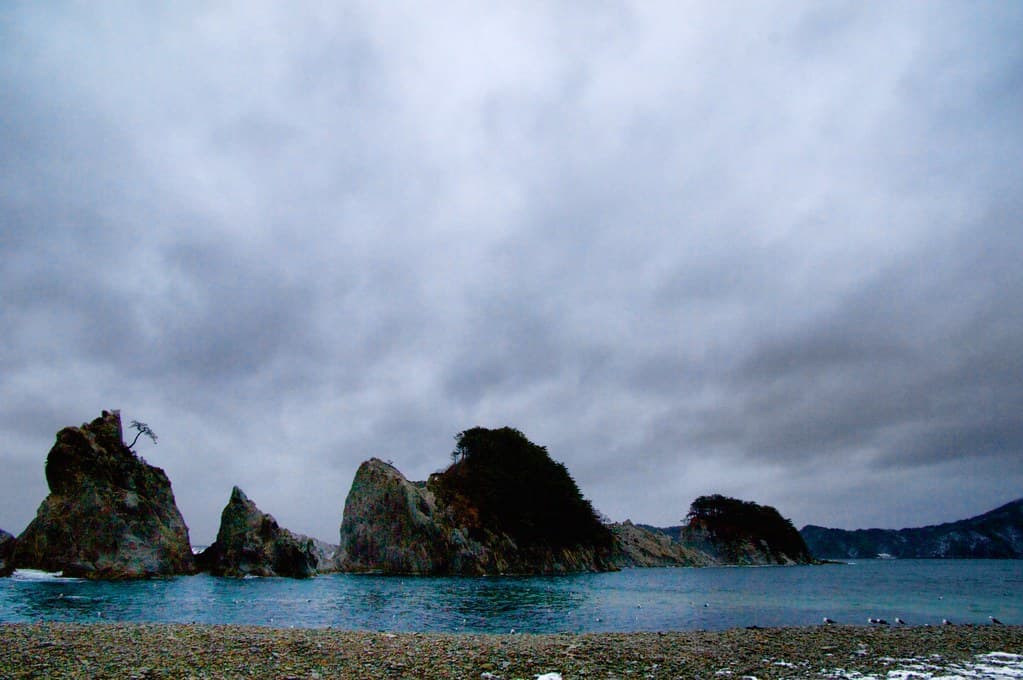
The beach is all stoneβno sand survives the Pacific's sorting here. You'll walk on ankle-turning cobbles worn smooth by centuries of wave action, in shades of slate gray, rust orange, and mottled green. Each incoming wave sucks at the pebbles with a rattling hiss, and your footsteps make no sound against the larger roar of water meeting rock. Driftwood logs, bleached bone-white, jam into crevices between boulders at the high-tide line. Above you, the village perches on the hillside at a height that makes the engineering clear: they moved everything up after the tsunami. A stone marker farther along the coast reads "Remember the calamity of tsunamis. Do not build homes below this point." The beach itself is beautiful in that stark, North Pacific wayβall function, no softness, with waves that come straight from Hokkaido without interruption. You'll see almost no one else, just occasional fishermen checking nets and the odd photographer documenting the coast's raw geometry. The water is shockingly cold even in August, fed by the Oyashio Current that runs down from the Arctic. Kelp forests wave in the surge just offshore, and the whole coastline smells of iodine and salt spray. You'll leave with damp clothes and pebbles in your shoes, ears still ringing with that particular music stones make when the sea rearranges them.
Places, rentals, tours and events within walking and driving distance of Aneyoshi Beach.
Photos
Aneyoshi Beach is a pebble beach in a remote coastal village setting, making it less ideal for traditional swimming compared to sandy beaches. The rocky shoreline and potentially stronger currents typical of exposed coastlines require caution. Visitors should be experienced swimmers if entering the water and always assess conditions carefully. There are unlikely to be lifeguards or safety facilities given the remote location. The beach is better suited for scenic walks, photography, and enjoying the natural coastal environment rather than extended swimming sessions, especially for families with young children.
Aneyoshi Beach naturally experiences fewer crowds year-round due to its remote location and pebble composition, which attracts fewer swimmers than sandy beaches. Visiting during weekdays or outside the peak summer months (July-August) virtually guarantees solitude. Spring (April-May) and autumn (September-October) offer comfortable weather for exploring with minimal visitors. The beach's appeal lies in its untouched, peaceful atmosphere, so even during summer you're unlikely to encounter large crowds. Early mornings and late afternoons provide the most serene experiences and best lighting for photography of the scenic coastal landscape.
Aneyoshi Beach is located in a remote coastal village, making access more challenging than urban beaches. Having your own vehicle is strongly recommended, as public transportation to this area is limited or non-existent. From Miyako city center, drive north along coastal roads, following signs toward Aneyoshi village. The journey may take 30-45 minutes or more depending on exact location and road conditions. Roads can be narrow and winding, typical of rural coastal areas. Check current road conditions and have a reliable GPS or map, as signage may be minimal in remote areas.
Aneyoshi is a remote coastal village with very limited dining and accommodation options directly in the area. You may find small local shops or occasional family-run eateries, but services are minimal. Most visitors base themselves in Miyako city, which offers proper restaurants and hotels, and make day trips to Aneyoshi Beach. If seeking accommodation closer to the beach, look for minshuku (guesthouses) in the general area, though availability is limited. Bringing your own food and drinks is advisable when visiting, as you cannot rely on finding services readily available at or near this remote beach.
Aneyoshi Beach offers an authentic, unspoiled coastal experience in a traditional fishing village setting that contrasts sharply with more accessible beaches. The remote location means pristine natural beauty, dramatic coastal scenery, and genuine solitude for those seeking escape from tourist areas. The village itself provides insights into rural Tohoku coastal life and has historical significance related to tsunami preparedness. The pebble beach and rugged surroundings appeal to photographers and nature lovers. Visitors interested in authentic Japanese coastal culture and willing to venture off the beaten path will find Aneyoshi Beach uniquely rewarding.