Counting the waves…
Counting the waves…
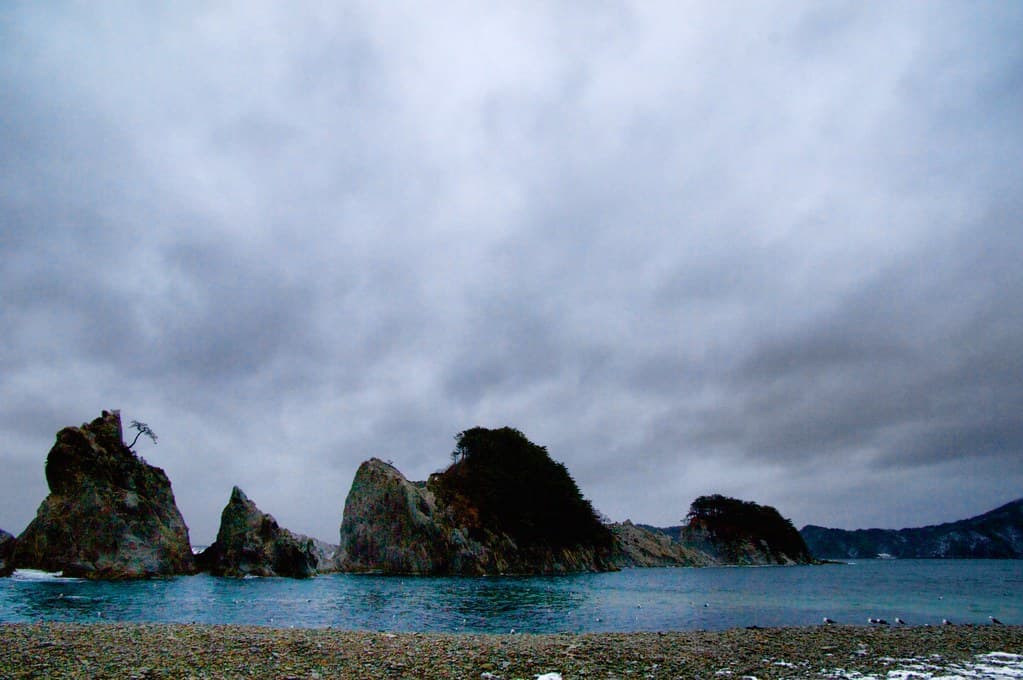
Taro rebuilt itself around the wall after 2011, and the beach exists in its shadow—literally, until noon when the sun climbs high enough to clear the concrete. But the sand itself extends magnificent and uncommitted, wide enough that even peak summer weekends never feel crowded. Beach grass colonizes the upper reaches in defiant tufts, their roots binding dunes that weren't here a decade ago. The surf breaks harder here than at Shirahama, waves arriving with actual shoulders during autumn swells. Bodyboarders work the shore break while children dig elaborate canal systems that fill and drain with each wave cycle. The sand's texture changes as you walk north: packed and grey-brown near the access point, lighter and softer where fewer feet compress it, almost golden where the river mouth leaks freshwater across the flats. Fishing boats transit the northern horizon, small white shapes sliding behind the offshore breakwater. Their diesel rumble carries across the water on still mornings. By evening, the beach empties except for runners—Taro residents who've made the sand their training ground, their footprints writing temporary cursive across the wet margin where waves have just retreated.
Places, rentals, tours and events within walking and driving distance of Taro Beach.
Photos
Taro Beach is a large sandy beach that can be suitable for families, though visitors should always exercise caution. The area was significantly impacted by the 2011 tsunami, and while rebuilt, understanding local safety measures and tsunami warning systems is important. During calm summer weather, the beach can be appropriate for swimming, but always check current conditions and respect posted warnings. Lifeguard availability may vary by season. The sandy shoreline is easier for children than rocky beaches, but supervision is essential. Be aware of changing conditions and familiarize yourself with evacuation routes as a precaution.
Taro Beach is best visited during summer months, particularly July and August, when weather is warmest and the large sandy beach is ideal for traditional beach activities. The expansive sand and scenic setting are beautiful during these peak months. Spring and autumn offer pleasant conditions for beach walks and enjoying coastal scenery without crowds, though water may be too cold for swimming. The beach can be visited year-round for its historical significance and scenic beauty, but winter visits should focus on sightseeing rather than beach recreation due to cold temperatures and rough seas.
Taro Beach is located in the Taro district, north of central Miyako. The most convenient access is by car, taking approximately 20-30 minutes from Miyako city center via coastal roads. Follow Route 45 northward toward Taro. Public bus services may connect Miyako and Taro, though schedules can be limited, especially outside peak season. The Sanriku Railway also serves Taro Station, from which the beach is accessible by local bus or taxi. Having a car provides the greatest flexibility for exploring Taro Beach and the surrounding area, including the tsunami memorial sites.
Taro district has limited dining options compared to central Miyako, though you may find local restaurants serving seafood and Japanese cuisine, particularly during summer. Small shops and seasonal food stands may operate near the beach in peak season. For wider restaurant choices and more accommodation options, Miyako city center is the better base, offering hotels, ryokan, and diverse dining. Some visitors may find minshuku or small guesthouses in or near Taro. The area is rebuilding following the 2011 tsunami, so facilities continue to develop. Advance planning for meals and lodging is recommended.
Taro Beach holds profound historical significance as a site deeply affected by the 2011 Great East Japan Earthquake and tsunami. The area features tsunami memorial sites and educational facilities that provide important context about the disaster and coastal resilience. Visiting Taro Beach offers opportunities to learn about tsunami preparedness and witness coastal community recovery. The large sandy beach itself provides beautiful scenery and recreational space, but many visitors also come to pay respects and understand this important chapter of recent Japanese history. This combination of natural beauty and historical significance makes Taro Beach uniquely meaningful among Miyako's beaches.