Counting the wavesβ¦

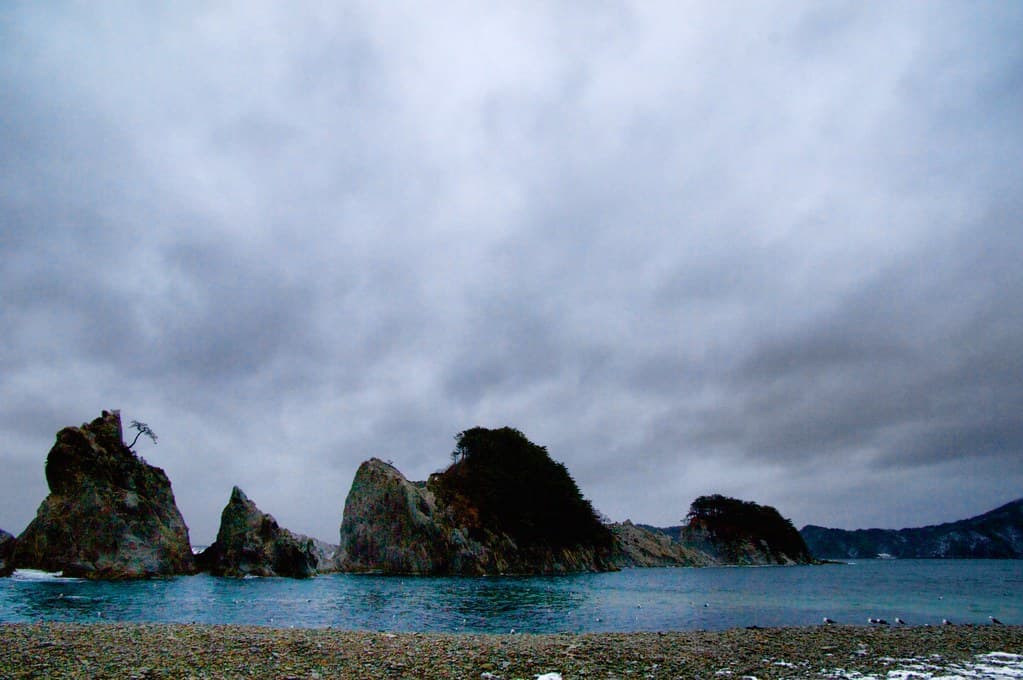
The final switchback delivers you onto a narrow shingle beach where eight or nine fishing boats rest on wooden rollers above the tide line. This is a working cove first, a visitor destination secondβthe beach scattered with plastic fish crates, cork floats strung on rope, bamboo poles leaning against the cliff face. The smell of old bait mixes with pine sap and seaweed, a combination that becomes less offensive and more informative the longer you stay. The cove's mouth opens northeast, creating protection from the prevailing winds that make most of Miyako's coast challenging during spring and autumn. Water inside the bay sits noticeably calmer than the ocean beyond the headlands, its surface dimpled by small fish feeding on plankton that concentrates in the protected water. The surrounding cliffs rise thirty meters on three sides, their faces supporting clutches of hardy pines and the occasional bamboo grove that sounds like rain when wind passes through. A concrete pier extends fifteen meters into the cove's center, just long enough for the fishing boats to tie up during their midday returns. The fishermen who work from here maintain a schedule you could set your watch byβout before first light, back by two in the afternoon, gear cleaned and stored by three. They're not unfriendly, just busy, and their presence reminds you that this place exists for purposes beyond recreation. A small Shinto shrine occupies a carved niche in the northern cliff, its red paint faded to pink by salt air and time.
Places, rentals, tours and events within walking and driving distance of Taro Hidden Cove.
Photos
Swimming conditions at hidden coves along the Iwate coast can vary significantly with tides and weather. The sheltered nature of this cove generally provides calmer waters than open beaches, but currents can still be present. There are typically no lifeguards at secluded locations like this, so swim at your own risk and never alone. Check local weather forecasts before visiting, avoid swimming during rough seas, and be aware that water temperatures in this region remain cool even in summer.
The best time to visit is during weekdays or off-peak hours when crowds are minimal, which aligns with this cove's quiet character. Summer months from July to September offer the warmest weather and calmer seas, though water remains cool. Spring and autumn provide beautiful scenery with fewer visitors. Avoid winter months when access may be difficult and seas are rough. Early morning visits often guarantee the most solitude and best light for photography of the coastal scenery.
Taro Hidden Cove is located in the Miyako area of Iwate Prefecture. The nearest major station is Miyako Station on the Sanriku Railway. From there, local buses or a rental car can take you toward the Taro area. As a hidden cove, specific access may require local inquiry or navigation apps. The journey from Tokyo takes approximately 5-6 hours by train. Having your own transportation is recommended for accessing more secluded coastal spots in this region.
Accommodation and dining options are primarily found in Miyako city center, about 15-20 minutes away by car. Miyako offers business hotels, traditional ryokan inns, and minshuku guesthouses with local seafood meals. The area is known for fresh sea urchin, salmon, and other coastal delicacies. Small restaurants and convenience stores are available in Taro village itself. For the most options, consider staying in central Miyako and making day trips to hidden beaches along the coast.
Taro Hidden Cove offers exceptional tranquility and seclusion compared to more accessible beaches in the Miyako region. Its hidden bay configuration provides natural shelter and a sense of discovery that appeals to travelers seeking quiet coastal experiences. The cove's secluded nature means you're likely to have the beach largely to yourself, especially during off-peak times. This location allows visitors to experience the rugged, authentic character of the Sanriku coastline without the development found at more popular beaches.