Counting the waves…
Counting the waves…

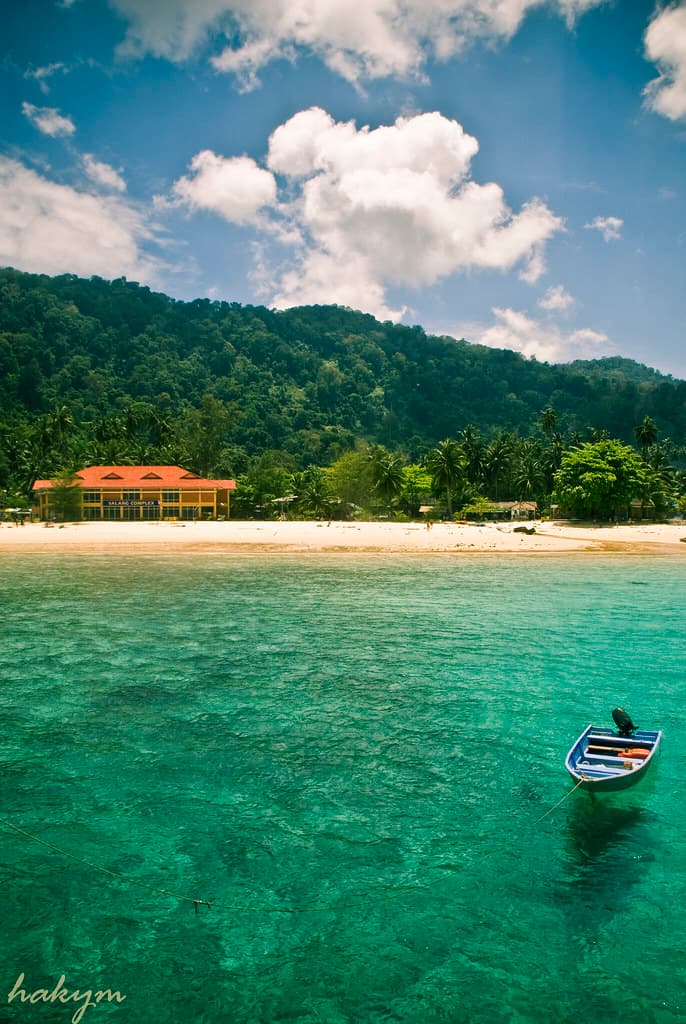
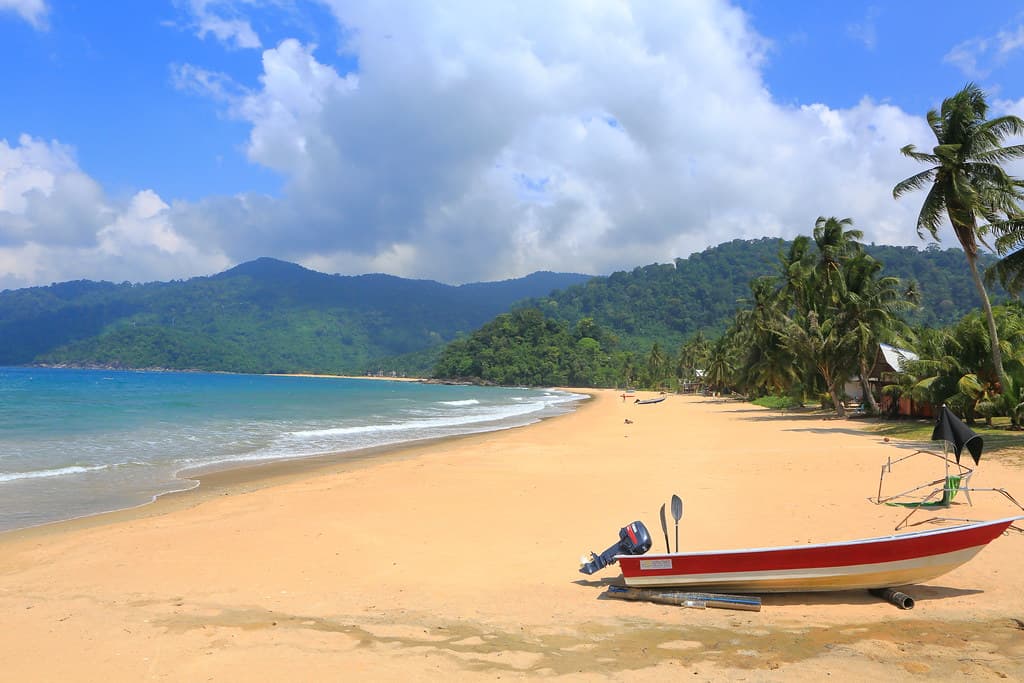
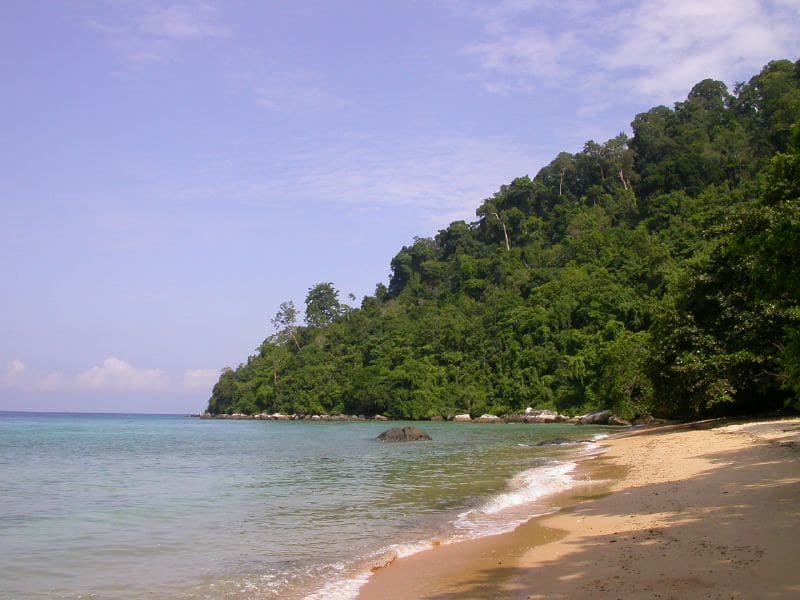
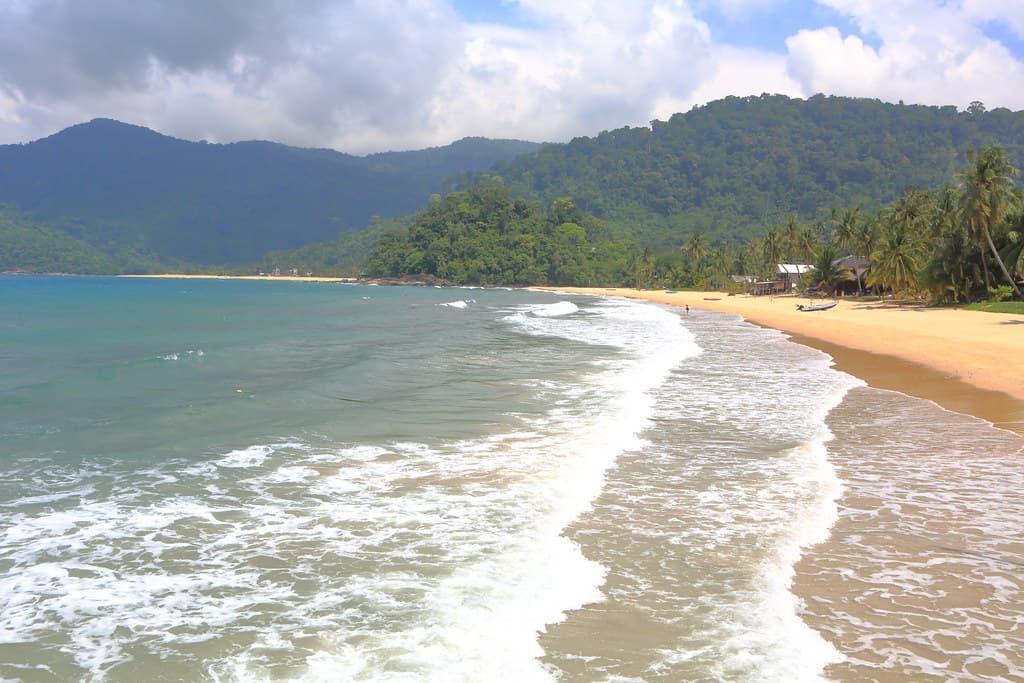
You'll know you've arrived when the dirt track spills out of the rainforest canopy and the beach spreads before you like a blank page. Juara sits on Tioman's less-trodden eastern flank, separated from the island's busier dive villages by a mountain ridge thick with hornbills and macaques. The sand here is finer than anything on the west coast—it squeaks beneath your flip-flops and clings to wet ankles in a way that feels more Maldivian than Malaysian. Mornings begin with the sun lifting straight out of the South China Sea, casting the offshore islands in silhouette while fishing boats motor past the break. The water shifts from jade to sapphire depending on cloud cover, and the beach shelves gently enough that you can wade out thirty meters before the waves reach your shoulders. A handful of modest guesthouses and a turtle conservation project anchor the southern end, but development stops there—no jet skis, no banana boats, just the occasional backpacker doing sun salutations on the sand. By mid-afternoon, when the heat presses down and even the monitor lizards retreat to shade, the village's handful of warungs become the center of gravity. You'll eat nasi lemak at plastic tables under palms, feet still sandy, watching the tide pull back to reveal tide pools stippled with hermit crabs. This is Tioman as it was meant to be experienced: unhurried, unpolished, and utterly worth the drive over the hill.
Places, rentals, tours and events within walking and driving distance of Juara Beach.
Photos
Juara Beach is generally safe for swimming, with calm, clear waters most of the year. The beach faces the South China Sea on Tioman's east coast, so conditions can be rougher during the northeast monsoon season (November to February) with stronger waves and currents. During dry months (March to October), the sea is typically tranquil and ideal for swimming. Always check local conditions before entering the water, as there are no lifeguards on duty. The sandy bottom slopes gradually, making it suitable for families with children during calm periods.
The best time to visit Juara Beach is between March and October during the dry season. April to September offers the most consistent weather with calm seas, excellent visibility for snorkeling, and minimal rainfall. Avoid the monsoon season (November to February) when many resorts close, boat services are limited or suspended, and rough seas make swimming unsafe. July and August are peak months with more visitors, while shoulder months like March, April, and October offer pleasant weather with fewer crowds and better accommodation rates.
Juara Beach is on Tioman's less-accessible east coast. From the main village (Tekek) or ferry arrival points, you can hire a 4WD taxi (around 40-60 MYR) for the bumpy 30-45 minute jungle crossing, or trek the challenging 7km jungle trail (2-3 hours). During calm seas, boat transfers from Tekek are sometimes available. Most visitors arrive via ferry from Mersing or Tanjung Gemok on the mainland to Tekek, then arrange onward transport. There are no roads connecting to the mainland, and parking isn't applicable as vehicles can't reach the island.
Juara Beach offers a range of budget to mid-range beachfront accommodation, from basic backpacker chalets to comfortable beach resorts like Juara Mutiara Resort and Bushman. Most lodging includes simple restaurants serving Malay cuisine, fresh seafood, and Western basics. There are several independent restaurants and beach cafes along the shore. Facilities are modest and laid-back compared to Tioman's west coast. Limited electricity (often generator-powered with set hours) and no ATMs mean bringing sufficient cash is essential. Most resorts close during monsoon season (November-February).
Juara Beach sits on Tioman's east coast, separated from the main west coast villages by a mountainous jungle barrier. This isolation made development more difficult and expensive, as supplies and materials must cross the challenging terrain. The lack of direct ferry access and reliable road infrastructure limited commercial growth. Many visitors actually prefer Juara for precisely this reason—it has retained a quieter, more authentic atmosphere with fewer crowds, simpler accommodations, and a relaxed backpacker vibe compared to busier west coast beaches like Salang or ABC.