Counting the waves…
Counting the waves…

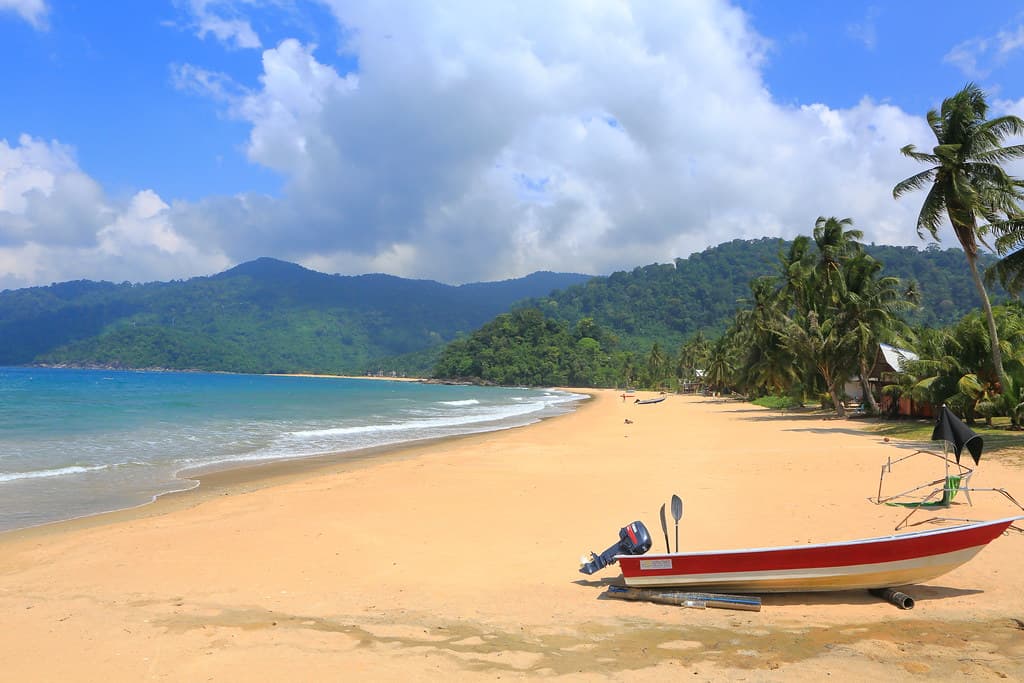
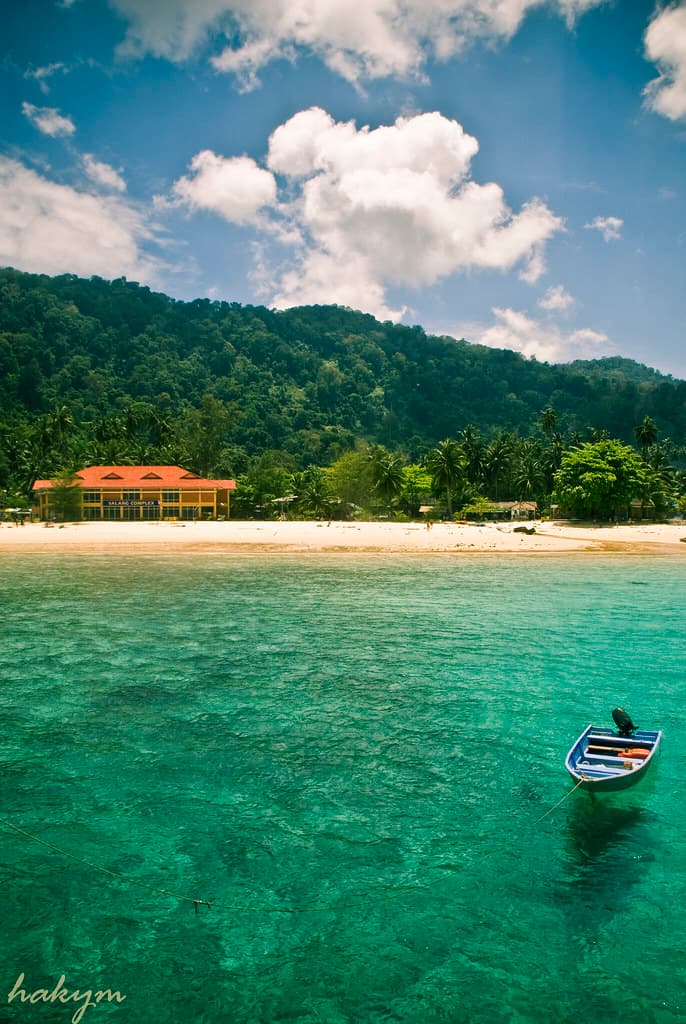
The trail from Mukut village spits you onto a beach where the jungle doesn't just frame the sand—it claims it. Coconut husks bleach in the sun beside driftwood logs the size of canoes, and the tide leaves lace patterns of foam across sand so fine it squeaks when you walk. Panuba sits on Tioman's southwestern corner, a forty-minute boat ride from the main jetty at Tekek, far enough that day-trippers rarely make the journey. The result is a cove that feels suspended in an older version of island time. Wade in and the seabed reveals itself in stages: ribbed sand, then scattered coral heads, then the sudden cobalt void where the reef wall plunges. Blacktip reef sharks patrol the shallows at dawn. Parrotfish crunch coral with sounds that carry underwater like distant construction work. You'll share the water with more Moorish idols than humans. The silence here has weight. No jet skis, no beach bars blaring reggae, no hawkers selling sarongs. Just the metronome of small waves and the occasional crack of a falling branch. A single rustic guesthouse backs the beach, its veranda strung with hammocks that sway even when there's no breeze. This is what Tioman's famous beaches were before the resorts arrived—raw, unhurried, and still negotiating terms with the forest.
Places, rentals, tours and events within walking and driving distance of Panuba Beach.
Photos
Panuba Beach generally offers calm, shallow waters suitable for swimming and snorkeling, particularly during the dry season (March to October). The sheltered cove provides natural protection from strong currents. However, always assess conditions upon arrival, as weather patterns can change. The beach's rocky areas and coral formations make it excellent for snorkeling, but water shoes are recommended to protect against sharp surfaces. Monitor children closely, and avoid swimming during monsoon season (November to February) when seas become rough and visibility decreases significantly.
The optimal time to visit Panuba Beach is between March and October, during Malaysia's dry season when seas are calm and skies are clear. April to September offers the most consistent weather with minimal rainfall. Avoid the northeast monsoon season (November to February) when heavy rains, rough seas, and reduced ferry services make access difficult. Weekdays and non-holiday periods ensure a quieter experience at this already secluded spot. Early mornings provide the best light for photography and the calmest waters for snorkeling before day-trippers arrive.
Reaching Panuba Beach requires reaching Tioman Island first, typically via ferry from Mersing or Tanjung Gemok on mainland Malaysia (services operate March-October). From popular Tioman villages like Tekek or Salang, you'll need to arrange boat transfer with local operators, as Panuba Beach has no road access. Some visitors trek through jungle trails from nearby beaches, though this requires a guide and proper preparation. No parking exists at Panuba itself. Alternatively, some resorts arrange private boat transfers for guests and day visitors.
Panuba Beach is very undeveloped with minimal amenities, reflecting its hidden, secluded nature. Accommodation options are extremely limited—check if any small guesthouses or homestays operate seasonally. Don't expect restaurants; bring your own food, water, and supplies. Basic facilities are scarce, so come prepared with essentials including sun protection and snorkeling gear. The nearest villages with shops, restaurants, and established resorts are accessible by boat. This lack of development is precisely what attracts visitors seeking an off-the-beaten-path Tioman experience away from busier beaches.
Panuba Beach stands out as one of Tioman's most secluded and least developed coves, offering an authentic escape from the island's busier stretches like ABC Beach or Salang. Its relative inaccessibility—requiring boat transfer or jungle trekking—keeps visitor numbers low, creating an intimate, pristine atmosphere. The beach is particularly valued by snorkelers and divers for its healthy coral formations and marine life close to shore. Unlike commercialized Tioman beaches, Panuba retains its raw, natural character with minimal infrastructure, appealing to adventurous travelers seeking tranquility and unspoiled coastal beauty.