Counting the waves…
Counting the waves…

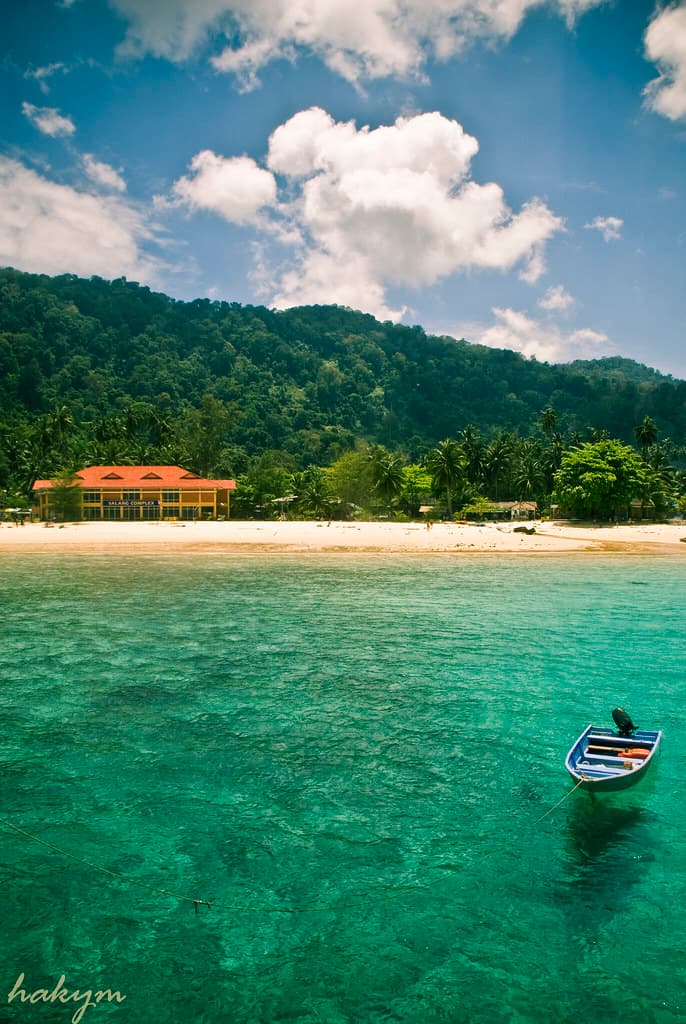
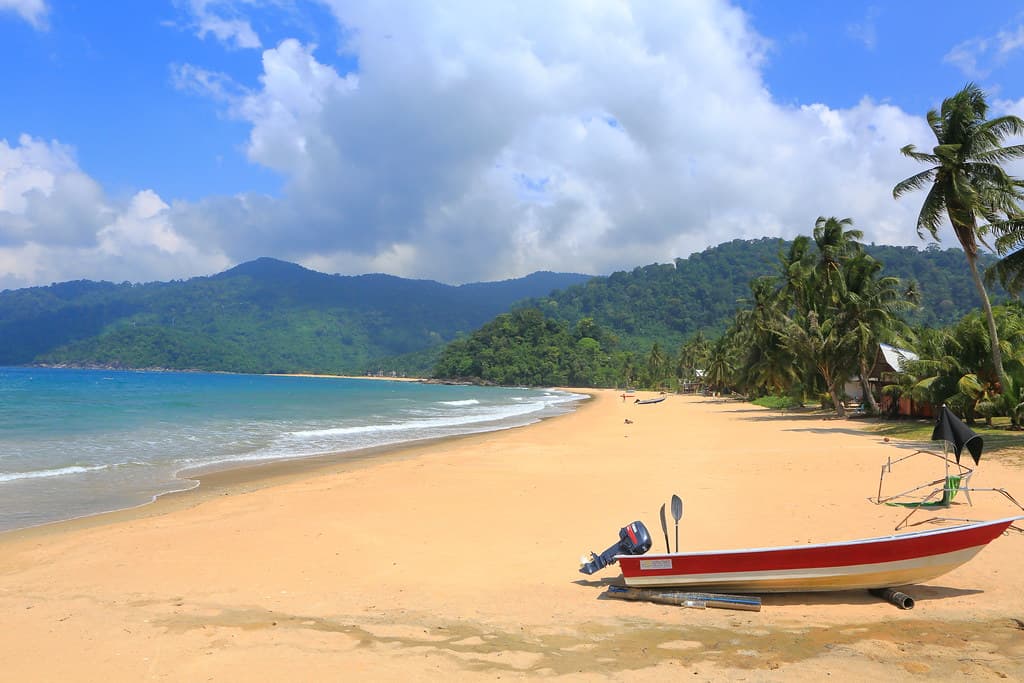
Paya Beach occupies the northeastern shoulder of Pulau Tioman, a twenty-minute boat ride from the island's main jetty at Tekek. Unlike the built-up villages farther south, this stretch remains deliberately low-key—a handful of modest resorts tucked between the treeline and a gently shelving shore. The water here stays calm even when swells rake the western coast, making it ideal for families who want their children to paddle without drama. Snorkeling doesn't require a boat excursion. Wade out thirty meters and you'll find table corals the size of dining sets, their surfaces stippled with purple and yellow. Blacktip reef sharks cruise the shallows in late afternoon, their dorsal fins cutting neat lines through water so still you can count the pebbles below. Between swims, monitor lizards—some as long as your arm—patrol the high-tide mark, unbothered by beach chairs. The resorts here serve grilled stingray and nasi lemak at beachfront tables where the only soundtrack is the slap of water against wooden pilings. There's no nightlife, no jet skis, no hawkers. Just the kind of unhurried routine that makes you forget which day of the week it is: snorkel at dawn, nap under a palm, repeat until the ferry comes.
Places, rentals, tours and events within walking and driving distance of Paya Beach.
Photos
Paya Beach is generally safe for swimming, with calm, shallow waters particularly suitable for families with children. The bay's protected location provides sheltered conditions most of the year. Snorkeling is excellent here, with coral reefs close to shore and visibility typically good during calm weather. However, always check current conditions with your resort, avoid swimming during monsoon season (November-February), and wear water shoes as some areas have coral and rocks. Life-saving equipment availability varies by resort.
The best time to visit Paya Beach is March through October, during the dry season when seas are calm and weather is sunny. Peak season runs from June to August, offering the most reliable conditions but larger crowds. April-May and September-October provide excellent weather with fewer visitors. Avoid November through February when the northeast monsoon brings heavy rain, rough seas, and many resorts close completely. Water visibility for snorkeling is best during the drier months.
Paya Beach is accessible only by boat from mainland Malaysia. Most visitors take ferries from Mersing (Johor) or Tanjung Gemok (Pahang), with journey times around 1.5-2.5 hours depending on departure point. Many Paya Beach resorts arrange boat transfers from these jetties—booking in advance is recommended. There's no road access on Tioman, and no parking at the beach itself. Some visitors arrive via speedboat or catamaran services. During monsoon season (November-February), boat services are suspended.
Paya Beach is primarily a resort beach with several accommodation options ranging from budget chalets to mid-range resorts, most offering restaurant facilities serving Malaysian and international cuisine. Paya Beach Spa & Dive Resort is the main establishment. Dining is typically at your resort's restaurant, as standalone restaurants are limited. Basic amenities like dive shops and small provision stores are available. For more dining variety, you'd need to travel by boat to other parts of Tioman. Booking accommodation in advance is essential, especially during peak season.
Paya Beach is renowned for exceptional snorkeling, with house reefs accessible directly from shore. Snorkelers regularly spot blacktip reef sharks, sea turtles, clownfish, parrotfish, and giant groupers among vibrant coral gardens. The Marine Park status protects the reef ecosystem. Baby blacktip sharks are commonly seen in shallow waters near the beach, particularly in the morning. Coral diversity includes both hard and soft corals. The best snorkeling spots are often just meters from the beach, though guided snorkeling trips to nearby sites offer even more spectacular encounters.