Counting the wavesβ¦

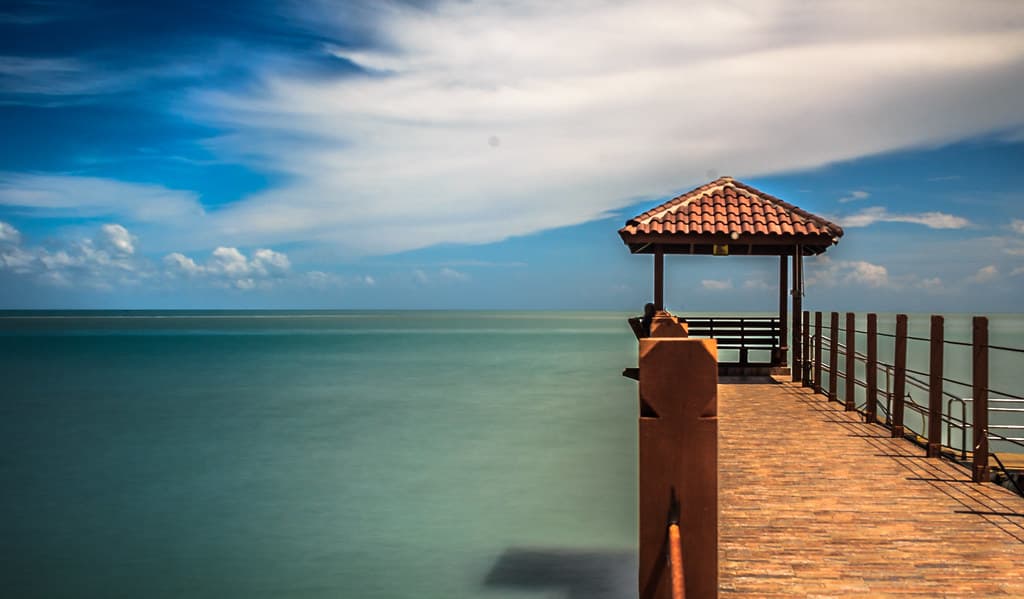
The shoreline at Pantai Esen stretches in a narrow band of sand the color of wet concrete, bordered by casuarina trees that lean landward from years of coastal wind. Visibility in the water rarely extends beyond your knees; the Strait of Malacca carries sediment from rivers upstream, turning the shallows a milky gray-green. Fishing stakes jut from the water at low tide, and you'll often see villagers wading out to check their nets while seabirds circle overhead. This is the side of Penang that doesn't make its way into glossy brochures. Wooden stilt houses line the inland edge, their zinc roofs catching the afternoon sun. The beach serves as a practical spaceβa place to haul boats ashore, to dry squid on bamboo racks, to let children splash in the shallows after school. A handful of food stalls appear in the late afternoon, serving fried banana fritters and sugarcane juice to motorcycle riders pausing on their way home. You'll want to visit during golden hour, when the low sun softens the industrial silhouettes across the strait and casts long shadows across the sand. The light transforms the humble shoreline into something worth photographing, even if you wouldn't linger to swim. It's a five-minute stop that reminds you not every beach needs to be swimmable to tell a story.

Places, rentals, tours and events within walking and driving distance of Pantai Esen.
Photos
Pantai Esen is primarily known as a photo stop rather than a swimming destination. The beach has low visibility and limited information about water conditions, lifeguard presence, or safety infrastructure. If you're looking for a swimming beach in Penang, more established beaches like Batu Ferringhi or Tanjung Bungah offer better facilities and monitored conditions. If visiting Pantai Esen, exercise caution near the water and prioritize it as a scenic viewing point rather than a swimming location.
Like most of Penang, Pantai Esen is best visited during the drier months between December and February, when rainfall is lower and skies are clearer for photography. The beach serves primarily as a quick photo stop, so visiting during early morning or late afternoon offers the best natural lighting and cooler temperatures. Avoid the monsoon season from August to October when heavy rains are common. Weekdays typically mean fewer visitors at this hidden beach location.
Pantai Esen is located in Permatang Damar Laut on Penang Island. As a low-visibility, hidden beach, it's best reached by private vehicle or taxi rather than public transport. Specific parking details are limited due to its lesser-known status. When visiting hidden beaches in Penang, look for roadside parking areas near the coast. Consider using GPS navigation and asking locals for directions, as signage may be minimal compared to major tourist beaches.
As a hidden, low-profile beach, Pantai Esen likely has minimal to no facilities directly on-site. Don't expect developed amenities like restrooms, food stalls, or nearby lodging that you'd find at popular tourist beaches. It's advisable to bring your own water and snacks. For dining and accommodation, you'll need to head to more developed areas of Penang such as Georgetown or Batu Ferringhi, which offer full ranges of restaurants, cafes, and hotels.
Pantai Esen has low visibility among tourists, meaning it doesn't appear prominently in mainstream travel guides or itineraries. Unlike Penang's popular beaches, it remains relatively undiscovered and undeveloped, making it ideal for travellers seeking off-the-beaten-path photo opportunities away from crowds. The 'hidden' designation suggests it offers a more authentic, quiet coastal experience. However, this also means fewer facilities and less information available, so it's best suited for brief photo stops rather than extended beach days.