Counting the waves…
Counting the waves…
A refined fusion of water purity, environmental stability, and communal vibrancy for Gertak Sanggul Beach.
View MethodologyAnalyzed via live sensors and environmental data.
Wave height, wind, and atmospheric stability.
Live footfall and crowd balance metrics.
Community reviews and curated sentiment.
“You'll find Gertak Sanggul at the end of a winding coast road where kampung houses lean toward the water and wooden boats rest on mudflats. The southwest-facing shore catches the day's last light in a slow burn across…”
Limited recent visitor reports — live OBI telemetry is your best guide for current conditions.
The drive south from Teluk Kumbar narrows into a single lane flanked by coconut palms and weathered shrines before spilling you onto a crescent of sand that belongs, first and foremost, to the fisherfolk of Gertak Sanggul. Their painted boats tilt on the tidal flats, nets spread to dry on bamboo poles, and the air carries brine mixed with charcoal smoke from roadside grills. This isn't a beach engineered for tourism—no sun loungers, no kiosks peddling sarongs—but rather a working waterfront where you're invited to observe, respectfully, the rhythm of a fading way of life.
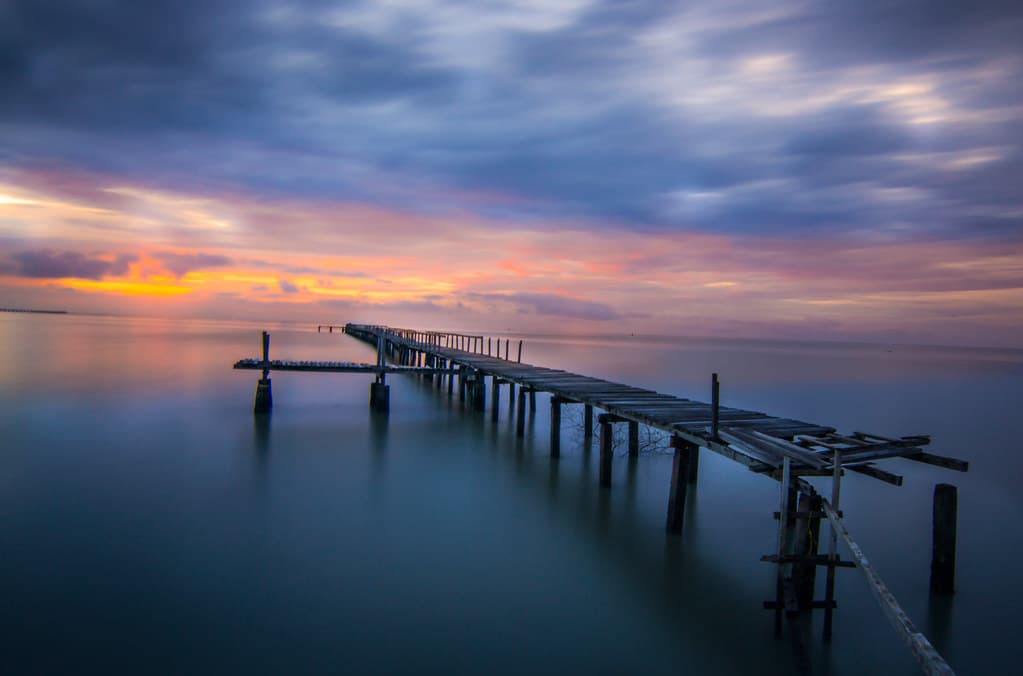
The shoreline itself is modest: casuarina trees fringe the sand, and at low tide the flats extend far enough that you can walk toward Sumatra's silhouette on the horizon. Locals come for evening exercise, grandmothers in wide-brimmed hats collecting shellfish, couples perched on concrete breakwaters. The real theater begins around six, when the sun descends behind the refinery stacks of Kedah and the sky ignites in gradients of tangerine and plum.
 Credit: Unsplash
Small fishing boats anchored in a bay before a sandy beach and city skyline
 Credit: Unsplash
Calm day at the beach with some cyclists
Best color six-thirty to seven
Grilled fish on banana leaf
Mudflats reveal at evening ebb
Prime Visitation
local visit
Where it is
Gertak Sanggul Beach
Teluk Kumbar, Penang, Malaysia
5.284000°, 100.205000°
Weather
Loading…
Swell
—
Temp
Warm · Restorative
UV Index
Moderate
Wind
—
Tidal State
Last known
Max Sunlight
—
Ideal Shade
—
Jan - Dec (Peak)
May - Nov (Off-season)
Historical data suggests peak visibility and stable sea temperatures occur during the prime visitation window.
Select a category to load nearby places.
Unlock restaurants, luxury stays and curated maritime experiences within 2km
Swimming conditions at Gertak Sanggul Beach are generally calm due to its location in a sheltered bay, making it suitable for casual wading and swimming. However, as a village beach, it lacks lifeguards and safety facilities. The water can be murky, particularly during monsoon season or high tide. Check local conditions before entering the water, avoid swimming alone, and supervise children closely. The beach is better suited for relaxing, sunset viewing, and experiencing local fishing village life rather than serious swimming activities.
The best time to visit Gertak Sanggul Beach is during the dry season from December to March, with late afternoon being ideal for spectacular sunset views over the Malacca Strait. Weekday mornings offer quieter experiences for observing local fishing activities. Avoid the southwest monsoon season (May-September) when rough seas and heavy rainfall occur. The beach faces southwest, making it particularly renowned for sunset photography. Visit during low tide to explore more of the shoreline and observe the traditional fishing community's daily activities in calmer conditions.
Gertak Sanggul Beach is located approximately 25km from George Town in Teluk Kumbar, Penang's southwestern tip. Drive along Jalan Tun Dr. Awang or take the coastal road through Balik Pulau. The journey takes 45-60 minutes depending on traffic. Parking is available in informal roadside areas near the beach and fishing village, typically free but limited in capacity. Public transportation options are scarce; renting a car or motorcycle is recommended. The beach is accessible via a small road leading through the fishing village.
Gertak Sanggul Beach has minimal tourist amenities, reflecting its authentic fishing village character. A few basic local food stalls and small warung-style restaurants serve fresh seafood and Malaysian dishes, particularly on weekends. Don't expect fancy facilities—there are limited public toilets and no significant shops or resorts directly on the beach. The nearby Teluk Kumbar town (5-10 minutes away) offers more dining options and convenience stores. Bring essentials like water, sunscreen, and snacks. Accommodation options are scarce; most visitors stay in George Town or Balik Pulau.
Gertak Sanggul Beach offers an authentic, uncommercialised fishing village experience unlike Penang's more developed beaches like Batu Ferringhi. You'll encounter traditional kelongs (offshore fishing platforms), colorful fishing boats, and local fishermen maintaining their nets—providing genuine insight into coastal Malay community life. Its southwest-facing position delivers stunning sunset views across the Malacca Strait toward Sumatra. The beach remains largely hidden from mass tourism, attracting mainly locals and photographers. This tranquil, rustic setting offers cultural authenticity rather than pristine sand or water sports facilities found at tourist-oriented beaches.
Photos