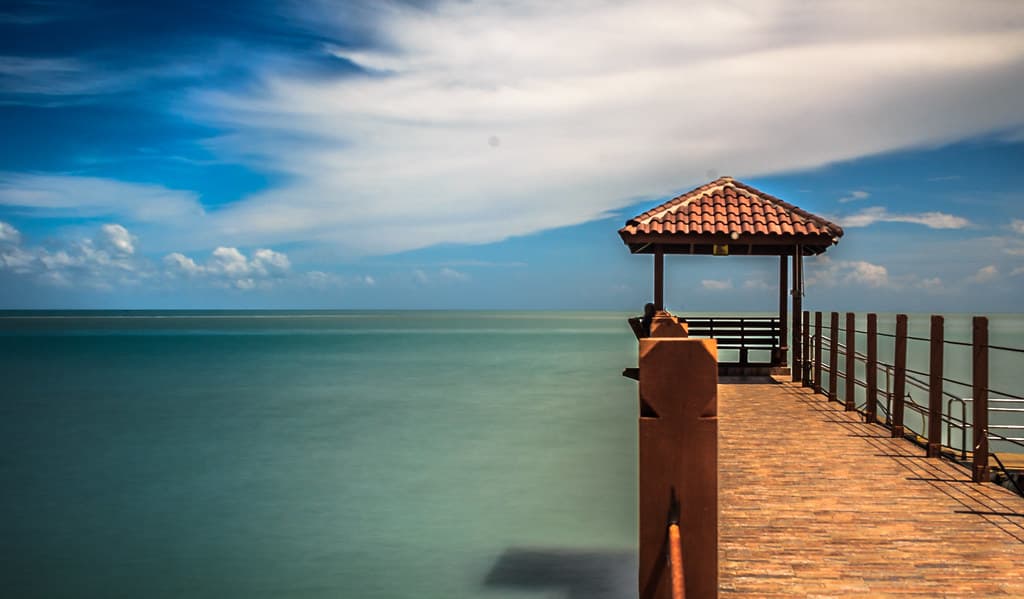
Counting the waves…
Counting the waves…

The longtail boat cuts its engine twenty meters from shore, and you wade the last stretch through bath-warm shallows, your feet sinking into soft brown sand. Monkey Beach lives up to its name—within minutes of arrival, you'll spot long-tailed macaques descending from the dipterocarp forest that rises steeply behind the beach, their confident swagger a reminder that you're visiting their territory, not the other way around. The cove spans roughly 150 meters, bookended by granite boulders slick with sea spray. Most visitors arrive mid-morning via boat from Teluk Bahang's fishing jetty, though the ambitious hike in through humid jungle trails rewards you with the beach at its emptiest. The water stays shallow for a good distance out, its aquamarine hue shifting to deeper navy where the seabed drops away. You'll hear the distinctive calls of hornbills overhead and the rustle of monitor lizards in the undergrowth. Come prepared—there are no vendors, no showers, no beach chairs for rent. Pack out everything you bring in, and keep food sealed tight; the macaques have perfected the art of opportunistic theft. The park rangers occasionally patrol, but this is wilderness swimming at its rawest, a forty-minute journey from George Town that feels like a different island entirely.

Places, rentals, tours and events within walking and driving distance of Monkey Beach.
Photos
Swimming at Monkey Beach is generally safe during calm weather, as the cove is relatively sheltered. However, conditions can change quickly, and there are no lifeguards on duty. The beach gets its name from wild macaque monkeys that inhabit the area—while they're usually not aggressive, avoid feeding them and keep a safe distance. Store food securely in bags, as monkeys may attempt to snatch items. Check weather forecasts before visiting, as rough seas can make both swimming and boat access dangerous during monsoon season.
The best time to visit Monkey Beach is during the dry season from December to March, when seas are calmer and rainfall is minimal. Visit on weekdays to avoid crowds, as weekends can get busy with local tourists. Plan to arrive in the morning (8-10am) for the most pleasant temperatures and better chances of spotting wildlife. Avoid the monsoon season (April to October) when rough seas may cancel boat services and heavy rain makes the jungle trek slippery and challenging. Early visits also offer better lighting for photography.
Monkey Beach is accessible by boat or hiking trail only—no road access exists. Most visitors take a 15-minute boat ride from Teluk Bahang fishing village; boats operate from the jetty near the National Park entrance and typically charge per person for round-trip service. Alternatively, you can hike the challenging 3.5km jungle trail through Penang National Park, which takes 1.5-2 hours one way. If hiking, register at the park entrance (free) and start early. Parking is available near Teluk Bahang jetty and park entrance.
Monkey Beach has minimal facilities—there are basic toilets and a small shelter, but no restaurants, shops, or food vendors on the beach itself. Bring your own food, drinking water, and snacks, as the nearest amenities are back in Teluk Bahang village. Pack out all trash to protect the environment. There's no accommodation at the beach; it's strictly a day-trip destination. Some visitors bring picnic supplies, but store food carefully in sealed containers to prevent monkeys from raiding your belongings. The closest restaurants and lodging are in Teluk Bahang or Batu Ferringhi.
Long-tailed macaques are the main attraction and permanent residents of Monkey Beach. While fascinating to observe, these are wild animals—never feed them, as this encourages aggressive behavior and disrupts their natural diet. Keep bags closed and don't show food openly, as monkeys are skilled at grabbing items. Maintain a respectful distance and avoid direct eye contact, which they may perceive as threatening. Don't touch or attempt to pet them. If a monkey approaches, stay calm and back away slowly. Park rangers recommend securing all belongings and being particularly cautious with shiny objects.