Counting the waves…
Counting the waves…
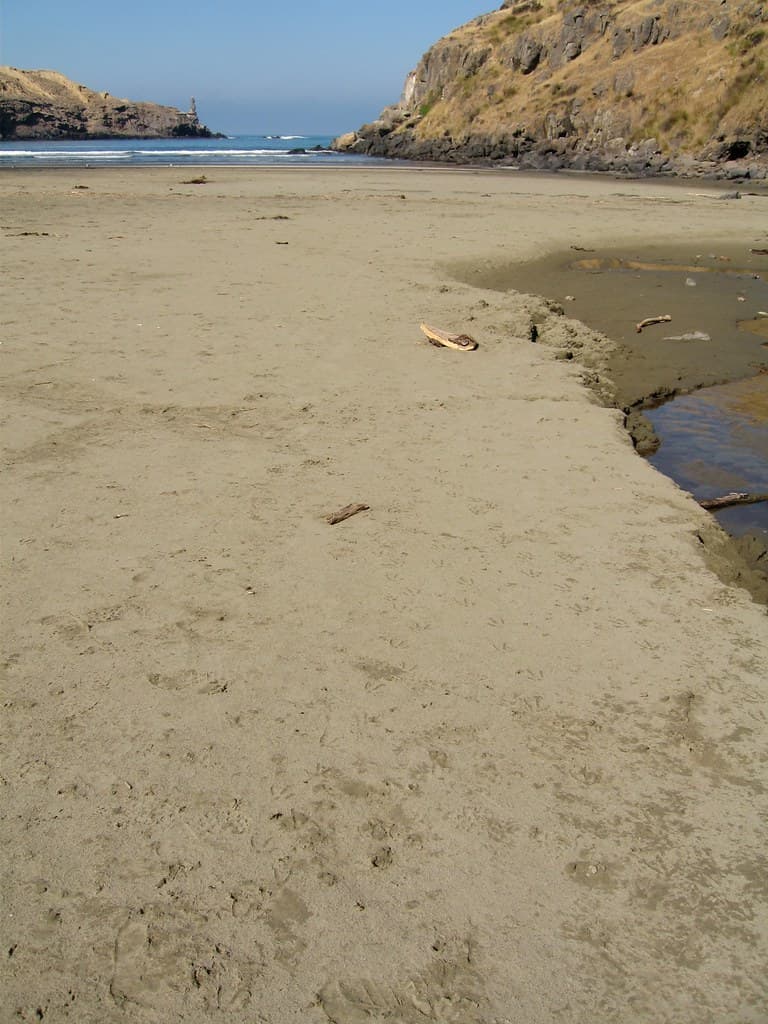
The stones shift under your boots as you cross the barrier spit separating Lake Ellesmere—Te Waihora—from the Canterburuy coast. Waves crack against rounded pebbles on the ocean side while black swans glide across the lagoon behind you. This forty-kilometer wedge of land feels less like a beach than a geological event still in progress, sculpted by southerly winds that carry salt spray and the cries of oystercatchers. Driftwood logs, bleached grey and polished smooth, lie scattered above the tide line like scattered vertebrae. You'll find pāua shells wedged between granite cobbles, their iridescent interiors catching late afternoon light. The beach has no facilities, no lifeguards, no ice cream vendors—just the raw mechanics of shore and storm. Sunset turns the lake copper while the Pacific goes slate-grey. You might see a fisherman casting into the surf or a 4WD track disappearing toward the spit's southern end. The wind never stops, and neither does the sense that you've stepped onto a coast that tolerates visitors but doesn't cater to them.
Places, rentals, tours and events within walking and driving distance of Kaitorete Beach.
Photos
Swimming at Kaitorete Beach is not recommended and can be dangerous. This exposed Pacific Ocean coastline experiences strong currents, unpredictable surf, and powerful waves. The beach is completely unpatrolled with no lifeguard services. The pebble shore can be unstable underfoot, and rips are common. The remote location means help is far away in emergencies. The beach is best appreciated for walking, photography, and experiencing raw coastal scenery rather than water activities. If you approach the water's edge, exercise extreme caution, never turn your back on the ocean, and stay well clear of the surf zone.
Kaitorete Beach is dramatic year-round, but conditions vary significantly by season. Summer offers more stable weather, though it can still be windy on this exposed coast. Autumn and spring provide excellent opportunities for solitude and photography with fewer visitors. Sunset is spectacular along this westward-facing coastline, creating stunning light for photography. Visit during calmer weather for easier access and walking. After storms, the beach offers exceptional beachcombing. Avoid visiting during strong wind warnings or severe weather. The remote location means crowd avoidance is easy any time, making it ideal for those seeking isolation and wild coastal beauty.
Kaitorete Beach access requires careful planning due to its remote location on the barrier spit between Lake Ellesmere and the Pacific Ocean. Access roads are unsealed gravel tracks that can be rough, sandy, and challenging. From Christchurch, travel via State Highway 75 toward Birdlings Flat, then follow spit roads. A sturdy vehicle with good clearance is recommended, and 4WD may be necessary in some sections or after rain. Roads can be impassable in poor weather. Check conditions before traveling, inform someone of your plans, and carry emergency supplies. No public transport serves this isolated area.
Kaitorete Beach has essentially no facilities, services, or commercial amenities. This is an extremely remote, wild coastline with no toilets, fresh water, shelter, or emergency services nearby. There are scattered private holiday homes (baches) along the spit but no accommodation for visitors. You must be completely self-sufficient, bringing all food, water, sun protection, and emergency supplies. The nearest services are at Birdlings Flat (limited) or back toward Christchurch. Plan your visit as a day trip from Christchurch or nearby towns, and ensure you have sufficient fuel, supplies, and emergency preparedness for this isolated coastal environment.
Kaitorete Beach's defining feature is its dramatic position on a long, narrow barrier spit separating Lake Ellesmere (Te Waihora) from the Pacific Ocean. This creates a unique landscape where freshwater lagoon meets wild ocean across a narrow gravel bar. The beach stretches for many kilometers of virtually undeveloped, rugged coastline—one of Canterbury's wildest coastal environments. The isolation offers unparalleled solitude and raw natural beauty. The area is significant to Māori and has important ecological values. Beachcombers find interesting stones, and the landscape provides exceptional photography opportunities of untamed New Zealand coastline rarely experienced elsewhere in Canterbury.