Counting the waves…
Counting the waves…
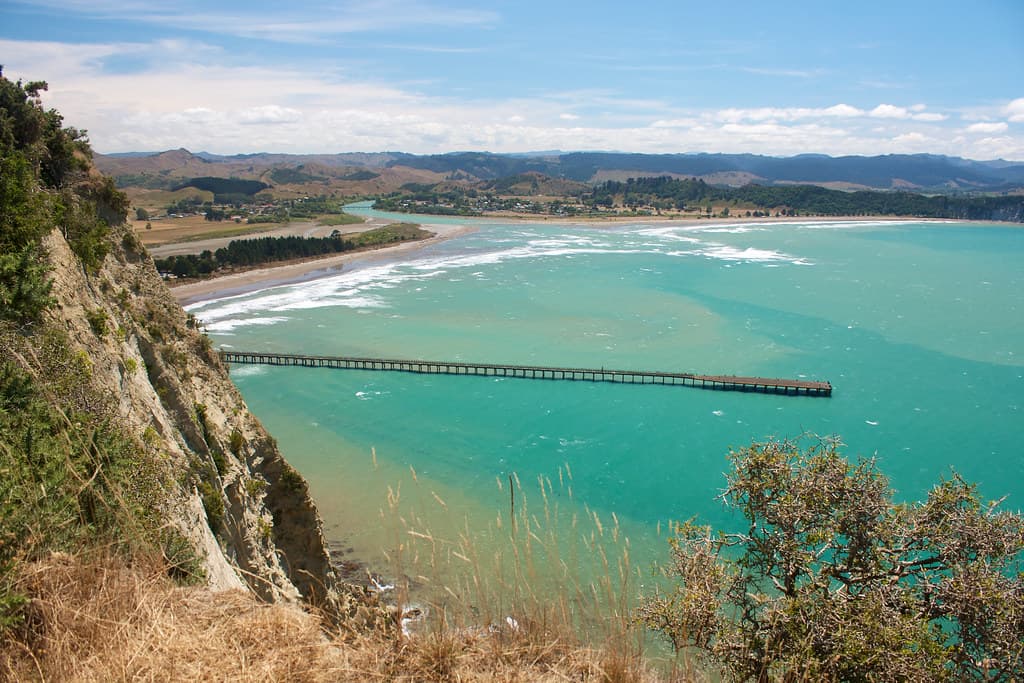
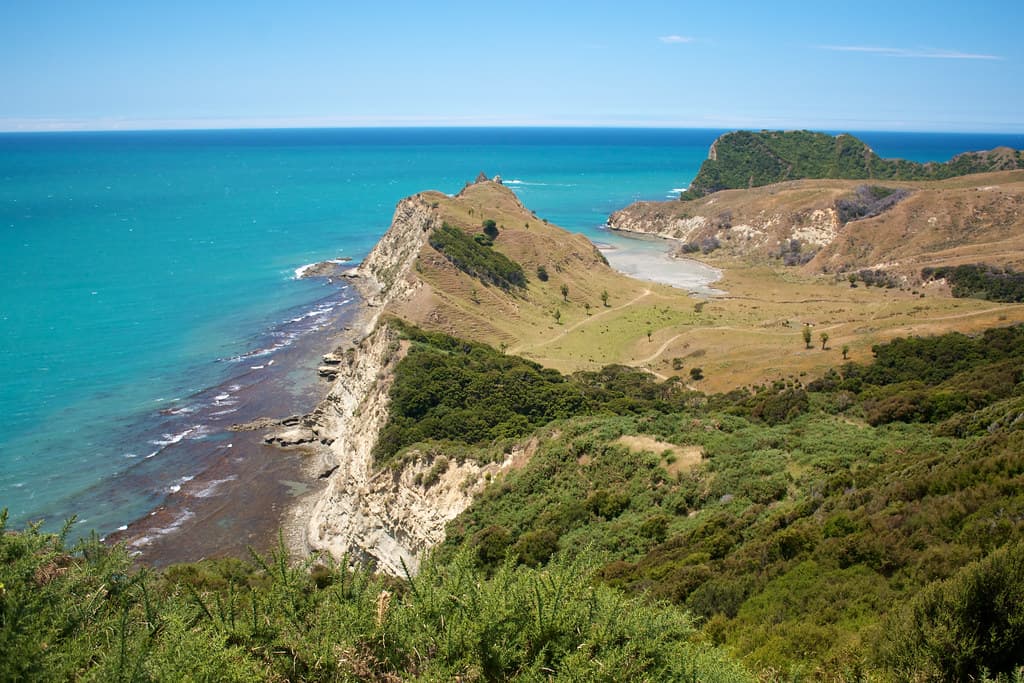
The forty-minute walk from Tolaga Bay wharf winds through regenerating bush and farmland before the land drops away, revealing Cook's Cove nestled below. The sand here holds a burnt-orange hue from iron-rich sediment, darkening where wavelets lap the shore. Overhead, shearwaters wheel between the headlands, their cries carried on salt wind. At low tide, rockpools stipple the reef platform, each basin teeming with kina and Neptune's necklace. The water shifts from jade near shore to deeper indigo beyond the reef, its temperature cold enough to quicken your breath. Driftwood logs, smoothed to bone-white, mark the high-tide line beneath cliffs layered like a geology textbook. This is where Endeavour sheltered in October 1769, Cook's crew filling water casks from the stream that still trickles across the beach. Māori elders from Uawa maintain the track and tell the stories of first contact. You'll find no facilities, no lifeguards—only the rhythmic percussion of waves on stone and the occasional fishing boat rounding the point, its hull bright against the basalt.
Places, rentals, tours and events within walking and driving distance of Cooks Cove Beach.
Photos
Cooks Cove Beach is generally more sheltered than open ocean beaches due to its cove formation, which can make it safer for swimming in calm conditions. However, it's unpatrolled, so swimmers must assess conditions themselves. The boat access designation suggests some protection from heavy surf, but currents can still be present. Always check conditions before entering the water, never swim alone, and be particularly cautious with children. The cove's configuration may create localized currents. If accessing by boat, ensure you have proper safety equipment and local knowledge of tides and weather.
The best weather for visiting Cooks Cove Beach occurs during summer (December-February), offering warm temperatures and calmer seas ideal for boat access and beach activities. The 'Less Crowds' tag means you'll enjoy relative solitude even during peak season. Autumn (March-May) can also be pleasant with stable weather. The historic significance of the cove makes it interesting year-round, though winter can be wet and cool. Plan visits around calm weather windows, as boat access requires suitable conditions. Early morning offers beautiful light and typically calmer seas for boat approaches.
Cooks Cove Beach is primarily accessed by boat, which distinguishes it from the main Tolaga Bay Beach. While there may be a walking track from Tolaga Bay township leading to the cove, boat access is noted as the characteristic approach. Local charter operators or private boats can reach the cove from Tolaga Bay. If walking, prepare for a coastal track that may take 1-2 hours depending on the route and conditions. Check locally for current access information, track conditions, and tide times. The journey itself offers scenic coastal views and connects to the area's historic significance.
Tolaga Bay township, located nearby, provides accommodation options including motels, holiday homes, camping grounds, and bed & breakfasts. The town has a small selection of dining options, typically cafés, a local store, and possibly a hotel or takeaway shop. Given the limited choices, many visitors bring their own supplies or eat before/after visiting the cove. Gisborne, about 55km south, offers more extensive dining and accommodation. For visiting Cooks Cove, plan to base yourself in Tolaga Bay and arrange provisions in advance. Self-catering is often the most practical option in this rural area.
Cooks Cove Beach holds important historical significance as one of Captain James Cook's landing sites during his first Pacific voyage in October 1769. The cove is where Cook and his crew came ashore, making it a notable location in New Zealand's European exploration history. The area also has deep Māori heritage predating Cook's arrival. This combination of cultural and historical layers makes the cove more than just a beach—it's a place where significant cross-cultural encounters occurred. Visitors can reflect on this history while enjoying the scenic beauty of this relatively untouched coastal environment.