Counting the waves…
Counting the waves…

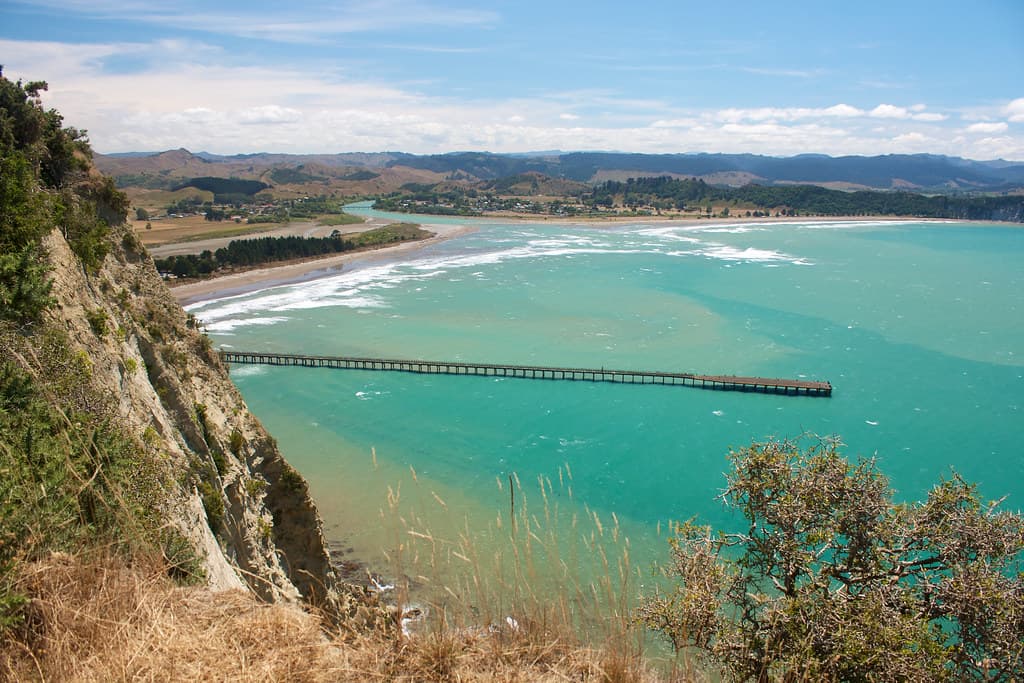
You approach Whangara down a narrow ribbon of asphalt that winds through hill country before dropping toward the sea, and the beach reveals itself slowly—a long sweep of sand fronting a scattering of modest homes and the marae that anchors the village. This is not a tourist beach; it's a living place, woven into the daily and ceremonial life of the community that has called this coast home for generations. The sand is firm and grey, littered with smooth stones and shell fragments that click softly underfoot. The water rolls in with a steady pulse, sometimes gentle, sometimes muscular, depending on the swell running beyond the point. Flax bushes and grasses fringe the upper beach, and a small stream cuts across the sand where fresh water meets salt. On calm days the surface of the bay reflects the headlands in rippling detail; when the wind rises, whitecaps churn offshore and the surf pounds the shoreline with authority. Whangara's significance extends beyond its physical beauty. The iwi connection to this place runs deep, and visitors are guests on ancestral land. Respect and quiet observation are appropriate here—this is a beach to walk thoughtfully, to sit and listen to the stories carried in the waves, and to acknowledge the living culture that sustains the village. The spirit of the place is palpable, woven into every tide and every sunrise that breaks over the Pacific.
Places, rentals, tours and events within walking and driving distance of Whangara Beach.
Photos
Whangara Beach is an unpatrolled beach where swimming conditions depend on weather and ocean swell. The beach can be suitable for swimming during calm conditions, but caution is essential as currents and surf can be unpredictable. Families should supervise children closely and assess conditions before entering the water. Local knowledge is valuable for understanding safe swimming areas. The beach is exposed to open ocean swells from the east, which can create stronger currents. Always check weather forecasts and only swim within your capabilities and experience level.
Summer months from December through March offer the best weather for visiting Whangara Beach, with warmer temperatures and generally calmer seas. This period is ideal for beach activities, though the beach rarely becomes crowded given its remote location. Autumn (April-May) can also provide pleasant conditions with mild weather. The shoulder seasons offer the advantage of even greater solitude. Winter visits are possible but expect cooler temperatures and potentially rougher seas. For cultural experiences, visiting during times when community events occur can provide deeper insights into this significant Māori village.
Whangara Beach is located about 30-35 kilometers north of Gisborne via State Highway 35. From Gisborne, drive north along the Pacific Coast Highway for approximately 30-40 minutes. Watch for signage to Whangara and turn toward the coast. The final approach involves local roads leading to the village and beach. A private vehicle is necessary as public transport doesn't service this rural coastal area. The roads are generally suitable for standard vehicles, though some sections may be gravel. Allow extra time for the scenic coastal drive.
Whangara is a small coastal village with minimal tourist infrastructure. There are no restaurants, cafes, or shops at the beach itself, so visitors must bring their own provisions from Gisborne. Accommodation in Whangara is limited and may include private holiday rentals or homestays when available, which should be arranged well in advance. Gisborne, approximately 30-40 minutes south, provides the nearest comprehensive services including supermarkets, restaurants, petrol stations, and various accommodation types from motels to hotels. Stock up on essentials before leaving the city.
Whangara Beach holds deep cultural significance as the setting for the internationally acclaimed film "Whale Rider," which brought global attention to this Māori coastal community. The village has strong ties to Paikea, the legendary whale rider of Māori tradition, and the local iwi (tribe) maintains important ancestral connections to this coastline. The marae (meeting grounds) and community reflect authentic East Coast Māori culture. Visitors should approach with respect, understanding this is a living community, not merely a tourist attraction. The beach represents generations of Māori coastal heritage and identity.