Counting the waves…
Counting the waves…

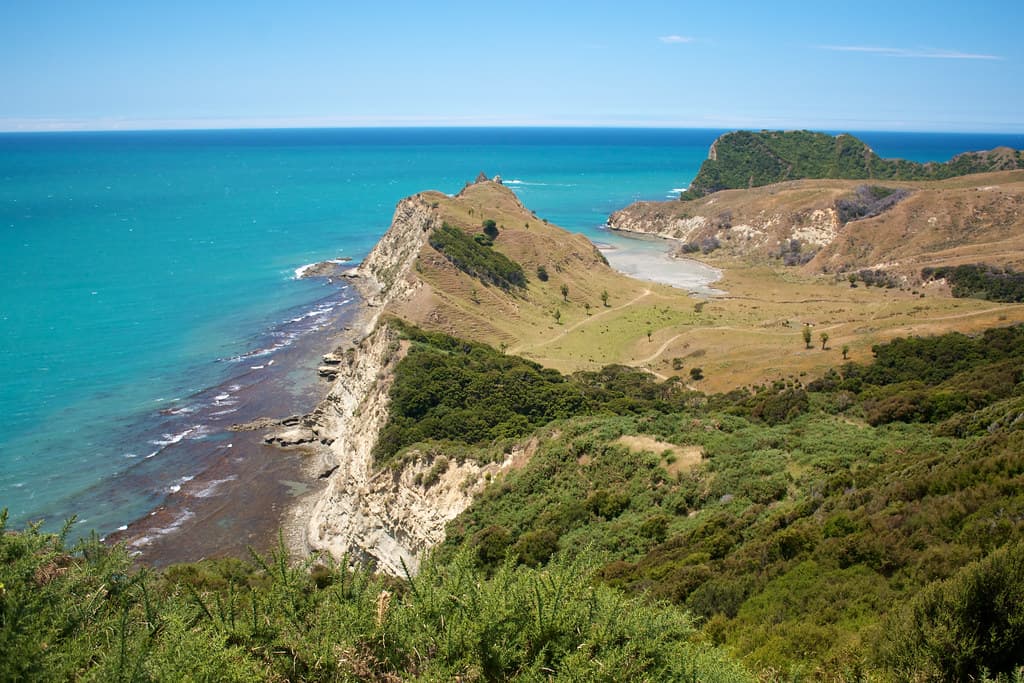
The wharf is the first thing you notice—a ruler-straight line of timber and concrete reaching so far into the swells that the shore seems to recede behind you as you walk its 660-meter length. Built in 1929 when coastal steamers were the region's lifeline, it remains defiantly functional, though now it's fishermen rather than cargo ships that tie up at the T-head. Below the decking, green water surges between pilings furred with rust-colored kelp, and spotties dart through the submerged forest of pylons. The beach itself unfolds in a long, generous sweep of tan sand, wide enough at low tide that a game of cricket won't crowd sunbathers staking out towel territory near the dunes. The Uawa River empties at the southern end, its brown freshwater layering over the salt in visible bands of color, pushing a plume of sediment that stains the shorebreak amber. Driftwood accumulates in tangled piles near the grass line—massive logs still showing axe marks, smaller branches stripped white by sun and salt. Above the beach, the township of Tolaga Bay dozes in a time warp of art deco storefronts and weatherboard baches, many empty now except during holidays. Come evening, locals drive down to the wharf carpark, lean against truck beds with fish and chips, and watch the light fade over the water while black-backed gulls patrol for scraps.
Places, rentals, tours and events within walking and driving distance of Tolaga Bay Beach.
Photos
Tolaga Bay Beach is generally safe for swimming during calm summer conditions, particularly in the sheltered areas near the bay. However, like most East Coast beaches, it's unpatrolled, so swim between the flags if lifeguards are present during peak season, stay close to shore, and check conditions before entering the water. The beach can experience strong currents and surf during rough weather. Always supervise children closely and avoid swimming alone or after storms when water clarity and safety are compromised.
The best time to visit Tolaga Bay Beach is during New Zealand's summer months from December to March, when you'll enjoy warm weather, calmer seas, and ideal conditions for swimming and photography. This period offers the most stable weather on the East Coast. Shoulder seasons (November and April) can also be pleasant with fewer visitors and lower accommodation costs. Winter months are cooler and windier but still scenic. Early mornings provide the best light for photographing the historic wharf, while sunrises here are particularly spectacular.
Tolaga Bay Beach is located approximately 55 kilometers north of Gisborne along State Highway 35 (the Pacific Coast Highway). The drive from Gisborne takes about 50 minutes through scenic coastal and rural landscapes. There's no public transport to Tolaga Bay, so you'll need your own vehicle or rental car. From the small township of Tolaga Bay, follow signs to the wharf and beach access points. Parking is available near the historic wharf. The drive along SH35 is winding in places, so allow extra time and take care.
Tolaga Bay is a small township with limited but adequate facilities. You'll find a general store, a hotel, and a café offering basic meals and supplies. For more dining variety, Gisborne (55km south) has extensive options. Accommodation includes holiday homes, a motor camp, and several bach rentals available through booking platforms. The historic Tolaga Bay Inn offers pub-style accommodation. Book ahead during summer holidays as options are limited. Many visitors stay in Gisborne and day-trip to Tolaga Bay, or continue touring around the East Cape circuit.
Tolaga Bay's historic wharf is the longest concrete wharf in the Southern Hemisphere, stretching 660 meters into the Pacific Ocean. Built in 1929, it was originally used for shipping wool and livestock but now serves as a unique walking and fishing platform. The walk to the end takes about 15 minutes and offers spectacular coastal views, making it extremely popular with photographers and Instagram enthusiasts. The wharf's dramatic length and historic significance make it an iconic East Coast landmark. It's free to access and open year-round for walking, though fishing restrictions may apply.