Counting the waves…
Counting the waves…
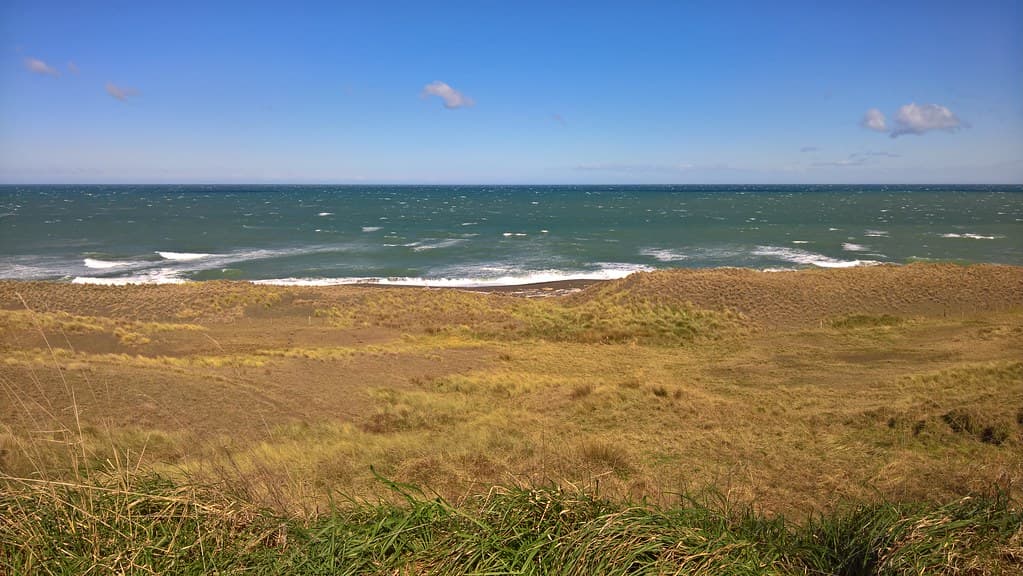
The beach at Pūhakī announces itself modestly: a gravel pullout, a gap in the lupins, a footpath worn through the dunes. You step onto sand the color of wet slate, firm underfoot, scattered with driftwood and kelp from the previous tide. The coast here runs straight and featureless for kilometers, hemmed between farmland and the Pacific, a working stretch of shoreline that tourism brochures routinely overlook. You'll spread your towel where the sand is dry and still cool from the night. The surf rolls in with mechanical regularity—thigh-high, waist-high, occasionally shoulder-high depending on the swell. There are no flags, no lifeguards, no facilities beyond the dirt track you drove in on. Behind the dunes, sheep graze paddocks that climb gently toward the inland ranges. The only movement is the wind combing the marram grass and the occasional ute rattling past on the coast road. Sunset at Pūhakī is a study in horizontals: the beach, the breakers, the horizon, the long clouds stacked above it all. The light goes amber, then rose, catching the spray off the shore break and turning the wet sand into a mirror. You walk back to the car with salt drying on your shins and sand in your shoes, already half-forgetting the name of this beach, which is exactly how it's survived this long without crowds.
Places, rentals, tours and events within walking and driving distance of Pūhakī Beach.
Photos
Swimming at Pūhakī Beach requires caution as it's an unpatrolled, rural beach exposed to open ocean conditions. Surf and currents can vary significantly depending on weather and swell. Only swim during calm conditions and stay within your depth if you're not a confident swimmer. There are no lifeguards or rescue services immediately available, so exercise personal judgment and never swim alone. The beach is safest during summer months with settled weather. Always check surf forecasts and local conditions before entering the water, and supervise children at all times.
Summer (December-February) offers the best conditions for visiting Pūhakī Beach, with warm temperatures, calmer seas, and extended daylight hours perfect for sunset viewing—one of the beach's highlights. Late autumn and early spring can also provide pleasant weather with minimal crowds. The beach is particularly beautiful during golden hour for photography. Winter months tend to be cooler and wetter with rougher seas, though storm watching has its own appeal. Weekdays throughout the year ensure maximum solitude at this hidden gem, which rarely sees tourist crowds even in peak season.
Pūhakī Beach is located between Wairoa and Māhia Peninsula, accessible via State Highway 2 along the Hawke's Bay coast. From Napier, it's roughly a 90-minute drive north; from Gisborne, approximately 90 minutes south via Wairoa. Look for signposted turnoffs from SH2 leading toward the coast through rural farmland. The final approach may involve unsealed roads, so check conditions if travelling after rain. No public transport services this remote area, making a private vehicle essential. Ensure your vehicle has adequate fuel as service stations are sparse in this region.
Pūhakī Beach itself has no commercial facilities, reflecting its remote, rural character. Visitors should bring all necessary supplies including food, water, and sun protection. The nearest town with basic services is Wairoa, approximately 30-40 minutes away, which has supermarkets, cafes, and fuel stations. Accommodation options in the immediate area are extremely limited; look for farm stays or holiday rentals in the wider district, or base yourself in Wairoa or Māhia. Most visitors come for day trips. Pack out all rubbish as there are no bins or facilities at the beach.
Pūhakī Beach is distinguished by its authentic remoteness and absence from typical tourist itineraries, offering visitors a genuine off-the-beaten-path coastal experience. The beach is particularly renowned for stunning sunsets over the Pacific Ocean, with unobstructed views and often dramatic cloud formations. Its location between Wairoa and Māhia means it's frequently bypassed by travellers, ensuring peaceful solitude. The rural setting provides a glimpse into traditional New Zealand coastal farming communities, with working farms extending to the shoreline. It's ideal for those seeking unspoiled natural beauty without crowds or commercial development.