Counting the waves…
Counting the waves…
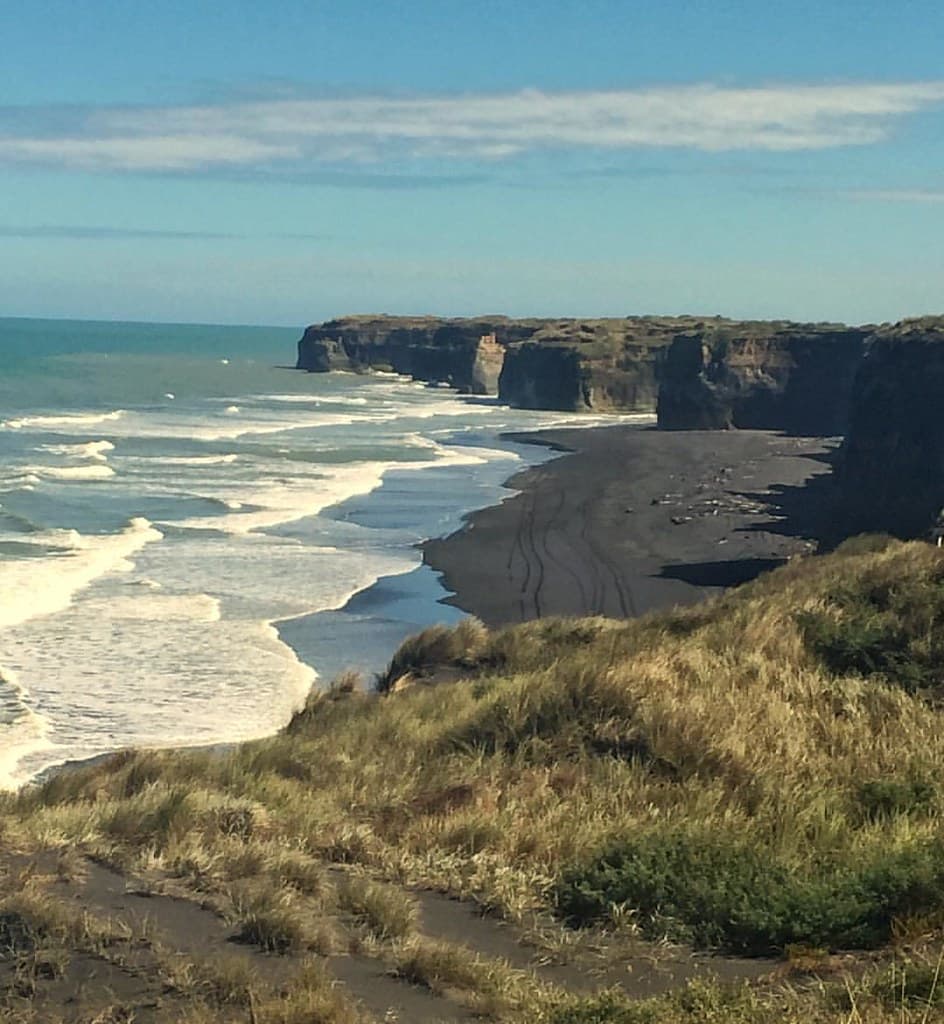
The iron-rich sand at Waihi Beach holds a charcoal lustre that deepens after rain, its granules magnetic enough to cling to the soles of your shoes long after you've left. Driftwood—bleached bone-white by salt and sun—lies in tangled piles above the high-tide line, each piece smoothed into sculptural form by years of tumbling. The beach stretches in both directions with few interruptions, just the occasional creek mouth cutting channels through the sand as freshwater meets Pacific swells. On clear afternoons, Mount Taranaki's volcanic cone stands sentinel to the north, its snowcap gleaming against the sky while clouds build around its shoulders. The wind here carries the iodine tang of kelp and the faint diesel trace of fishing boats working offshore. Locals arrive in weathered utes, backing trailers down to the firm sand near the waterline to launch aluminum dinghies into the breakers. You'll see children digging for tuatua clams where the sand stays wet, their buckets filling as each wave recedes. Evening light gilds the black sand bronze, and the sun drops into the Tasman Sea with little ceremony—no crowds, no viewpoint markers, just the methodical crash of waves and the cry of gulls wheeling overhead. It's a beach that belongs to those who live within driving distance, a place for weekend solitude rather than bucket-list ticking.
Places, rentals, tours and events within walking and driving distance of Waihi Beach.
Photos
Waihi Beach near Hāwera is an unpatrolled west coast beach with conditions typical of the Taranaki coastline, including variable surf, potential rips, and strong currents. It's best suited for confident, experienced swimmers who understand ocean conditions. The beach sees local recreational use but requires caution and respect for the sea. Always check weather and surf conditions before swimming, never swim alone, and be aware that conditions can change quickly. Families often prefer the beach for walking and playing in shallow water during calm conditions rather than swimming. The black iron sand can become very hot in summer sun.
Summer months (December-March) provide the most pleasant weather for visiting Waihi Beach, with warmer temperatures typically between 18-24°C and longer daylight hours. However, the beach remains relatively quiet even during peak season, making it appealing for those seeking less crowded experiences. Shoulder seasons (April-May and September-November) offer mild conditions suitable for beach walks and coastal exploration with even fewer visitors. Sunsets are spectacular year-round due to the beach's west-facing position. Local residents use the beach throughout the year for walking and recreation. Weather can be changeable, so check forecasts before visiting.
Waihi Beach is located northwest of Hāwera in South Taranaki. From Hāwera township, take Waihi Road westward toward the coast, following signs to the beach. The distance is approximately 10-12 kilometres from central Hāwera. Roads are generally well-maintained and sealed for most of the journey. Parking is available near beach access points. Hāwera itself is on State Highway 3, about 75 kilometres south of New Plymouth. A private vehicle is essential as public transport to this coastal area is not available. The route passes through characteristic Taranaki farmland before reaching the coast.
Waihi Beach itself has minimal facilities, being primarily a local recreational beach without commercial development. Visitors should plan to bring their own food and supplies. Hāwera (approximately 10-12km away) serves as the main service centre, offering supermarkets, restaurants, cafés, bakeries, and takeaway options. Accommodation in Hāwera includes motels, hotels, and holiday parks with various price points suitable for budget travellers. Some private holiday homes near the beach may be available for rental. Most visitors treat Waihi Beach as a day trip from Hāwera, bringing picnic supplies and enjoying the quiet coastal setting.
Waihi Beach offers an authentic, low-key coastal experience primarily enjoyed by local residents rather than tourists, providing genuine insight into regional beach culture. The broad coastal views across the Tasman Sea and characteristic black iron sand create classic Taranaki scenery without crowds or commercial development. The beach's quiet, unspoiled nature appeals to those seeking peaceful walks, beachcombing, and nature appreciation. Its proximity to Hāwera makes it easily accessible for a short coastal escape. The lack of facilities and tourist infrastructure means visitors experience the beach in its natural state, ideal for quiet reflection and enjoying coastal landscapes.