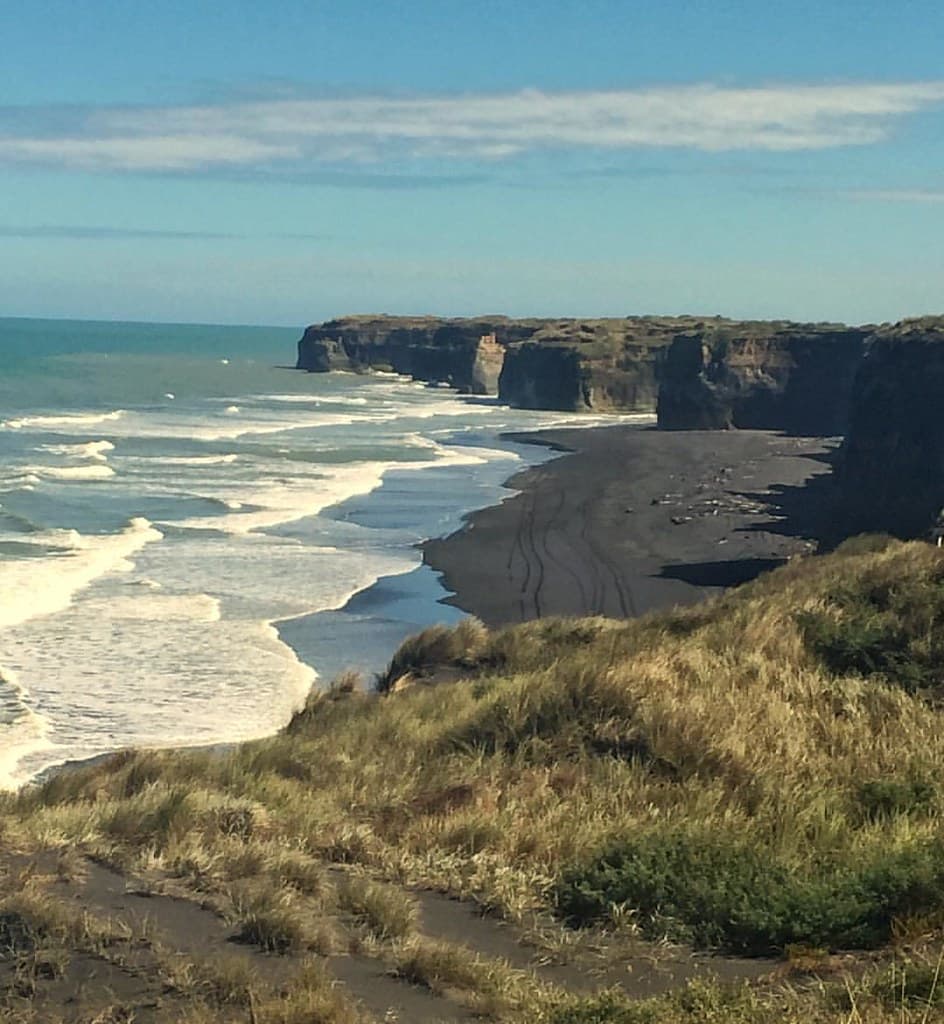
Counting the waves…
Counting the waves…

The Kaupokonui River slides across black sand in braided channels that redraw themselves with every flood, creating a natural moat between the camping ground and the open beach. At low tide you can hop across on exposed stones; at high tide you'll either wade knee-deep or walk the farm track inland to the bridge. The beach itself runs unbroken in both directions, backed by sand dunes colonized by marram grass that hisses in the constant wind. This is a camping destination rather than a day-trip beach—the gravel access road winds through dairy country for several kilometres, discouraging casual visitors. The camping ground operates on an honesty-box system, with basic facilities that get maintained by volunteers and the occasional council crew. You'll see the same Taranaki families returning year after year, their kids learning to bodysurf in the shorebreak and explore rock pools at the river mouth. Manaia is the nearest town, a blink-and-you'll-miss-it cluster of shops serving the surrounding farms. Mount Taranaki presides over everything when the weather clears, though coastal fog often keeps the mountain hidden for days. The fishing can be excellent—snapper and gurnard off the beach, whitebait in the river during spring runs—but you're here for the space and the sound of surf, not amenities or entertainment.
Places, rentals, tours and events within walking and driving distance of Kaupokonui Beach.
Photos
Kaupokonui Beach is an unpatrolled beach where swimming requires caution. The river mouth area can have unpredictable currents and changing sandbars, making it less ideal for swimming, especially for children. Families visit primarily for beachcombing, walking, and camping rather than swimming. If entering the water, stay close to shore, supervise children constantly, and avoid the river mouth area where currents are strongest. The beach's family-friendly reputation comes from its camping facilities and peaceful atmosphere rather than swimming conditions. Always check local conditions and exercise appropriate caution.
The best time to visit Kaupokonui Beach is during summer (December-February) when weather is warmest and most suitable for camping and beach activities. The beach is particularly popular with families during school holidays, though it remains relatively quiet compared to major tourist beaches. Shoulder seasons offer pleasant conditions with fewer visitors, ideal for those seeking solitude. Budget travellers can visit year-round as the area has minimal commercial facilities. Sunset viewing is excellent throughout the year as the beach faces west toward the Tasman Sea.
Kaupokonui Beach is located on the South Taranaki coast, accessed via roads from the town of Manaia. From Hawera, travel toward Manaia, then follow local roads signposted toward Kaupokonui Beach and the camping area. The drive from Hawera takes approximately 20-25 minutes. Roads are mostly sealed with some gravel sections near the beach. A standard vehicle can access the area in normal conditions. The beach and camping ground are at the Kaupokonui River mouth, with parking available near the camping area. Signage from Manaia should guide you to the coast.
Kaupokonui Beach has a basic camping area near the river mouth, offering a budget-friendly option for overnight stays. Facilities are minimal, typically including basic toilets but limited other amenities—check current conditions before planning to camp. There are no food outlets at the beach, so bring all supplies, including drinking water. The nearest town, Manaia, has a small shop for basic provisions, while Hawera (about 20 minutes away) offers supermarkets, cafes, and fuel stations. For more comfortable accommodation, Hawera and Opunake provide motels and other lodging options.
Kaupokonui Beach's defining feature is its river-mouth camping area, offering a quiet, budget-friendly coastal camping experience rare on this coast. The combination of river and ocean creates diverse scenery and environments for exploration, with the Kaupokonui River adding a freshwater element to the coastal setting. The beach maintains a low profile with minimal development, attracting those who appreciate simple, uncommercialized beach experiences. Its location on the South Taranaki coast provides an authentic local atmosphere, and the camping facilities make it particularly appealing for budget travellers and families seeking affordable coastal stays.