Counting the waves…
Counting the waves…
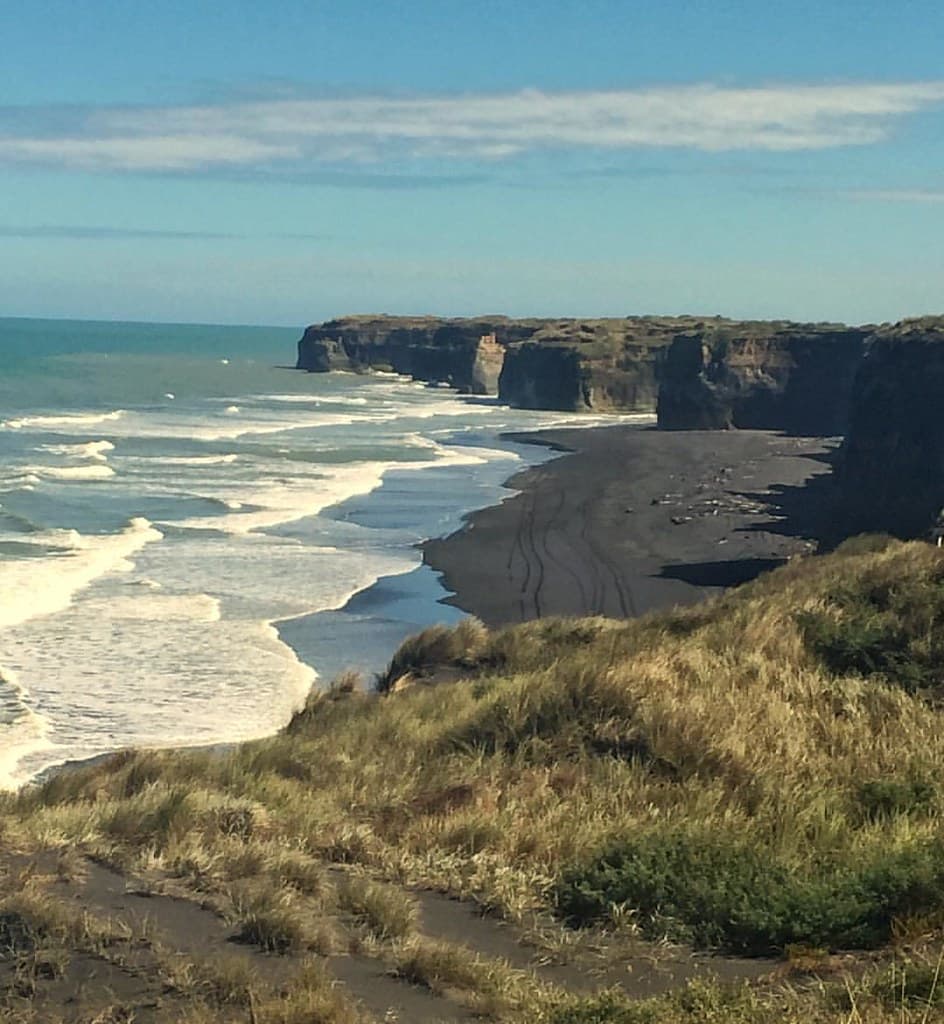
Ōhawe Beach unfolds as a string of modest holiday homes pressed between the coastal road and a beach that runs for kilometres in both directions, the sand a charcoal hue that holds warmth on January afternoons. This is bach country—simple fibro-and-timber cottages with outdoor showers for rinsing salt, clotheslines strung between pohutukawa, boat trailers rusting gently in driveways. Generations of South Taranaki families return here each summer, their routines as predictable as the tides: morning fishing, afternoons in the shallows, evenings around gas barbecues while children chase each other across the sand. The settlement has the unhurried rhythm of a place where people arrive for weeks, not days. You'll see grandparents teaching kids to bait hooks with pilchard, teenagers carrying surfboards toward the northern break, couples walking the beach at dusk with kelpie dogs ranging ahead. The local dairy stocks ice blocks and white bread, the essentials for a Kiwi summer holiday. At low tide, the firm sand becomes a highway for four-wheel-drives heading south toward fishing spots accessible only by beach. Winter empties Ōhawe to a handful of permanent residents, the baches shuttered against westerly gales that rake across the coast. But come Labour Weekend, the migration begins again—families unlocking doors, airing out rooms that smell of salt and pine, re-establishing the annual claim to a piece of coastline where the pace slows to match the patient rhythm of waves.
Places, rentals, tours and events within walking and driving distance of Ōhawe Beach.
Photos
Ōhawe Beach is an unpatrolled west coast beach with variable surf conditions. Like most Taranaki beaches, it can experience strong rips, currents, and unpredictable waves, making it more suitable for confident swimmers. Always check surf reports and tide conditions before swimming. The beach is popular for surfing and fishing, so be aware of other water users. Families often prefer paddling in calmer conditions or at low tide. Never swim alone and be cautious of holes and drop-offs. The black sand can become extremely hot during summer.
Summer months (December-March) offer the warmest weather for visiting Ōhawe Beach, with temperatures typically between 18-24°C. This period coincides with school holidays when many Kiwi families occupy holiday homes in the settlement. For budget travellers, visiting outside peak summer (April-November) means potentially lower accommodation rates and fewer crowds, though weather is less predictable. Fishing enthusiasts visit year-round depending on seasonal runs. Sunsets are spectacular throughout the year, and spring offers mild conditions for beach walks without summer crowds.
Ōhawe Beach is located off State Highway 45 (the Surf Highway) in South Taranaki, approximately 15 kilometres northwest of Hāwera. From the highway, turn onto Ōhawe Beach Road and follow it westward approximately 5 kilometres to the coast. The beach settlement is well-signposted. It's about 80 kilometres south of New Plymouth. Parking is available throughout the small settlement near beach access points. A private vehicle is necessary as public transport doesn't service this coastal area. Roads are sealed and suitable for all vehicles.
Ōhawe Beach is primarily a small holiday settlement with limited commercial facilities. Accommodation consists mainly of private holiday homes and baches available for weekly rentals, particularly popular during summer. There are no restaurants, cafés, or shops directly at the beach, so visitors should bring supplies from Hāwera (15km away), which has supermarkets, restaurants, cafés, and motels. The nearest petrol station is also in Hāwera. Budget travellers can find reasonably priced bach rentals, especially outside peak summer season. Self-catering is the norm here.
Ōhawe Beach is renowned for its long stretches of black iron sand and excellent surf fishing opportunities, particularly for snapper, kahawai, and gurnard. The beach offers a traditional Kiwi holiday experience with its laid-back bach settlement atmosphere, popular with families who return year after year. It's less developed and commercialized than many New Zealand beaches, providing authentic coastal relaxation. The beach's length allows for extended walks, and its west-facing position offers stunning Tasman Sea sunsets. It's an ideal destination for those seeking a quiet, traditional beach holiday away from tourist areas.