Counting the waves…
Counting the waves…
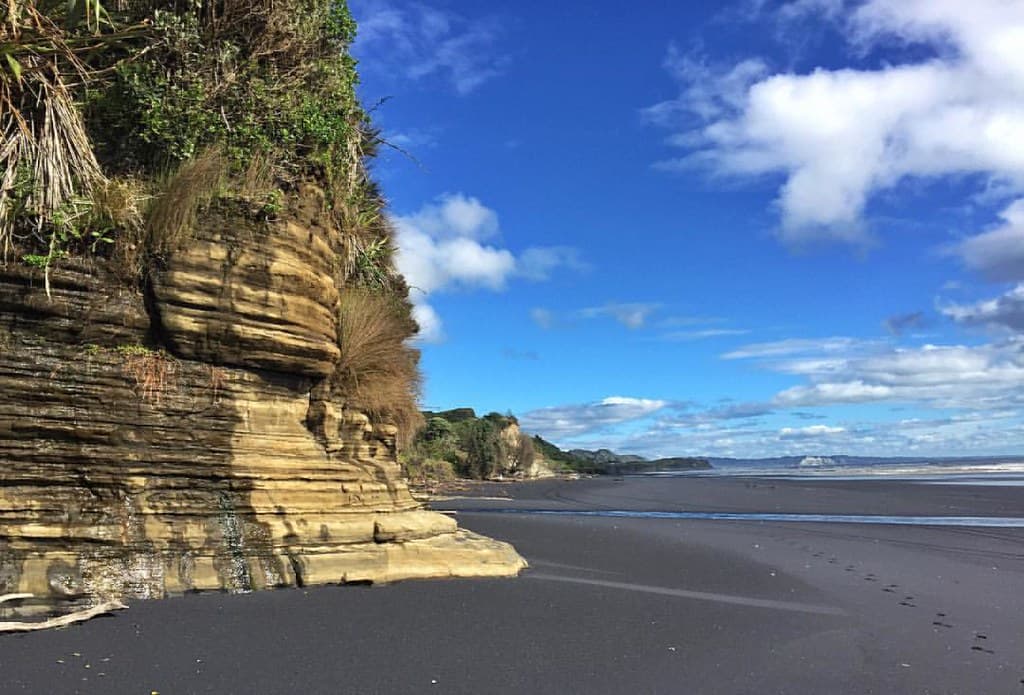
You stand where two forces meet—the Mokau River, tea-dark from inland tributaries, cutting through charcoal sand to collide with the Tasman Sea. The beach stretches in both directions, broad and empty except for driftwood logs bleached white by salt and sun. Gulls hover above the river mouth, watching for whitebait and smelt, while locals in waders work the current with practiced casts. The sand underfoot is dense and black, volcanic in origin, cool even on warm afternoons. You can walk for an hour and meet no one, following the tideline where kelp tangles with plastic floats and polished stones. Mount Taranaki appears on clear days, a perfect cone to the south, but more often the horizon stays grey and indistinct, sea blending into sky. Sunset here is unhurried. The light turns copper, then rust, painting the river mouth in shades of amber while the offshore wind picks up. There are no cafés, no rental stands—just a small settlement, a boat ramp, and the understanding that some beaches exist for watching, for casting lines, for the simple act of being at the edge of land.
Places, rentals, tours and events within walking and driving distance of Mokau River Mouth Beach.
Photos
Swimming at river mouth beaches requires caution due to unpredictable currents, rips, and changing sandbanks where river water meets the ocean. Conditions vary with tides and river flow. The beach is not patrolled by lifeguards, so swim only if you're a confident swimmer and understand surf conditions. Many visitors prefer paddling in shallower areas or focusing on fishing and walking. Always check weather and tide information before entering the water, and never swim alone.
Mokau is best during New Zealand's warmer months (November to April) for comfortable weather, though it remains relatively uncrowded year-round. Visit during weekdays or off-peak seasons for the quietest experience. The beach is particularly beautiful at sunset. Low tide is ideal for walking and exploring the sand. Fishing enthusiasts often prefer early morning or evening. Budget travellers will find fewer crowds and lower accommodation costs outside school holidays and peak summer weeks.
Mokau is located on State Highway 3 between New Plymouth and Te Kuiti, approximately 90 minutes north of New Plymouth. The small settlement of Mōkau sits right on the highway, with easy access to the beach via local roads. There is no public transport to Mokau, so you'll need a private vehicle. Parking is available near the beach area. The drive along SH3 offers scenic coastal views. Ensure your vehicle has fuel, as services are limited in this rural area.
Mōkau is a small settlement with limited services. The Mokau Motor Camp and Motel offers basic accommodation near the beach, suitable for budget travellers. A local dairy or small shop may provide basic supplies, but options are minimal. For more dining and accommodation choices, travel south to Awakino or north to towns along State Highway 3. Visitors often bring their own food and supplies for self-catering. New Plymouth offers full services approximately 90 minutes away.
Mokau's distinctive river-mouth setting creates excellent fishing opportunities, particularly for kahawai, snapper, and whitebait during season. The beach marks the boundary between Taranaki and Waikato regions and offers a genuine off-the-beaten-path experience with minimal development. The dramatic meeting point of the Mōkau River and Tasman Sea creates unique sandbar formations and birdwatching opportunities. Its location on the remote northern Taranaki coast means you'll often have the beach largely to yourself, offering authentic rural New Zealand coastal character.