Counting the waves…
Counting the waves…
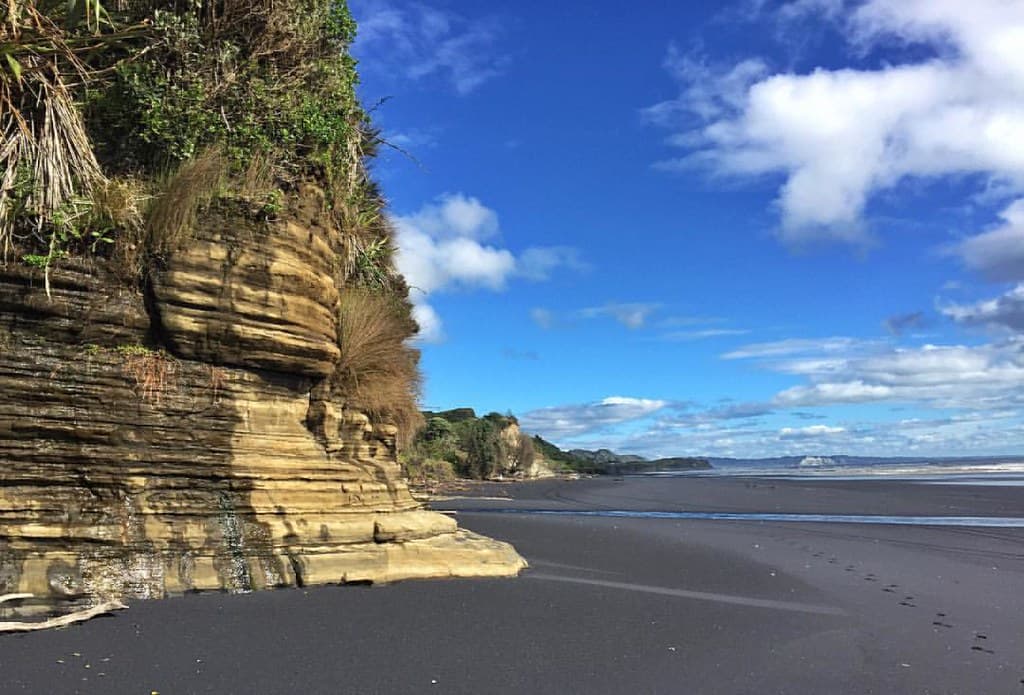
You'll feel the volcanic grit beneath your toes the moment you step onto Mokau Beach—a coarse, charcoal sand that absorbs the afternoon heat and clings stubbornly to towel fibers. The river mouth dominates the northern end, its brackish water mingling with salt spray as incoming swells push white foam across the bar. Driftwood logs, bleached bone-white by sun and salt, punctuate the high-tide line like scattered sculptures. The beach curves gently southward for nearly two kilometers, backed by scrubby coastal vegetation and the occasional bach perched on higher ground. When the afternoon sun drops toward the Tasman horizon, the wet sand becomes a mirror, reflecting burnt orange and magenta in elongated streaks. Oystercatchers probe the waterline with vermillion beaks, their piping calls carrying over the steady percussion of surf. Local families claim their favorite spots near the boat ramp, spreading blankets on dry sand while children wade through the shallows where river meets ocean. The water temperature hovers around fifteen degrees Celsius even in summer—bracing enough to make you catch your breath on entry, warm enough to keep you in once you've committed. Across the river, limestone cliffs rise in layered shelves, their faces streaked with rust and olive where minerals seep through porous rock.
Places, rentals, tours and events within walking and driving distance of Mokau Beach.
Photos
Mokau Beach requires caution for swimming due to its river mouth location and typical west coast conditions. Strong currents, rips, and unpredictable surf are common where the Mokau River meets the sea. The black sand can become very hot in summer. There are no lifeguard patrols, so swim only in calm conditions, stay near shore, and always supervise children closely. Many locals prefer the river estuary for gentler swimming conditions. Check tide times and weather forecasts before entering the water.
Summer months from December to February offer the warmest weather and best beach conditions at Mokau Beach, ideal for family visits. Autumn (March-May) provides pleasant temperatures with fewer crowds and spectacular sunsets. Winter and spring can be windy with rougher seas but offer dramatic coastal scenery. Budget travellers benefit from lower accommodation rates outside peak summer holidays. Early mornings and late afternoons year-round provide the calmest conditions and best light for photography along this scenic black sand coastline.
Mokau Beach is located approximately 80 kilometres north of New Plymouth and 90 kilometres south of Te Kuiti via State Highway 3. The journey takes about one hour from either direction by car, with well-maintained roads throughout. There is no public transport to Mokau, so a private vehicle is essential. Parking is available near the beach and around the town centre. The beach access is straightforward from the main road, with the settlement small enough to navigate easily on foot once you arrive.
Mokau offers limited but genuine local hospitality options. The Mokau Motel and Motor Camp provides budget-friendly accommodation close to the beach. Several holiday homes are available for rent, particularly popular during summer. For dining, the local pub and a cafe serve classic Kiwi fare and refreshments. Facilities are basic and small-town in character. For more extensive dining and shopping options, New Plymouth or Te Kuiti provide fuller services. Stock up on supplies before arriving if you're self-catering, as local shops have limited hours and selections.
Mokau Beach's defining feature is its dramatic river mouth setting where the Mokau River meets the Tasman Sea, creating stunning scenery where freshwater and ocean converge. The classic northern King Country character combines black volcanic sand, rugged coastline, and rich Māori heritage. Mokau serves as a gateway to the nearby Whitecliffs walkway, famous for towering white fossil-rich cliffs contrasting with dark sand. The area offers excellent fishing, both surf casting and river fishing. The town retains an authentic, unhurried coastal village atmosphere that larger tourist destinations have lost.