Counting the waves…
Counting the waves…
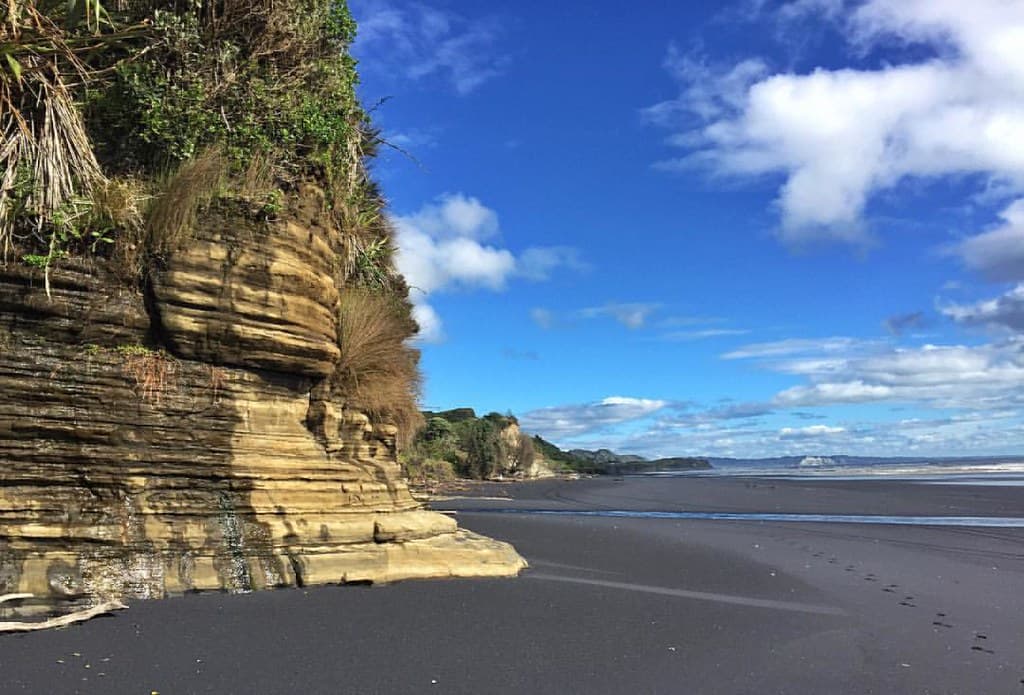
You park beside the boat ramp where the river runs deep and tidal, locals launching aluminum dinghies for flounder or whitebait depending on season. Walk fifty metres north and the character shifts completely—the river fans across the beach in shallow braids, and the proper surf beach begins, black sand extending in a wide arc toward the cliffs that mark the next bay. The transition happens so gradually you barely notice when you've left river territory and entered the Tasman's domain. The beach runs flat and firm at low tide, hard-packed enough to drive on though few bother. Waves roll in with steady rhythm, lacking the chaos of more exposed coasts but carrying enough push to knock over children and make boogie-boarding worthwhile. River channels cut through the sand create natural pools that warm in the afternoon sun—toddlers splash in ankle-deep water while parents sit on the bank, half-watching, half-dozing. The local surf club's tower stands sentinel at the southern end, lifeguards on duty through summer weekends. Driftwood accumulates in enormous piles where high tides deposit the river's offerings: silvered logs, fishing net floats, plastic detritus, and occasionally a glass fishing float that makes your day. The Mokau Hotel overlooks everything, its veranda the unofficial command post for beach observation and cold beer consumption. You can walk north for kilometres if you're inclined, passing only footprints and the occasional seal hauled out to rest. By evening, the river mouth catches the last light, turning copper, and the pub fills with salt-crusted locals comparing the day's catch.
Places, rentals, tours and events within walking and driving distance of Mokau River Mouth Beach.
Photos
Swimming at Mokau River Mouth requires caution due to the complex currents created where the river meets the ocean. Strong rips can form, particularly near the river channel and during outgoing tides. The beach is unpatrolled with no lifeguard services. Conditions vary significantly with river flow, tides, and ocean swells. After heavy rainfall, the river can be swollen and dangerous with debris and discolored water. The beach is better suited for experienced swimmers who understand rip currents. Families with children should stay in shallow areas well away from the river mouth and maintain constant supervision.
Summer months (December-February) offer the most reliable weather and warmest conditions for beach visits. The area experiences fewer crowds than popular tourist beaches, making it pleasant even during peak holiday periods. Sunset is particularly beautiful as the sun sets over the Tasman Sea, creating excellent photography opportunities. Visit during stable weather periods and check tide charts beforehand, as low tide reveals more beach area and rock pools. The fishing village atmosphere is authentic year-round, but summer provides the best conditions for outdoor activities. Budget-conscious travelers will find this destination offers natural beauty without entry fees.
Mokau is located on State Highway 3, approximately 90 minutes north of New Plymouth or 90 minutes west of Te Kuiti, making it accessible by standard vehicle. The beach is located at the village beside where the Mokau River meets the sea. From the main street, beach access is straightforward with parking available near the waterfront. The journey involves scenic driving through rural Waikato and Taranaki regions. There is no public transport service to Mokau. Ensure you have adequate fuel before departing from larger towns, as Mokau has limited services. Road conditions are generally good year-round.
Mokau is a small village with a local store, fish and chip shop, and a hotel/tavern offering meals and drinks. The village is known for whitebait, available seasonally at local outlets. Accommodation includes a motor camp, holiday park, and various holiday rental properties that should be booked ahead during summer. The Mokau Hotel offers pub-style accommodation and meals. For more extensive shopping and dining options, Te Kuiti (90 minutes) or New Plymouth (90 minutes) are the nearest larger towns. Many visitors bring supplies and enjoy picnics at the beach or self-catering in holiday rentals.
Mokau River Mouth Beach combines the distinctive character of a working fishing village with dramatic west coast scenery. The river mouth creates unique landscape features and fishing opportunities, particularly famous for whitebait during the seasonal runs. Black sand beaches characteristic of the Tasman coast stretch north and south from the river. The area offers an authentic Kiwi coastal experience without tourist development, maintaining its traditional fishing community atmosphere. The combination of river and ocean environments attracts diverse birdlife. It's an ideal stop on the scenic State Highway 3 coastal route, offering genuine New Zealand coastal culture and natural beauty.