Counting the waves…
Counting the waves…
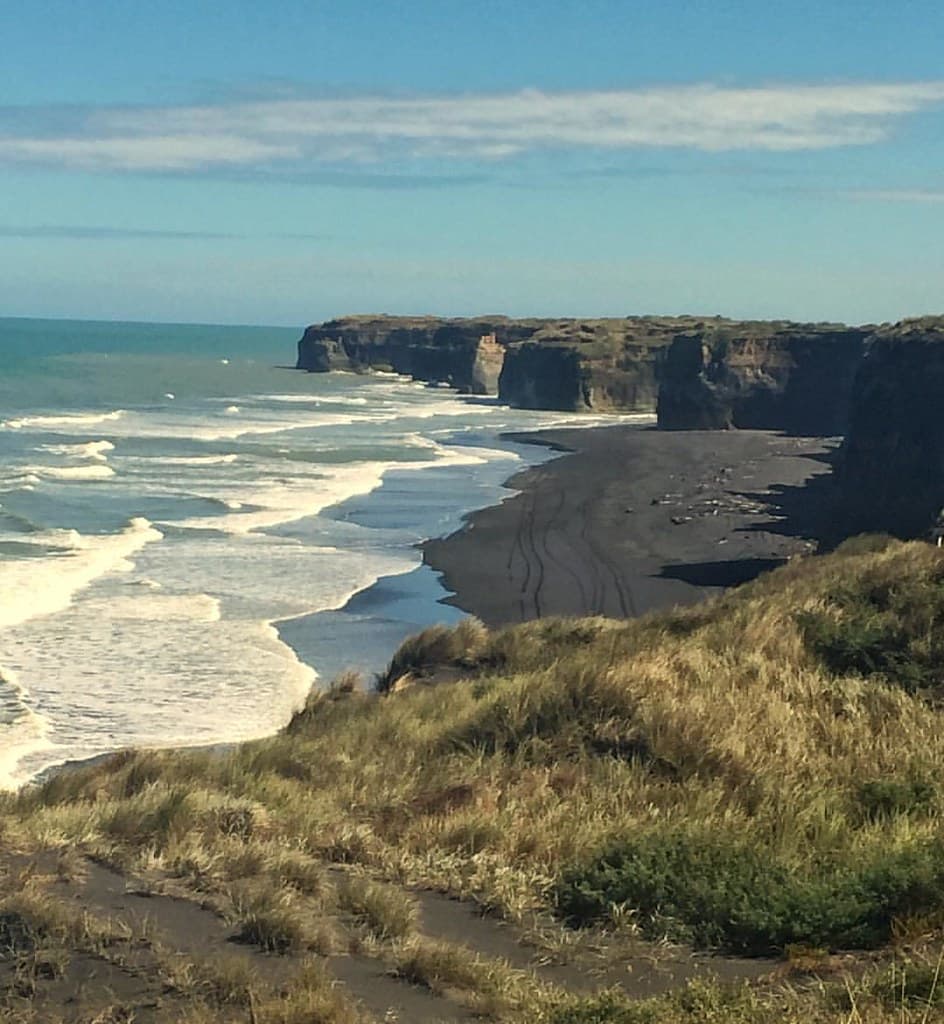
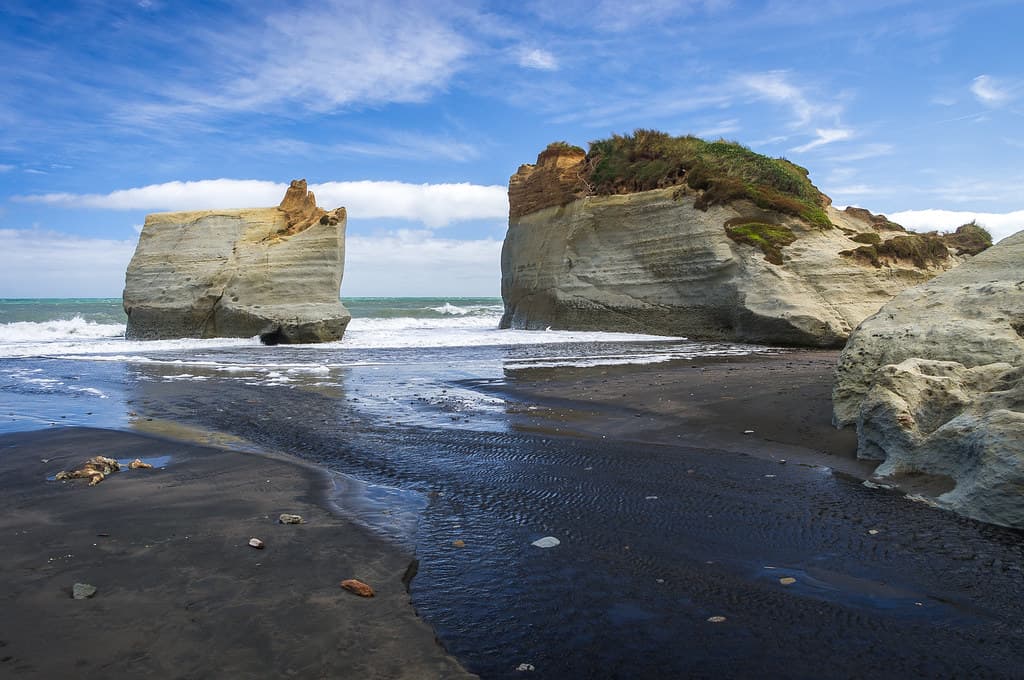
Pātea Beach sits where the Pātea River completes its journey from inland hill country to the Pacific, the freshwater spreading across dark sand in patterns that change with every flood and every tide. The settlement clusters around this meeting point—a mix of older fibro baches and newer holiday homes arranged along streets that lead to the foreshore. This is South Taranaki's version of coastal living: unpretentious, weather-exposed, appealing primarily to those who measure vacation success by fish caught and children thoroughly exhausted from days in the surf. The beach itself extends north and south from the river mouth, the sand fine and dark, the waves typically manageable for family swimming during summer. At low tide, the firm sand becomes a thoroughfare for vehicles—locals driving to preferred fishing spots, launching boats through the shorebreak, or simply cruising the beach because they can. The river mouth draws fishermen year-round, their rods planted in the sand while they wait for kahawai to strike, thermos cups of tea steaming in the coastal wind. Behind the beach, the township of Pātea proper sits slightly inland, its freezing works closed decades ago but its community persisting around the essentials: school, pub, superette. Summer holidays bring the settlement to life—children on bikes, barbecues smoking between houses, teenagers congregating on the sand after dark. But even at peak season, this remains fundamentally a local beach, shaped by generations of South Taranaki families who return annually to the same modest properties, maintaining traditions of simple coastal holidays that predate social media and sustainable tourism buzzwords.
Places, rentals, tours and events within walking and driving distance of Pātea Beach.
Photos
Pātea Beach, located at the Pātea River mouth, presents typical west coast challenges including unpredictable surf, rips, and currents, particularly near the river outflow. The beach is unpatrolled, so swimmers should be experienced and cautious. River mouth areas can be especially hazardous due to changing channels, currents, and undertows. Swimming conditions vary significantly with tides and weather. The beach is more commonly used for fishing, walking, and surfing rather than casual swimming. Families with young children should supervise closely and consider paddling only in very calm conditions. Always check local conditions before entering the water.
Summer months (December-March) offer the warmest and most stable weather for visiting Pātea Beach, with temperatures typically ranging from 18-24°C. However, budget travellers can find better value accommodation and fewer crowds during shoulder and off-peak seasons (April-November), though weather becomes more variable. The beach and river mouth attract fishing enthusiasts year-round, with different seasonal fish runs. Sunsets are spectacular throughout the year. Holiday periods see more visitors from the local area. Spring and autumn provide pleasant conditions for beach walks and exploring the coastline without peak summer heat or crowds.
Pātea Beach is located at the western edge of Pātea town in South Taranaki, approximately 60 kilometres south of Hāwera and 90 kilometres south of New Plymouth. From State Highway 3, turn onto Bridge Street in Pātea and follow it westward toward the coast and river mouth. The beach access and parking area are clearly marked near where the Pātea River meets the sea. Roads are sealed and suitable for all vehicles. A private vehicle is essential as public transport to this rural coastal area is extremely limited. The drive offers scenic rural and coastal views.
Pātea township offers basic amenities within a short distance of the beach, including a hotel, café, takeaway options, and a small supermarket for supplies. Accommodation options in town include budget-friendly motels and holiday rentals. The Pātea Hotel provides meals and has a local pub atmosphere. For more extensive dining and lodging choices, Hāwera (approximately 20km north) offers additional motels, restaurants, and services. Many visitors bring picnic supplies to enjoy at the beach. Self-catering is common for those staying in local holiday homes. Budget travellers will find reasonable prices compared to larger tourist centres.
Pātea Beach's location at the Pātea River mouth creates a distinctive coastal environment where freshwater meets the Tasman Sea, attracting diverse birdlife and fish species. The area has historical significance as an important South Taranaki coastal settlement. The beach is particularly valued by local anglers for surf fishing and whitebait during season. The combination of river, beach, and coastal walks offers varied scenery. The authentic, unhurried atmosphere reflects traditional New Zealand coastal life away from major tourist routes. The area provides genuine local holiday appeal with fewer international visitors, offering insight into regional Kiwi beach culture.