
Counting the waves…
Counting the waves…

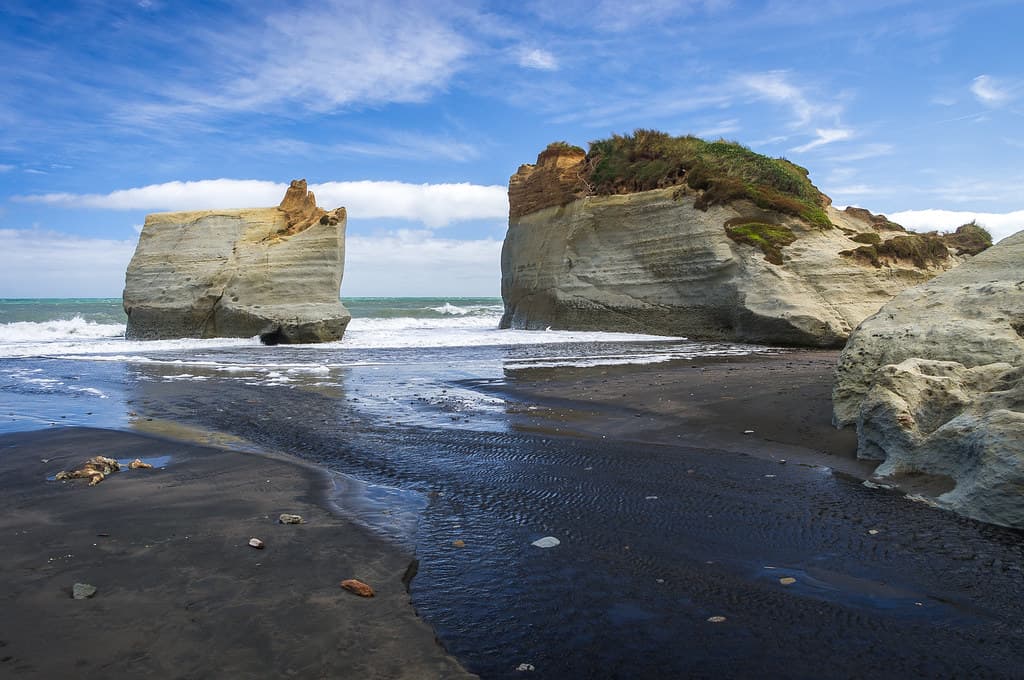
Waverley Beach unfolds beneath cliffs that tell stories in strata—bands of sandstone, mudstone, and clay exposed where the coast crumbles gradually into the Tasman Sea. The beaches themselves carry the region's characteristic black sand, but here it mingles with clay runoff from the bluffs, creating patterns of charcoal and ochre along the tideline. This southern reach of Taranaki sees a fraction of the visitors who congregate around Surf Highway 45, leaving the coastline to locals, serious surfers chasing uncrowded breaks, and occasional travelers who've taken the detour south from the main route. The settlement of Waverley sits inland, connected to the beach by a gravel road that winds through farmland where sheep graze slopes dotted with cabbage trees. At the coast, you'll find a small cluster of holiday homes and a camping ground that fills modestly in summer but never approaches capacity. The beach stretches in both directions, backed by cliffs that provide shelter from prevailing westerlies on their lee side. Driftwood accumulates in massive piles where storm waves deposit entire trees, their roots still attached, worn smooth by months of tumbling. Walking here requires watching the tides—some sections become impassable at high water when waves crash directly against cliff bases. But time it right and you can traverse kilometres of coastline, passing rock platforms where blue penguins sometimes nest and finding fossils weathering from the soft sediment. The isolation feels earned rather than accidental, a coastline that rewards the effort of getting slightly off the beaten track.
Places, rentals, tours and events within walking and driving distance of Waverley Beach.
Photos
Waverley Beach is an unpatrolled west coast beach with challenging surf conditions typical of the Taranaki coastline. Strong rips, unpredictable waves, and undertows can occur, making it suitable primarily for experienced swimmers. The black sand can become very hot in summer. Always check tide times and weather before entering the water, swim between the flags if lifeguards are present during peak season, and never swim alone. Paddling and beachcombing are safer alternatives for families with young children.
The best weather at Waverley Beach occurs during the warmer months from December to March, with temperatures ranging from 18-23°C. However, visiting during shoulder seasons (April-May or September-November) offers fewer crowds and still-pleasant conditions for beach walks. Summer weekends and public holidays see more visitors, though this beach remains quieter than northern Taranaki beaches. Sunsets are spectacular year-round. Check local forecasts as westerly winds can bring changeable weather any time of year.
Waverley Beach is located approximately 8 kilometres west of Waverley township in South Taranaki. From State Highway 3, take Waverley Beach Road westward through farmland until you reach the coast. The route is clearly signposted. The beach is about 70 kilometres south of New Plymouth and 35 kilometres north of Whanganui. A sealed road leads most of the way, with parking available near the beach. A personal vehicle is essential as public transport options to this coastal area are extremely limited.
Accommodation and dining options are limited directly at Waverley Beach. The nearby township of Waverley (8km away) offers basic amenities including a pub, café, and small grocery store for supplies. Some holiday homes and baches are available for rental near the beach. For more comprehensive accommodation and restaurant choices, visitors typically stay in Hāwera (25km south) or Pātea (15km south), both offering motels, hotels, and dining options. It's advisable to bring your own food and drinks for a beach day.
Waverley Beach stands out for its dramatic coastal cliffs and striking black iron-sand shore, characteristic of the region's volcanic geology. Its southern location means it receives fewer visitors than the popular surf beaches near New Plymouth, offering a more secluded experience. The beach provides excellent opportunities for fossil hunting along the cliffs and rock formations. The combination of rugged natural beauty, impressive sunsets over the Tasman Sea, and peaceful atmosphere makes it ideal for those seeking quiet coastal exploration away from tourist hotspots.