Counting the waves…
Counting the waves…
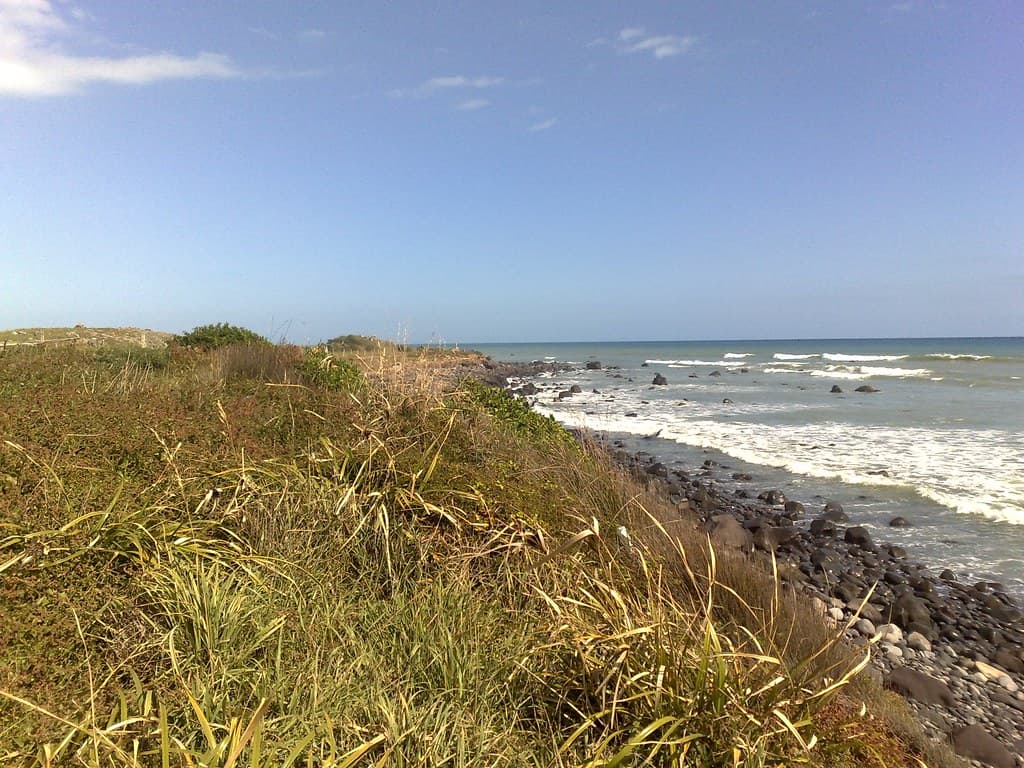
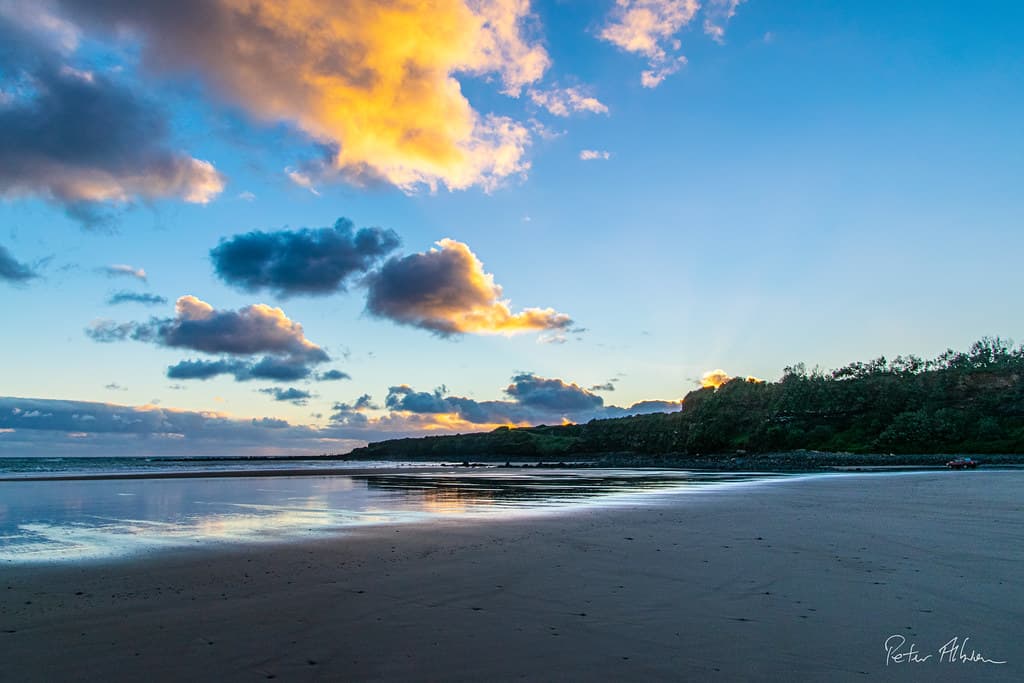
The drive to Raharaha takes you past dairy pastures that end abruptly at eroded bluffs, the land falling away to reveal a coastline shaped entirely by wind and wave. Black sand stretches in both directions, punctuated by house-sized boulders worn smooth over millennia. The beach belongs to the gulls and the tide; you might share it with a lone fisherman casting for kahawai, but more often you'll have only your footprints marking the shore. Sunset transforms the ordinary into the operatic. Mount Taranaki, when visible, turns violet against a sky streaked orange and bruised purple, its symmetrical cone mirrored in the wet sand at your feet. The light catches the spray from waves breaking over offshore rocks, throwing halos around each surge. You'll feel the offshore wind push against you, carrying salt and the faint tang of kelp. There are no amenities, no lifeguards, no sanitized beach experience. You bring what you need and take everything with you when you leave. The rocks are slick with algae; the currents are unforgiving. But for those who want the coast as it has always been—raw, uncompromising, and utterly indifferent to human comfort—Raharaha delivers.
Places, rentals, tours and events within walking and driving distance of Raharaha Beach.
Photos
Raharaha Beach is a rocky coastal area with rugged conditions typical of the Taranaki coast. Swimming is generally not recommended due to unpredictable surf, strong currents, and the rocky shoreline. There are no lifeguard patrols at this remote beach. The beach is better suited for walking, photography, and coastal exploration rather than water activities. Always check local conditions before visiting and never swim alone at unpatrolled beaches. If you do enter the water, stay close to shore and be extremely cautious.
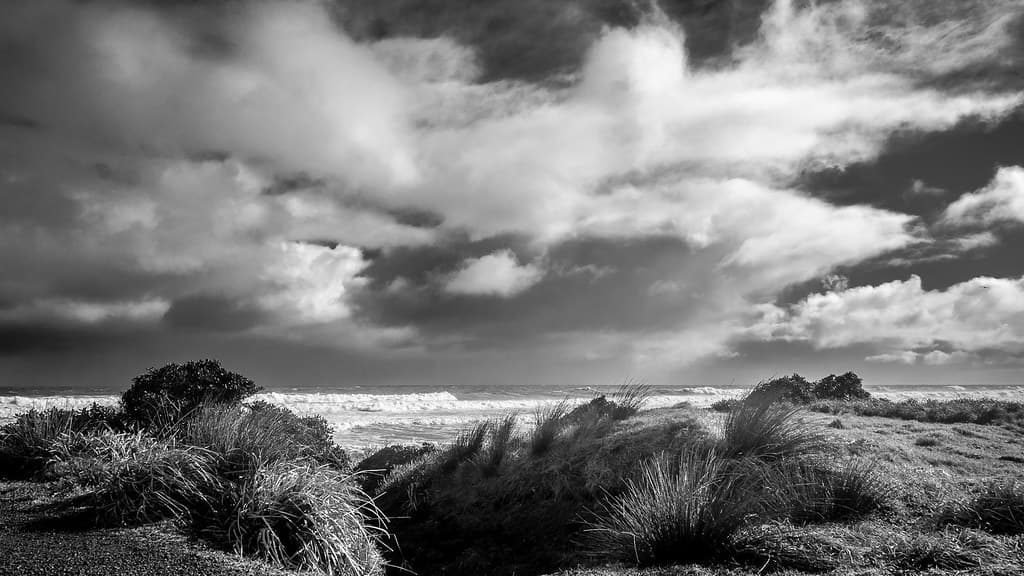
The best time to visit Raharaha Beach is during summer months (December to February) for the most pleasant weather, though the beach remains quiet year-round due to its remote location. The shoulder seasons of spring and autumn offer fewer crowds and excellent conditions for sunset viewing. Winter can be dramatic with powerful surf and moody skies, appealing to photographers. Visit during weekdays and outside school holidays for the most solitude. Weather on the Taranaki coast can change quickly, so check forecasts before travelling.
Raharaha Beach is located near Rahotu on the Taranaki coast, accessed via State Highway 45 (the Surf Highway). From New Plymouth, drive south for approximately 40 minutes. Turn off the highway onto local roads leading toward the coast near Rahotu township. The beach requires driving on rural roads, and access may involve unsealed tracks. A standard vehicle can usually access the area in good weather, but check local conditions. Limited signage means you may need to ask locals or use GPS coordinates for exact access points.
Raharaha Beach is in a sparse rural area with very limited facilities nearby. The small settlement of Rahotu offers basic services, but options are minimal. For accommodation, you'll need to stay in larger towns like Opunake (15 minutes south) or New Plymouth (40 minutes north), which offer motels, B&Bs, and holiday parks. Pack food and water for your beach visit as there are no cafes or shops at the beach itself. The nearest supermarkets and restaurants are in Opunake or Hawera.
Raharaha Beach exemplifies authentic, unspoiled Taranaki coastal character with minimal development and very low visitor numbers. Its rocky nature and rural setting provide a stark contrast to more popular sandy beaches in the region. The beach offers genuine solitude and raw coastal scenery without tourist infrastructure, appealing to those seeking off-the-beaten-path experiences. The combination of rugged coastline, dramatic surf, and potential Mount Taranaki views creates a quintessentially wild West Coast atmosphere. It's ideal for photographers and nature lovers who appreciate untouched landscapes over amenities.