Counting the waves…
Counting the waves…
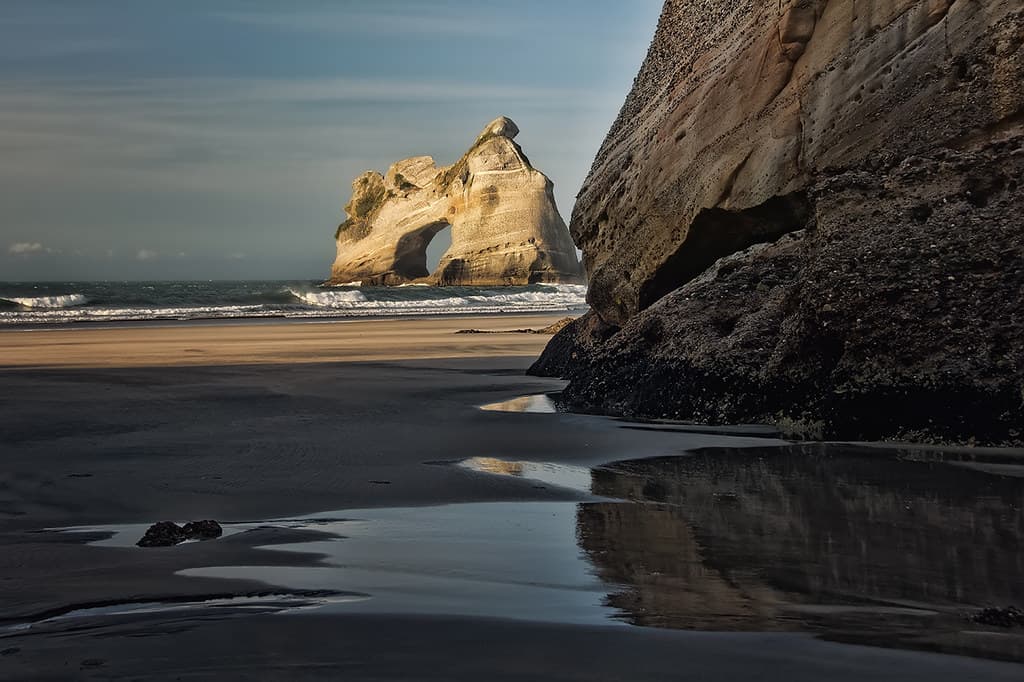
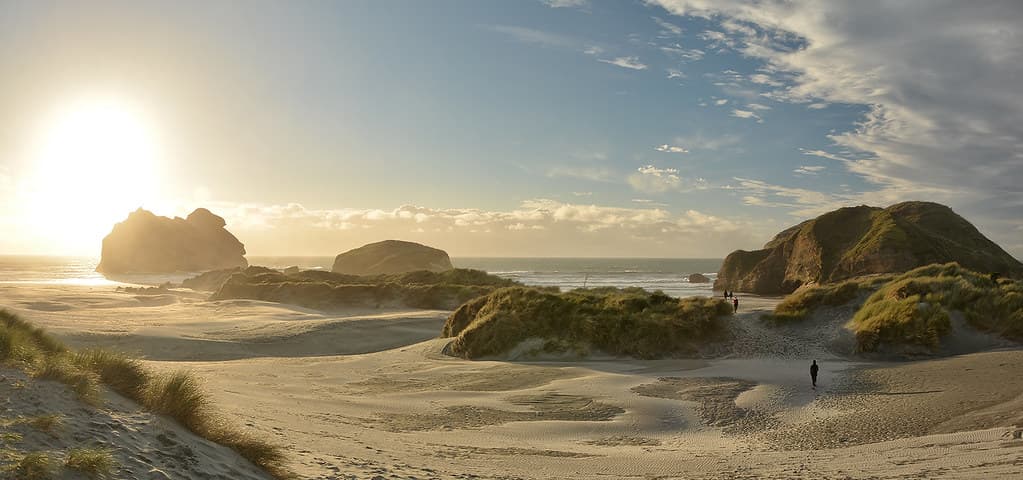
The walk in sets the tone: you cross paddocks where cows graze indifferently, climb a stile, then suddenly the vegetation changes—flax, toetoe, wind-sheared shrubs clinging to dunes. When you crest the final rise, Wharariki sprawls below in all its theatrical glory. Sea stacks jut from the beach like the ruins of some giant's temple. An enormous stone archway frames the western headland. The sand itself comes in streaks—pale gold near the waterline, darker where iron-rich streams have stained it. You descend through a gully where the dunes tower overhead, their crests sharp as knives. At the beach, the wind hits you properly now, carrying salt spray and the percussion of waves. Fur seals occupy the caves at the southern end; you'll hear their barking echoing off stone before you see them draped across rocks like bored sunbathers. The tide dictates what you can explore—at low water, you can walk through the main archway and investigate the rock pools beyond, where anemones retract at your shadow. This isn't a swimming beach. Rips run between the stacks, and the surf pounds with west-coast conviction. But for photography at any hour—sunrise gilding the eastern cliffs, sunset silhouetting the arches—Wharariki delivers drama other beaches can't match.
Places, rentals, tours and events within walking and driving distance of Wharariki Beach.
Photos
Swimming at Wharariki Beach is not recommended and can be dangerous. This West Coast beach faces the Tasman Sea and experiences strong rip currents, large waves, and unpredictable surf conditions. There are no lifeguards on duty. The beach is best enjoyed for walking, photography, and exploring rock formations at low tide. If you visit the caves or archways, always check tide times beforehand as areas can become cut off quickly. Keep a safe distance from cliff edges and be cautious on wet rocks.
Visit Wharariki Beach during low tide to fully explore the sea stacks, caves, and archways—check tide tables before your trip. Summer months (December-February) offer the most stable weather, though the beach is dramatic year-round. For photography, late afternoon provides stunning light for sunset shots, making it particularly Instagrammable. Weekdays and shoulder seasons (spring and autumn) mean fewer crowds. Winter can be spectacular but bring wild weather and strong winds, so dress appropriately in layers and waterproof gear.
Wharariki Beach is located at the northern tip of the South Island. From Takaka, drive toward Collingwood, then follow Wharariki Road (unsealed gravel) to the car park—about 30 minutes total. The final section is a 20-minute walk across farmland (follow marked paths and close gates behind you). The access track is relatively flat but can be muddy after rain. There is no public transport to the beach. The nearest towns are Collingwood (15km) and Takaka (30km). Rental cars can handle the gravel road in normal conditions.
Wharariki Beach has no facilities, so bring food and water. The nearest services are in Collingwood (15km away), which has a pub, cafe, and small store. Puponga Farm Park campground near the beach access offers basic camping. More accommodation options exist in Collingwood including motels, holiday homes, and backpackers. Takaka (30km) provides wider choices for dining and lodging. Many visitors day-trip from Golden Bay towns. Pack a picnic and take all rubbish with you as there are no bins at the beach.
Wharariki Beach is famous for its dramatic natural features including towering sea stacks (Archway Islands) rising from the sand, accessible caves and rock archways that can be explored at low tide, and massive wind-sculpted sand dunes. The wild, rugged West Coast scenery creates incredible photography opportunities, especially at sunset. You may spot New Zealand fur seals lounging on rocks (observe from a distance). The beach stretches for several kilometers, offering vast open spaces backed by dunes and fronted by powerful surf—quintessential untamed coastal landscape.