Counting the waves…
Counting the waves…

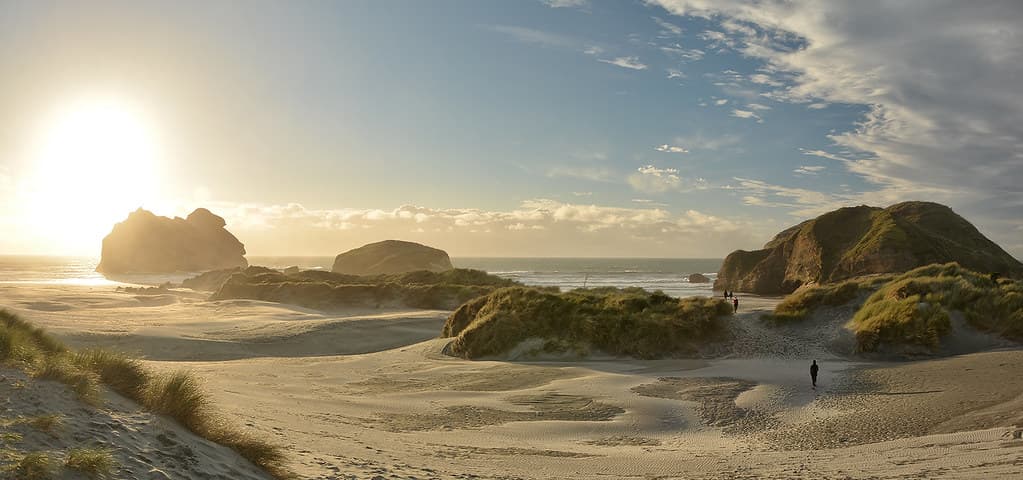
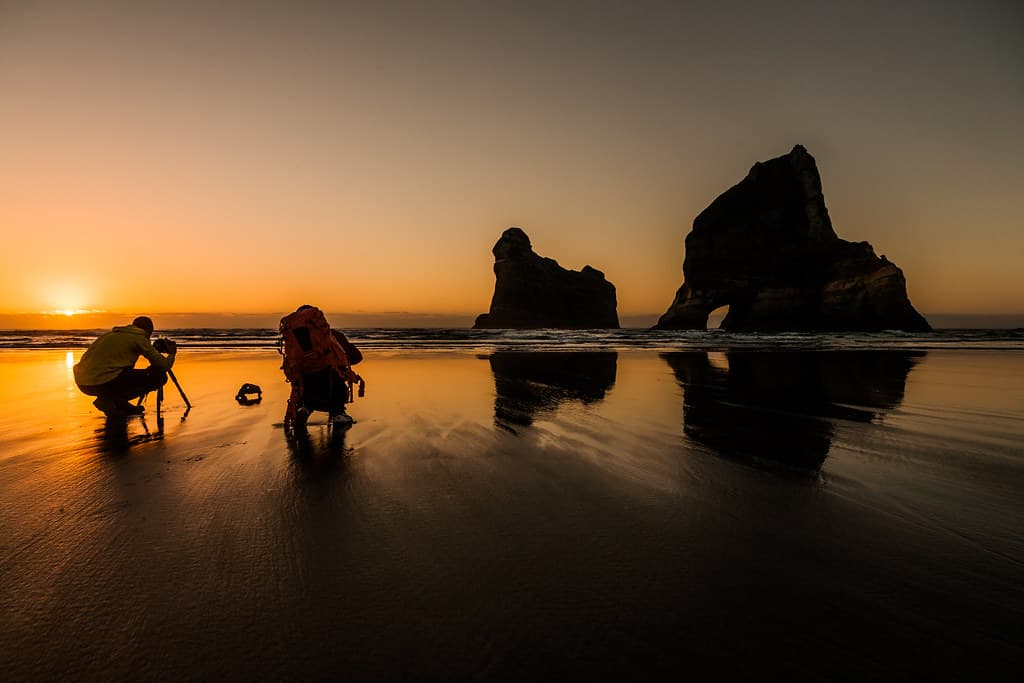
The approach through farmland gives no hint of what's coming: then the land drops away and you're standing above a beach that looks assembled by tectonic argument. Boulders, platforms of layered rock, tide pools carved into sedimentary shelves—Fossil Point wears its geological history on the surface. The rock strata tilt and fold, recording ancient seabed compressed into stone, now cracked and pitted by salt and storm. This is not a swimming beach. The ocean arrives with intent here, waves exploding against rock faces, spray lifting in sheets. On big swell days, the entire shoreline becomes percussion—boom and hiss, the constant movement of water reshaping stone molecule by molecule. You'll find sea caves undercut into cliffsides, arches framing pieces of horizon, and if you time it right, tide pools teeming with anemones and crabs. The name promises fossils, and patient searching reveals them: shell impressions, marine organism traces, the compressed memories of Oligocene seas. But the real draw is the wildness, the sense that this coast remains uninterested in human comfort. Photographers work the angles—rock textures against sky, wave action frozen mid-explosion, the interplay of light on wet stone. You leave windblown and slightly humbled.
Places, rentals, tours and events within walking and driving distance of Fossil Point Beach.
Photos
Swimming at Fossil Point Beach is generally not recommended due to its rocky nature, strong currents, and exposed location near the entrance to Golden Bay. The area experiences unpredictable tides and waves, making conditions challenging even for experienced swimmers. The beach is better suited for exploring rock formations, beachcombing, and photography. Always check tide times before visiting, as the rocky areas can become isolated during high tide. If you're looking for safer swimming, consider the more sheltered beaches along Golden Bay's inner coast.
The optimal time to visit is during summer months (December to February) when weather conditions are most stable and daylight hours are longer for exploration. However, shoulder seasons (March-May and September-November) offer fewer crowds while still providing decent weather. Visit during low to mid-tide to access the most interesting rock formations and fossil-bearing areas. Early morning or late afternoon provides the best lighting for photography. Winter months can be wild and dramatic but bring harsh winds and unpredictable weather, so come prepared with warm, windproof clothing.
Fossil Point Beach is located near Puponga in the far north of Golden Bay, approximately 30 minutes' drive from Collingwood and 2 hours from Takaka. From the main road, follow signs toward Wharariki Beach and Farewell Spit; Fossil Point is in this vicinity. The final approach typically involves unsealed roads that can be rough, so drive carefully. A standard car can usually access the area in good weather, but high-clearance vehicles are advantageous. Parking is limited and informal. Allow extra time for the journey on gravel roads.
The immediate Puponga area has very limited services—this is a remote, rural location. The nearest township with basic supplies is Collingwood, about 30 minutes away, which has a small store, cafe, and limited accommodation options including motels and campgrounds. For a wider range of restaurants, groceries, and lodging, Takaka (about 2 hours away) is the main service center for Golden Bay. It's essential to bring your own food, water, and supplies when visiting Fossil Point. Plan ahead and stock up before making the journey to this remote coastal area.
Fossil Point Beach stands out for its geological significance and dramatic rocky landscape. The area features fascinating rock formations that contain fossils and demonstrate millions of years of geological history, making it particularly interesting for geology enthusiasts and photographers. The wild, rugged scenery differs markedly from Golden Bay's typical sandy beaches, offering dramatic coastal vistas and unique Instagrammable backdrops. Its remote location near Farewell Spit means it remains relatively undiscovered, providing a sense of wilderness and solitude. The combination of geological interest and raw natural beauty makes it a distinctive destination worth the journey.