Counting the waves…
Counting the waves…
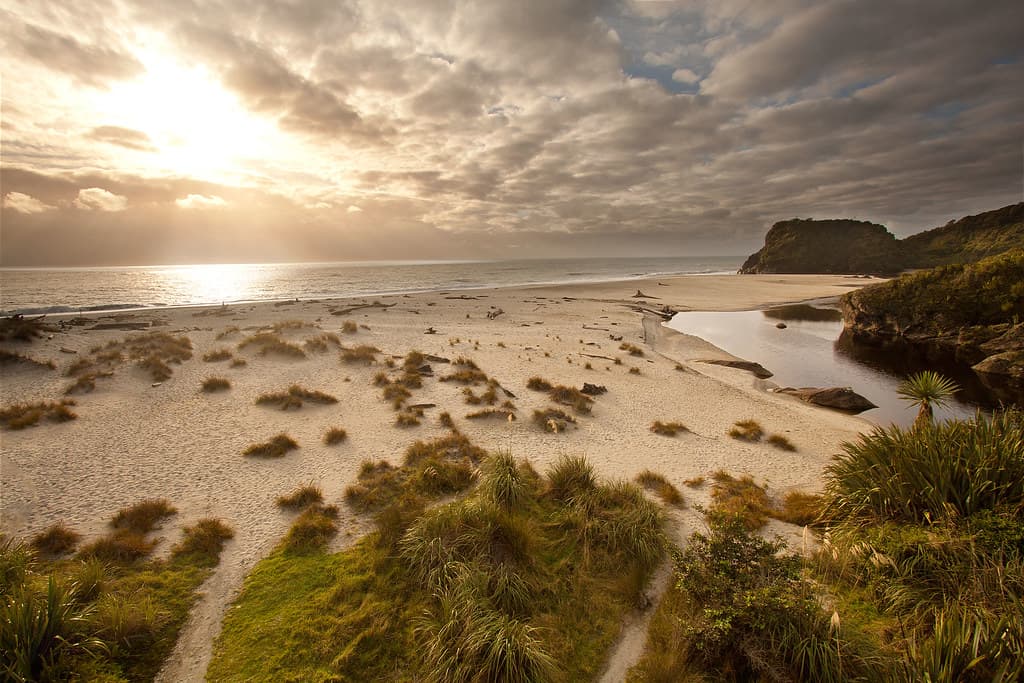
The track ends at a paddock gate, and beyond it stretches a curve of grey sand littered with bleached totara logs the size of small cars. The Poerua River braids across the beach in shallow channels that shift daily, and you can walk for an hour without seeing another soul. Oystercatchers patrol the tide line, their orange beaks bright against wet sand. Sunset here is a slow burn: the Alps turn violet, then the sky bleeds apricot across the Tasman, and the sand darkens to gunmetal. Wind sculpts the dunes into ripples that catch the last light. Seabirds settle on the river flats as the temperature drops. Bring layers—the West Coast wind is relentless, even in summer. The beach is long enough for a proper walk, and at low tide you can cross the river mouth to explore the southern headland. The roar of the Tasman is constant, a white noise that drowns out everything but your own thoughts.
Places, rentals, tours and events within walking and driving distance of Poerua Beach.
Photos
Swimming at Poerua Beach is not advisable due to the wild, exposed West Coast conditions. The beach faces the powerful Tasman Sea with strong currents, cold water, and unpredictable surf typical of South Westland. There are no lifeguard services, facilities, or other swimmers nearby in this remote location. The beach is best enjoyed for walking, beachcombing, and scenic appreciation. If you do enter the water, stay in shallow areas, never swim alone, and be extremely cautious of changing conditions and rips.
Visit Poerua Beach during the drier, warmer months between November and March when access roads are in better condition and weather is more stable, though rain is common year-round on the West Coast. The beach is ideal for those seeking solitude during less crowded periods, particularly on weekdays. Late afternoon visits reward you with stunning sunset opportunities over the Tasman Sea. Always check weather forecasts and road conditions before visiting, as heavy rainfall can affect access routes through this remote area.
Poerua Beach is accessed via back roads from Harihari township on State Highway 6. From Harihari, you'll need to navigate unsealed or gravel roads that may pass through farmland and river flats toward the coast. Road conditions vary depending on weather, and a sturdy vehicle is recommended. The route may cross private property in places, so respect any gates and signage. It's advisable to ask locally in Harihari for current access conditions and directions, as detailed mapping may be limited for this remote location.
Harihari township, the nearest settlement, offers basic services including a pub, small store, and limited accommodation options such as holiday parks and B&Bs. The township is small, so facilities are modest. For more comprehensive services, Franz Josef (approximately 35 km north) or Hokitika (approximately 100 km south) provide wider choices of accommodation, restaurants, and supplies. It's wise to stock up on food, water, and fuel in larger towns before visiting this remote beach, especially for day trips or picnics.
Poerua Beach offers exceptional remoteness and isolation, even by West Coast standards. Located near the Poerua River flats in South Westland, it provides an authentic wilderness coastal experience rarely found in mainstream guides. The beach's proximity to wetlands and river systems creates unique landscapes where mountains, rivers, and ocean converge. Expect long stretches of wild, driftwood-laden sand with virtually no development or other visitors. It's ideal for photographers, nature lovers, and those seeking true solitude along New Zealand's rugged western coastline.