Counting the waves…
Counting the waves…
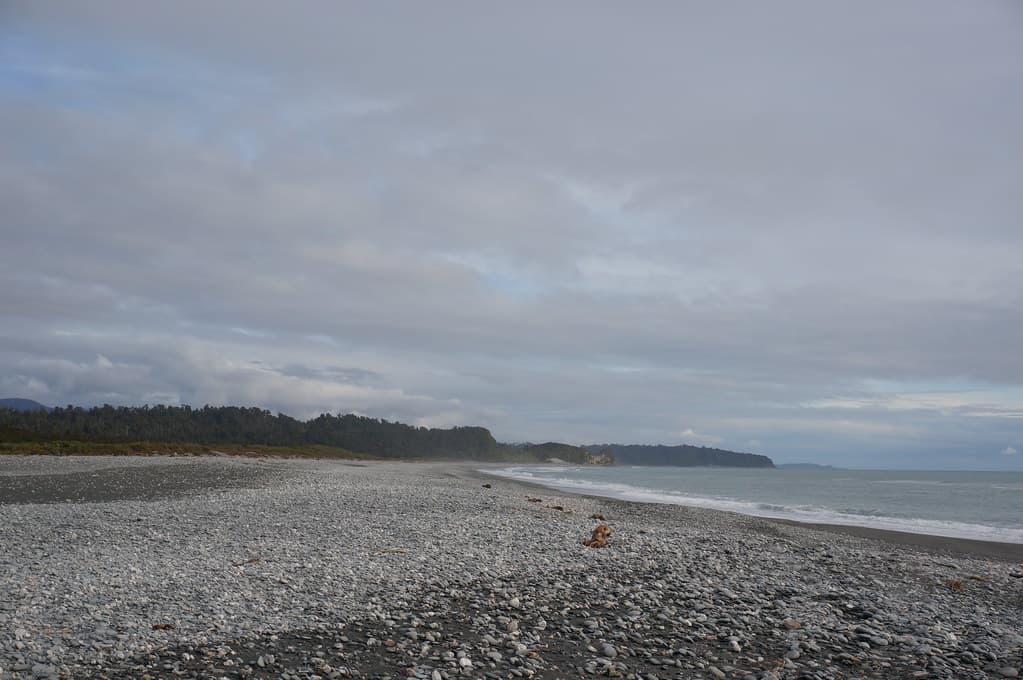
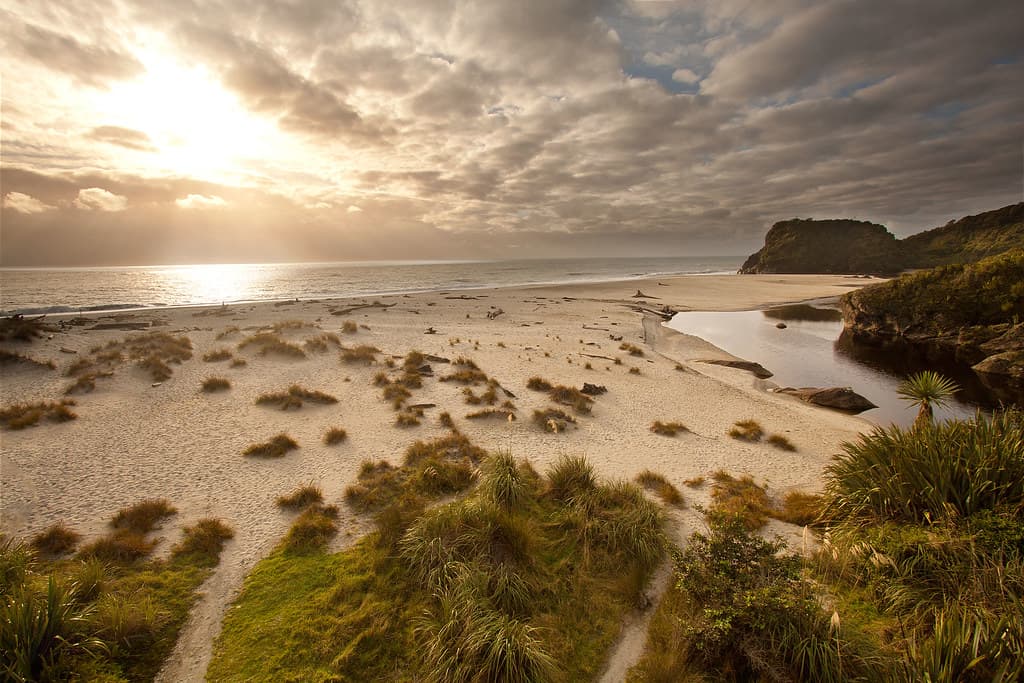
Ōkārito exists in beautiful isolation—a handful of baches and a permanent population you can count on two hands. The beach begins where the lagoon outlet meets the ocean, a dynamic junction where fresh and salt water mix across ever-shifting sandbars. The sand itself is pale grey, finer than typical West Coast beaches, and extends in a gentle curve north toward the Three Mile headland. Behind you, the Ōkārito lagoon spreads across wetlands that harbor white herons and countless other species, while inland, the Southern Alps stack up in such clarity they seem within touching distance. Walk north and the beach becomes progressively wilder and emptier. Driftwood accumulates in the upper beach, and on calm days you can walk for an hour without seeing another person. The surf here is gentler than exposed West Coast beaches—the lagoon outlet and offshore sandbars take some of the Tasman's aggression out of the waves. Families actually swim here on warm days, a rarity on this coast. Rock pools form near the southern headland where the lagoon mouth creates complicated currents and deposits shells, driftwood, and occasionally, pieces of worked greenstone. The light at Ōkārito has a particular quality—something about the wetlands and ocean combining to create skies that photographers drive hours to capture. Sunsets paint the Alps in alpenglow while the lagoon turns to mercury and the ocean reflects clouds in intricate detail. The village has no shops, no cafes, no facilities beyond a toilet block and boat ramp. This remoteness is the entire point. You come to Ōkārito to step outside the West Coast tourist circuit entirely, to find a beach that still feels genuinely isolated despite being marked on maps.
Places, rentals, tours and events within walking and driving distance of Ōkārito Beach.
Photos
Ōkārito Beach has gentler conditions than many exposed West Coast beaches due to its position near the lagoon, but caution is still necessary. The beach experiences variable conditions with potential rips and currents, and is unpatrolled. Families can enjoy paddling and playing in shallow water on calm days, but supervision is essential. The water remains cold year-round. Conditions can change quickly, so assess the surf before entering. The beach is safer for beach walks, exploring rock pools at low tide, and nature observation than serious swimming. Always prioritize safety, particularly with children, and never swim alone in this remote location.
Visit Ōkārito Beach during settled weather periods, typically more common in summer and autumn, though the West Coast climate is unpredictable year-round. Early morning offers the best chance for clear views of the Southern Alps, including Aoraki Mount Cook on exceptionally clear days. Visiting outside peak summer (mid-week or shoulder seasons) ensures fewer crowds and a more peaceful experience of this remote area. Consider coordinating your visit with low tide for better beach exploration. The area is also renowned for birdwatching, particularly white herons (kōtuku), with guided tours available seasonally. Check weather forecasts before travelling to this isolated location.
Ōkārito is accessed via a 13-kilometre sealed road that turns off State Highway 6, approximately 130 kilometres south of Hokitika and north of Franz Josef. The turnoff is clearly signposted. The road is suitable for all vehicles and winds through native forest before reaching the tiny settlement of Ōkārito. The beach is a short walk from the village end-of-road parking area. Allow about 15-20 minutes' drive from the highway turnoff. Be aware that Ōkārito is remote with no mobile coverage in some areas. Fill up with petrol before leaving main towns, and check your vehicle is in good condition.
Ōkārito is a tiny settlement with very limited services. There's a small DOC campground and a few private accommodation options including cottages and B&Bs, but no shops, restaurants, or cafes. Visitors must bring all food and supplies from larger towns like Franz Josef (approximately 25km south) or Whataroa (15km north). The nearest petrol stations and supermarkets are in these towns. Book accommodation well in advance as options are limited. The lack of facilities is part of Ōkārito's charm, offering a genuine remote experience, but requires planning and self-sufficiency. Mobile phone coverage is also limited or absent.
Ōkārito Beach offers a unique combination of wild coastline, pristine lagoon environment, and spectacular Southern Alps views, including Aoraki Mount Cook on clear days. The area is ecologically significant, with New Zealand's largest wetland supporting rare birdlife including white herons. The remote, undeveloped character provides an authentic wilderness experience increasingly rare elsewhere. Ōkārito's tiny permanent population (around 30 people) and minimal tourist infrastructure create a peaceful, contemplative atmosphere. The beach's position at the interface of mountains, forest, lagoon, and ocean creates exceptional scenic diversity. It's a place for those seeking solitude, natural beauty, and connection with untouched coastal wilderness.