Counting the waves…
Counting the waves…

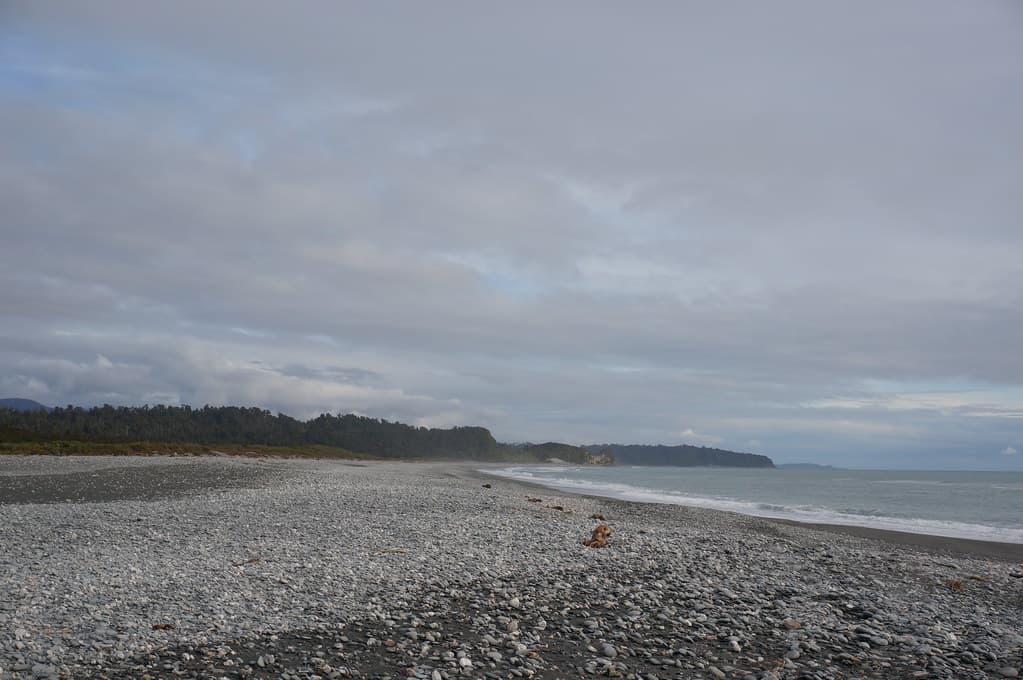
Saltwater Beach earns its name from the brackish lagoon that forms where the Poerua River slows and spreads before meeting the sea. The water here shifts from glacier-fed turquoise inland to amber where tannins leach from the coastal wetlands, finally surrendering to the Tasman's slate-grey breakers. You arrive at low tide when the lagoon is shallowest, warm enough for wading while the ocean beyond remains frigid and forbidding. Families from Harihari claim this beach on summer weekends, children splashing in the lagoon's calm water while parents set up beneath the driftwood logs that line the upper beach. The sand is coarser here than beaches further north, mixed with small rounded pebbles that rattle in the receding waves. Toetoe grasses fringe the lagoon's southern edge, bending in the constant breeze that carries the competing scents of saltwater and river mud. You walk the spit that separates lagoon from ocean, one foot in each ecosystem. On the lagoon side, flounder dart through shallows and gulls pick through exposed mudflats. Ocean-side, the surf pounds with characteristic West Coast intensity, sending spray high enough to taste on your lips. The beach curves south toward the Wanganui River mouth, a stretch of sand that sees perhaps a dozen visitors on the busiest summer day. You understand why Harihari locals guard this place quietly—it offers the rare combination of safe swimming and wild coastline within a five-minute drive.
Places, rentals, tours and events within walking and driving distance of Saltwater Beach.
Photos
Swimming at Saltwater Beach requires caution. The West Coast is known for powerful Tasman Sea surf, strong currents, and unpredictable conditions. The river mouth and lagoon areas may appear calmer but can have shifting channels and currents. There are no lifeguards on duty. Stick to shallow paddling, supervise children closely, and avoid swimming alone. Check conditions locally before entering the water, and be aware that water temperatures are cool year-round.
For fewer crowds, visit during autumn (March-May) or spring (September-November). The West Coast receives high rainfall year-round, so dry weather is never guaranteed. Summer (December-February) offers the warmest temperatures but can still be wet. Winter brings dramatic storm-watching opportunities. Early morning visits often provide the calmest conditions and best light for photography. The lagoon and river-mouth scenery is particularly beautiful after rainfall when water levels are higher.
Saltwater Beach is located a short drive from Harihari township on State Highway 6 along the West Coast. From Harihari, follow local signage toward the coast. The beach requires driving on a combination of sealed and unsealed roads, with the final access typically via gravel. A standard vehicle can usually access the area in good weather, but check local conditions as West Coast roads can be affected by rainfall. Allow extra time for unsealed sections.
Harihari township, a few kilometers away, offers basic services including a general store, café, and fuel. Accommodation options in Harihari include motels, holiday parks, and bed-and-breakfasts. For wider dining and lodging choices, Hokitika (approximately 80km north) and Franz Josef (approximately 90km south) provide more extensive options. It's advisable to stock up on supplies before visiting as beach-side facilities are non-existent. The nearest major town is Greymouth, about 120km north.
The lagoon and river-mouth system at Saltwater Beach creates unique coastal scenery distinct from typical West Coast surf beaches. The mixing of fresh river water with the Tasman Sea produces interesting natural patterns and attracts birdlife. The calmer lagoon waters provide opportunities for wildlife observation and photography that the open ocean doesn't offer. This environment showcases the dynamic relationship between New Zealand's rainforest-fed rivers and the sea, making it particularly appealing for nature enthusiasts seeking quieter coastal experiences.