Counting the wavesβ¦

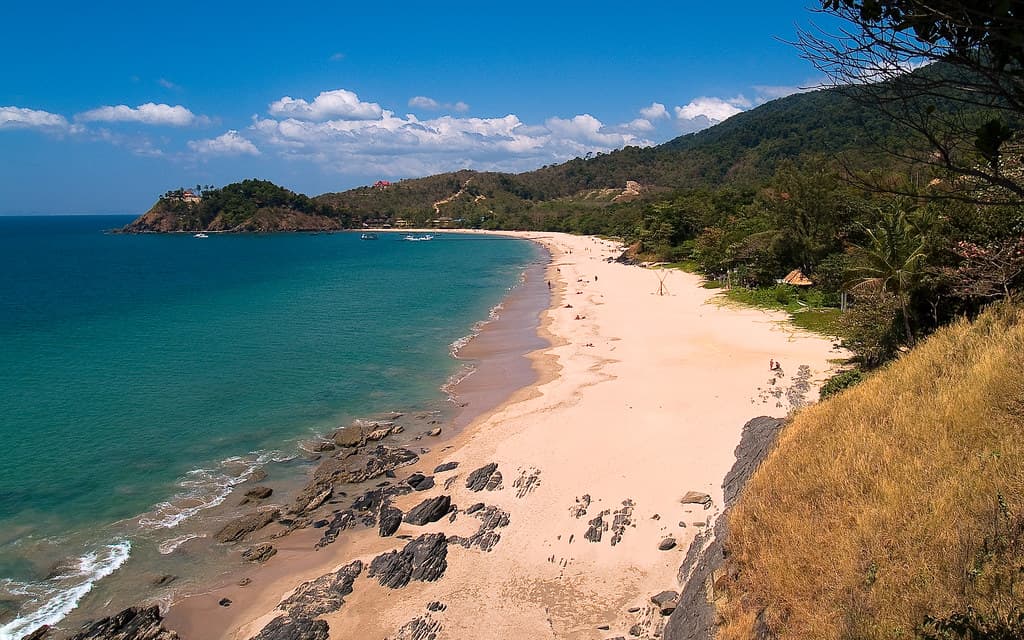
The longtail boats arrive at Ba Kantiang around nine in the morning, their engines cutting out as the sand shelf rises to meet wooden hulls. You wade in through bathwater warmth, feeling the give of fine sand between your toes, and already the reef is visibleβdark patches of coral gardens stippling the seafloor like inkblots on silk. By midday, the casuarina pines throw slanted shadows across the beach, and you claim one, spreading your sarong over roots that have drunk decades of monsoon rains. Beneath the surface, sergeant majors dart between table corals while you float facedown, mask fogging slightly, the only sound your own breathing and the distant clatter of a beachside kitchen preparing som tam. The bay's horseshoe geography keeps waves to gentle swells; the Andaman here feels more like a lake than an ocean. As the sun drops toward the headland, the light turns amber, then rose, catching the limestone karsts that bookend the bay. Local fishermen check their nets near the northern rocks, and the smell of grilling mackerel drifts across the sand. You rinse off under a freshwater tap, salt crystals dissolving on your shoulders, already planning tomorrow's return.
Places, rentals, tours and events within walking and driving distance of Ba Kantiang Bay.
Photos
Ba Kantiang Bay offers generally safe swimming conditions during the dry season (November-April) when waters are calm and clear. The bay's sheltered position provides protection from strong currents, though the beach has some rocky areas requiring caution when entering the water. Snorkeling is excellent here with coral reefs visible from shore, but watch for sharp rocks and coral. During monsoon season (May-October), conditions can become rough and swimming is not recommended. No lifeguards are present, so assess conditions carefully and avoid swimming alone in this relatively secluded spot.
Ba Kantiang Bay remains relatively quiet year-round due to its hidden location, but for the least crowded experience, visit during the shoulder months of November or late April to early May. Even during peak tourist season (December-February), this beach sees significantly fewer visitors than Ko Lanta's more accessible northern beaches. Weekdays are quieter than weekends. Early mornings before 10am offer the most solitude. While low season (June-October) is very quiet, many facilities close and weather conditions make access and swimming challenging.
Ba Kantiang Bay requires more effort to reach than mainstream beaches, contributing to its hidden gem status. Located on Ko Lanta's southwest coast, you must first reach Ko Lanta from Krabi Town via ferry or land route (3-4 hours total). Once on the island, the bay is accessed via a steep, unpaved path from the main road near Kantiang Bay, requiring 10-15 minutes of hiking. The trail can be challenging, especially when wet. Some visitors arrive by longtail boat from nearby beaches. A scooter or taxi to the trailhead is recommended.
Ba Kantiang Bay has minimal facilities, preserving its hidden, natural character. There is typically no permanent food service, accommodation, or beach facilities directly on the beach. Occasionally, a small beach shack may operate during high season selling drinks and simple snacks, but this is not guaranteed. Visitors should bring sufficient water, food, and sun protection. The nearest accommodations and restaurants are at neighboring Kantiang Bay, a short distance away. The lack of development is precisely what attracts visitors seeking an unspoiled, peaceful beach experience away from commercial tourism.
Ba Kantiang Bay features impressive coral formations close to shore, making it accessible for snorkelers of all levels without needing boats. The crystal-clear waters provide excellent visibility, typically better than more frequented beaches due to less disturbance from swimmers and boats. The reef ecosystem supports diverse marine life including colorful tropical fish, sea urchins, and various coral species. The bay's rocky headlands create natural habitats for marine creatures. The secluded nature means the reef experiences less damage from tourism, maintaining healthier coral compared to heavily visited snorkeling spots around Krabi.