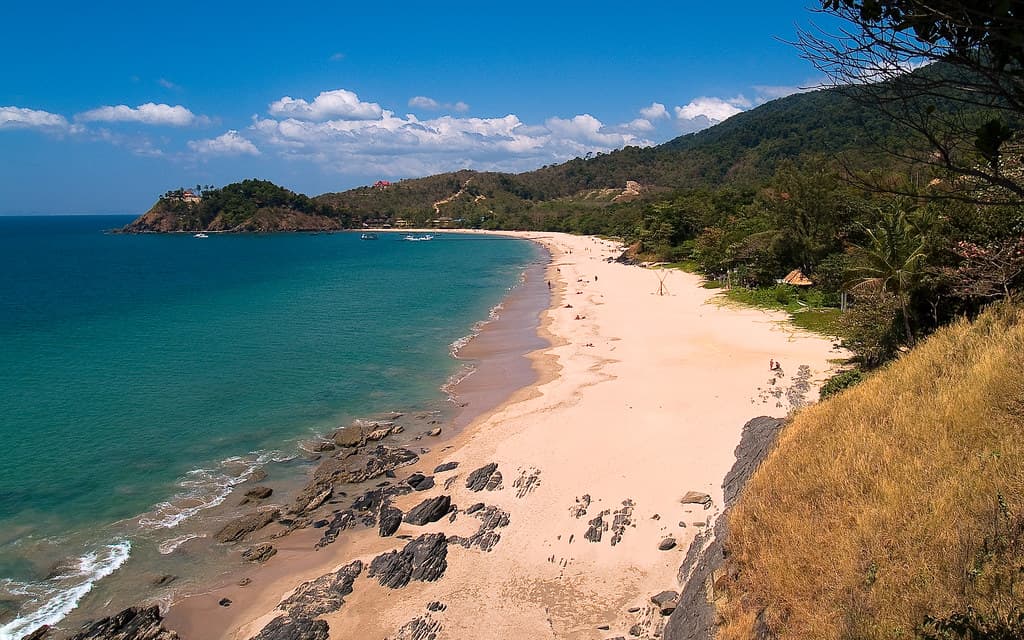
Counting the waves…
Counting the waves…
You arrive on the morning boat from the mainland and step onto weathered planks that creak underfoot, two hundred years of footsteps worn into the teak. The shophouses stretch along the eastern shore in various states of picturesque decay—some restored into cafes with Edison bulbs and flat whites, others still functioning as actual hardware stores where locals buy rope and fishing hooks by the kilo. The beach reveals itself at low tide: a strip of coarse sand mixed with shells and the occasional blue crab scuttling sideways toward the mangroves. This is where the island conducts its daily business—boats loaded with supplies, kids walking home from school across the mud flats, someone's uncle grilling satay outside a house so old it lists slightly to starboard. You duck into a cafe that serves Chiang Mai coffee and coconut cake, watching through salt-hazed windows as a longtail pilot coaxes his engine to life with adjustments that look more like negotiation than mechanics. By afternoon, the tide's in, lapping at the pier pilings, and you wander the single street, passing a shopfront selling dried fish so pungent your eyes water, a bar painted turquoise where an Italian expat serves Aperol spritzes to confused backpackers, a temple with gold leaf flaking from the Buddha's hands. This is the Lanta that existed before the resorts, and somehow it persists.

Places, rentals, tours and events within walking and driving distance of Lanta Old Town Beach.
Photos
Lanta Old Town Beach is not primarily known as a swimming destination. The waterfront here is more of a traditional fishing village setting with wooden piers and shallow mudflats that appear during low tide. Swimming conditions are generally not ideal due to boat traffic, murky water, and the tidal nature of the area. Visitors come here more for cultural exploration, photography, and experiencing authentic local life rather than beach activities. If you're looking for swimming, head to the west coast beaches of Koh Lanta which offer better sand and clearer waters. Treat this as a cultural stop rather than a beach destination.
The best time to visit Lanta Old Town Beach is during the dry season from November to April, when weather is pleasant for walking and exploring the historic area. Budget travelers particularly benefit from visiting during the shoulder months of May and October when accommodation rates drop and crowds thin out. Early morning or late afternoon offers the best light for photography and cooler temperatures for strolling the wooden walkways. Visit during weekdays for a more authentic local experience with fewer tourists. The town remains accessible year-round, though some establishments close during the monsoon season from June to September.
Lanta Old Town is located on the eastern side of Koh Lanta island. To reach the island from the mainland, take a ferry from Krabi's various piers or use the vehicle ferry from the nearby coast. Once on Koh Lanta, the Old Town is accessible by scooter, taxi, or arranged transport from west coast beach resorts, typically a 20-30 minute drive. Most visitors rent scooters for flexibility in exploring the island. During high season, minivan services connect the Old Town with popular beaches. The area is compact and walkable once you arrive, with wooden boardwalks connecting shops and restaurants along the waterfront.
Lanta Old Town offers charming boutique guesthouses and restored traditional wooden houses converted into atmospheric accommodations, generally at mid-range prices. The area provides excellent value during budget travel periods with authentic character you won't find at resort beaches. Dining options include excellent seafood restaurants, traditional Thai eateries, and cafes serving both local and Western food. Many restaurants sit on stilts over the water, offering unique dining experiences. You'll find fresh seafood prepared with local recipes, as this is still an active fishing community. Several bakeries and coffee shops cater to international visitors while maintaining local charm.
Lanta Old Town Beach is fundamentally different from typical Thai beaches because it prioritizes cultural heritage over beach activities. This historic settlement features traditional wooden Sino-Portuguese architecture, a working fishing village atmosphere, and authentic local life rarely found in resort areas. Unlike swimming-focused beaches, the appeal here lies in wandering wooden walkways, exploring heritage buildings, visiting small museums, and experiencing genuine island culture. The waterfront setting provides scenic backdrops rather than beach recreation. It offers insight into traditional southern Thai coastal life, making it essential for travelers interested in culture and history rather than just sun and sand.