Counting the waves…
Counting the waves…
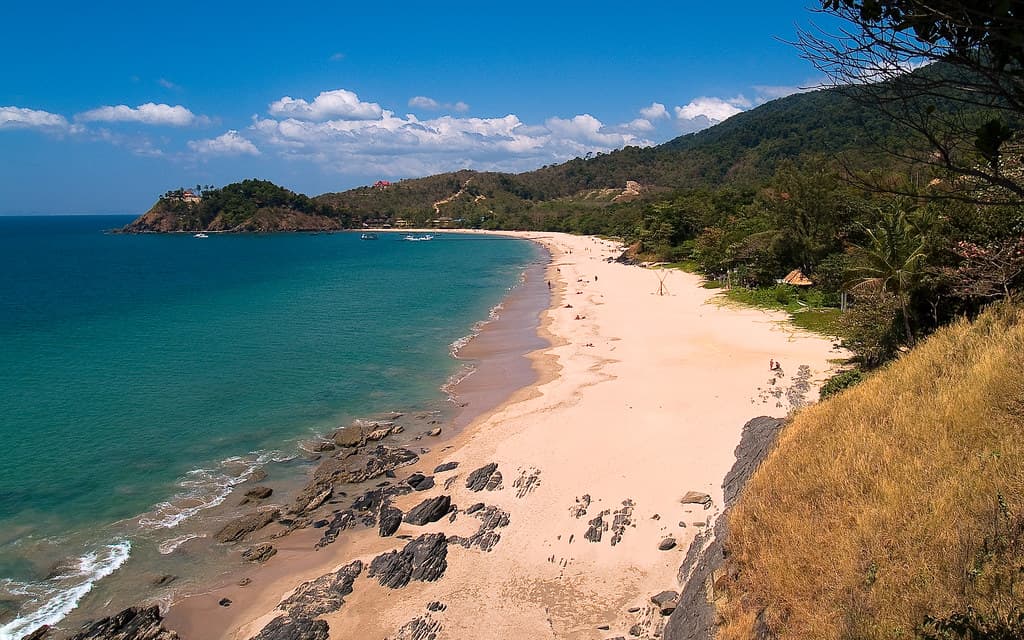
You descend through rubber plantations and jungle to reach Kantiang, the road switchbacking down until the bay reveals itself: a smooth arc of sand backed by palms and ironwood trees, the water gradating from transparent shallows to deep cerulean at the bay's center. The beach remains remarkably uncrowded despite its beauty—Ko Lanta's southern location means fewer day-trippers, and the handful of resorts blend into the vegetation rather than dominating the shoreline. The sand here feels different from northern beaches, slightly coarser, peppered with tiny shell fragments that create a faint pink tint in certain light. Wade in and the seafloor stays visible until you're chest-deep, the water so calm that even novice swimmers relax into long, lazy strokes parallel to shore. Snorkeling is possible around the rocky points at either end of the bay, where sergeant majors and angelfish navigate the boulder fields, though the real appeal is simply floating in water that feels designed for human bodies—perfectly temperate, buoyant, forgiving. After swimming, rinse off beneath the freshwater shower at the bay's center and retreat to shade. Local vendors sell green mango with chili salt and coconut ice cream from carts they wheel across the sand. By late afternoon, when the sun drops behind the western headland, the bay falls into shadow while the opposite promontory glows gold, and the water takes on the deep blue-green of jade.

Places, rentals, tours and events within walking and driving distance of Kantiang Bay.
Photos
Kantiang Bay is generally safe for swimming with calm, clear waters, especially during the dry season from November to April. The bay's protected location creates gentle conditions ideal for families with children. The beach has a gradual slope into the water, making it suitable for less confident swimmers. However, during monsoon season (May-October), waves can be stronger and swimming may be unsafe. There are no permanent lifeguards, so always supervise children closely and check local conditions. The serene atmosphere makes it particularly family-friendly.
Visit Kantiang Bay during the dry season from November through April for the best weather conditions. December to February offers perfect beach weather with calm seas, minimal rainfall, and comfortable temperatures. March and April are hotter but still excellent for beach activities. During these months, you'll experience the bay's signature calm waters and clear skies. The monsoon season (May-October) brings heavy rains, rough seas, and many establishments close. For the ideal combination of weather and fewer crowds, November or late February through March works well.
Kantiang Bay is located on Ko Lanta's southwest coast. From Krabi Town, take a minivan to Ban Hua Hin pier (1.5 hours), then a ferry to Ko Lanta (1.5 hours). During dry season, regular ferries operate daily. Alternatively, use the land route via two bridge connections with minibus services available. Once on Ko Lanta, Kantiang Bay is about 30 minutes by taxi or scooter from Saladan pier, heading south along the main coastal road. Total travel time is 3-4 hours. Many resorts offer transfer packages.
Kantiang Bay offers a good range of accommodation from budget bungalows to luxury resorts, mostly nestled among tropical vegetation along the beachfront. The area maintains a peaceful, less developed atmosphere compared to northern Ko Lanta beaches. Several beachfront restaurants serve fresh seafood, Thai cuisine, and international options, with most resort properties having their own dining facilities. A few independent restaurants and bars are scattered near the beach. The selection is more limited than busier beaches, contributing to the serene escape atmosphere. Advance booking recommended during peak season.
Kantiang Bay's location on Ko Lanta's southern end attracts fewer tourists than northern beaches like Klong Dao or Phra Ae. The bay's natural horseshoe shape creates a sense of enclosure and tranquility, with lush green hills providing a scenic backdrop. Development has been kept relatively low-key with accommodation blending into the landscape rather than dominating it. The combination of calm waters, soft white sand, and peaceful atmosphere creates an ideal setting for relaxation. The beach attracts visitors specifically seeking quieter experiences rather than party scenes or extensive tourist facilities.