Counting the waves…
Counting the waves…

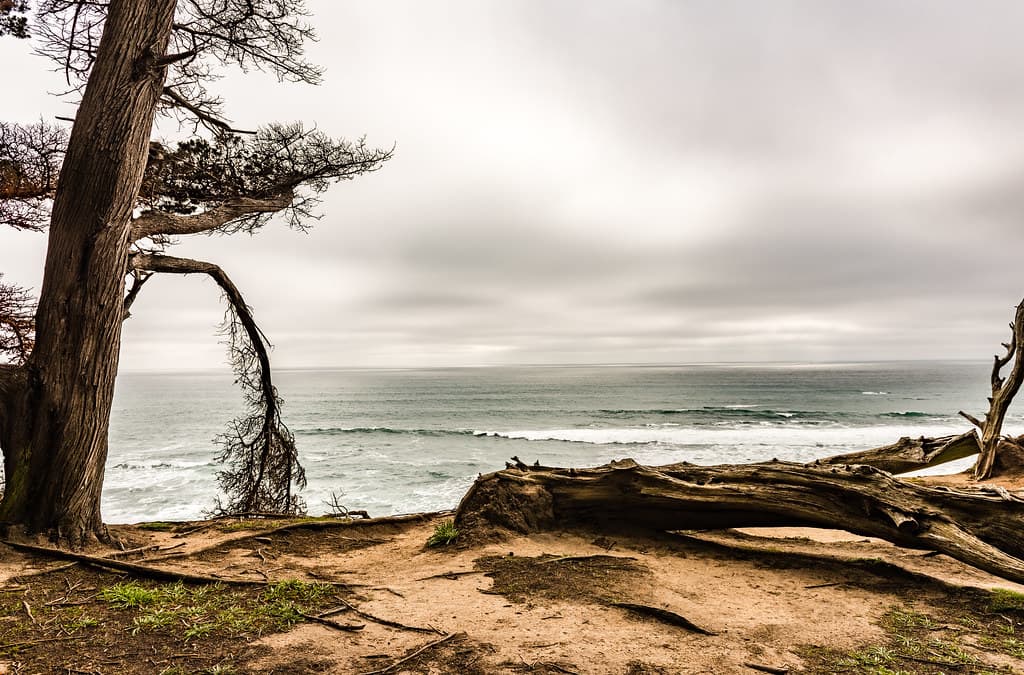
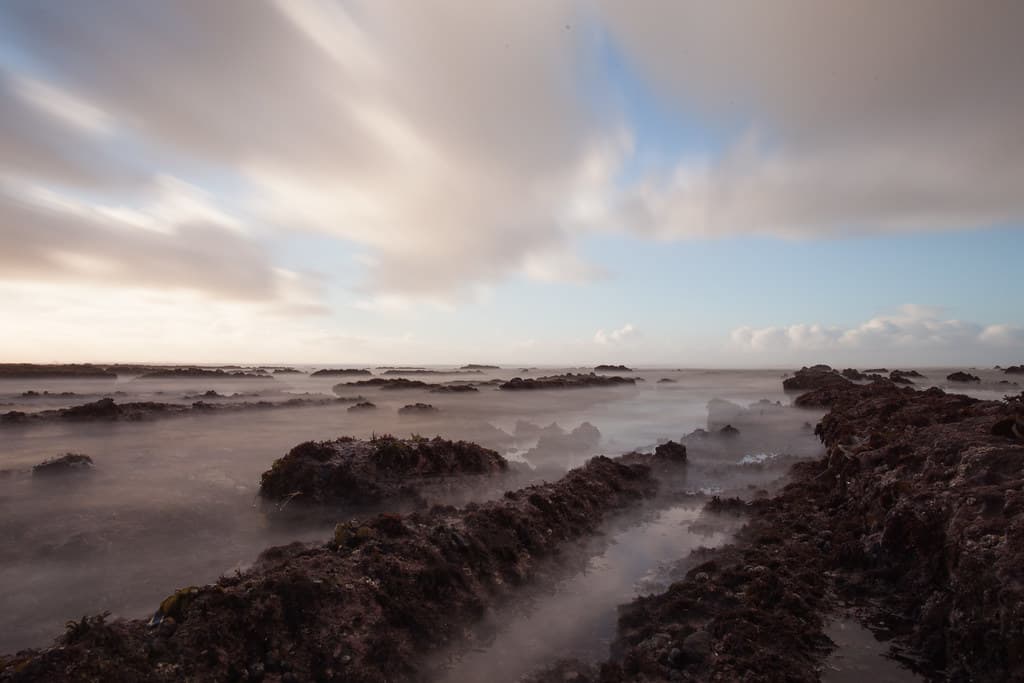
Fitzgerald Marine Reserve draws tide-watchers, not wave-riders. You descend wooden stairs past Monterey cypress and eucalyptus, stepping onto sand that gives way to a maze of volcanic reef shelves exposed twice daily. The shoreline stretches narrow and pebbly in places, backed by eroded bluffs streaked ochre and gray, but it's the reef—a living ledger of starfish, chitons, sculpins, and moon snails—that holds your attention. Rangers patrol during minus tides, gentle guardians reminding visitors to look but not touch. Beyond the tidepools, the beach offers solitude. Fog often clings to the coast year-round, muting the horizon into soft gradients of steel and silver. You walk westward along the sand, passing driftwood logs smoothed by salt and time, listening to harbor seals bark from offshore rocks. Surfers rarely bother with the weak, mushy waves here; this is a place for slowness, for kneeling on wet stone and watching a nudibranch inch along kelp. Come prepared for cold. The water hovers in the low fifties, even in summer. Wear layers, pack a windbreaker, and check tide charts before you arrive—low tides below +1.0 feet reveal the reserve's full spectacle. Moss Beach remains deliberately uncommercialized: no snack shacks, no umbrellas for rent, just you, the invertebrates, and the patient rhythm of the sea.
Places, rentals, tours and events within walking and driving distance of Fitzgerald Marine Reserve Beach.
Photos
Swimming is generally not recommended at Fitzgerald Marine Reserve. The beach is primarily known for tide pooling rather than swimming, with rocky terrain, strong currents, and cold water temperatures year-round (typically 50-60°F). The area is a protected marine reserve, so activities are regulated to preserve wildlife. Wading in shallow tidepools during low tide is popular and safer, but visitors should always watch for sneaker waves, wear appropriate footwear on slippery rocks, and supervise children closely. Check tide schedules before visiting for the best tide pooling experience.
The best time to visit is during low tide, particularly minus tides (below 0.0 feet), when more tidepools are exposed. These typically occur during winter and spring months. Plan to arrive 1-2 hours before the lowest tide point for optimal viewing. Mornings often offer calmer conditions and better light for photography. The reserve is accessible year-round, but summer brings more visitors and higher tides. Always check local tide charts before your visit. Overcast days are actually ideal as they prevent tidepools from overheating and keep marine life more active.
The main entrance is located off California Street in Moss Beach, about 20 miles south of San Francisco. Free parking is available in a small lot at the reserve entrance (at the end of California Street), but it fills quickly on weekends and during low tides. Additional street parking is available along North Lake Street and nearby residential areas. From Highway 1, turn onto California Street and follow signs to the reserve. Public transportation options are limited; driving is recommended. Arrive early during peak times, especially on weekend mornings with favorable tides.
Moss Beach has limited dining options within walking distance. The Distillery Restaurant, about a mile north, offers casual dining with ocean views. More restaurants are available in nearby Half Moon Bay (about 6 miles south), including seafood spots and cafes along Main Street. For lodging, the Seal Cove Inn in Moss Beach provides upscale accommodations. Half Moon Bay offers more hotel choices ranging from budget to boutique properties. Princeton-by-the-Sea, just a few miles away, has additional casual seafood restaurants. Pack snacks and water, as there are no facilities at the reserve itself.
Fitzgerald Marine Reserve hosts diverse marine life including sea stars (multiple species and colors), hermit crabs, shore crabs, sea anemones, sea urchins, chitons, and various snails and limpets. You may spot octopuses hiding in crevices, though they're shy and well-camouflaged. The reserve's protected status means abundant wildlife, but touching or removing any creatures is strictly prohibited. Rangers and docents often provide free guided walks on weekends, offering expert identification and education. Bring a waterproof field guide or download a tide pool app to help identify species. Respect all marine life by observing without disturbing.