
Counting the waves…
Counting the waves…

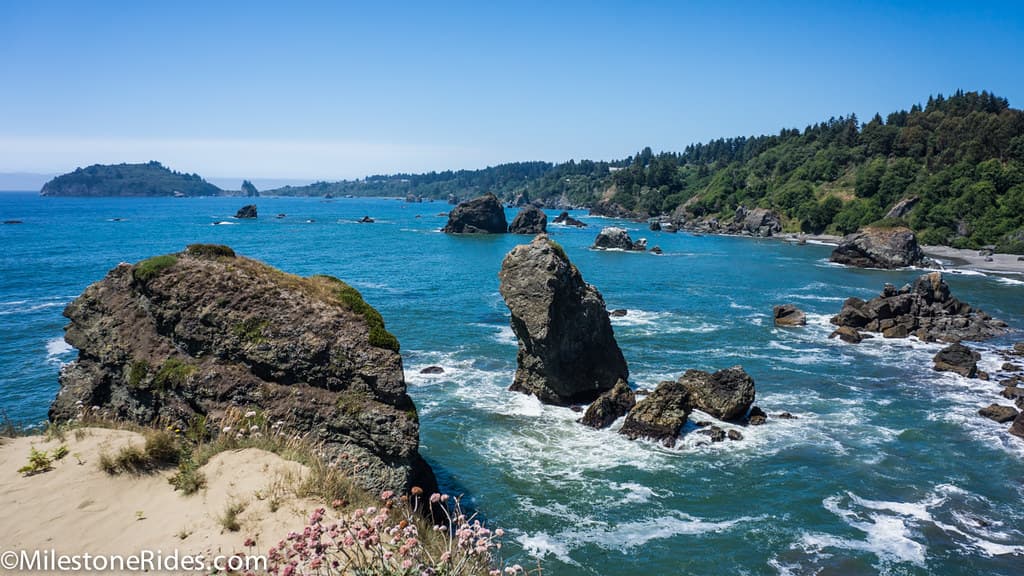
The trail drops you onto a narrow beach where the sand holds the dark, fine grain of volcanic geology and driftwood tangles form impromptu benches above the high-tide line. Offshore, a parade of sea stacks—some crowned with tufts of salt-tolerant grasses, others bare stone—interrupts the horizon. Gulls and cormorants roost on the rocks while harbor seals occasionally surface in the calmer pockets between swells. This is not a beach for swimming; the water stays frigid year-round and rip currents patrol the shoreline. Instead, you'll want to time your visit for low tide, when agates and jade pebbles appear among the cobbles and tide pools reveal ochre sea stars clinging to basalt. The beach faces northwest, so afternoon light turns golden early, painting Trinidad Head and the rocky outcrops in warm amber. Pack layers—the North Coast delivers fog and wind even in July—and bring binoculars if you're visiting between December and April, when gray whales migrate close enough to shore that you can see their blows from the bluff. The parking area holds maybe a dozen cars, and the beach's reputation as a locals' refuge means you'll often have long stretches of shoreline to yourself, interrupted only by the percussion of waves against stone.
Places, rentals, tours and events within walking and driving distance of Luffenholtz Beach.
Photos
Swimming at Luffenholtz Beach is generally not recommended due to strong currents, cold water temperatures, and unpredictable waves common along Northern California's coast. The beach is better suited for tide pooling, beachcombing, and scenic viewing rather than swimming. If you do wade in the water, stay close to shore and never turn your back on the ocean, as sneaker waves can occur without warning. The rocky cove and dramatic surf make this primarily a sightseeing destination rather than a swimming beach.
Luffenholtz Beach offers year-round beauty, though each season brings different experiences. Summer and early fall typically provide the most pleasant weather with less fog and calmer seas, ideal for tide pooling and photography. Winter and spring bring dramatic wave action and storm-watching opportunities, plus potential whale-watching from the bluffs. Morning visits often feature clearer skies before coastal fog rolls in during afternoons. Low tide is best for exploring tide pools and rock formations. The beach's sheltered cove provides some wind protection during breezy conditions.
Luffenholtz Beach is located about 3 miles south of Trinidad off Highway 101. Take the Scenic Drive exit and follow signs toward the coast. There's a small parking area at the trailhead with space for approximately 10-15 vehicles. From the parking lot, a moderately steep trail descends roughly 0.2 miles to the beach through coastal forest. The path can be slippery when wet, so wear sturdy footwear. Parking is free, and the limited spaces fill quickly on sunny weekends, so arrive early for best availability.
Luffenholtz Beach has no facilities—no restrooms, water, or food services—so come prepared. The nearby town of Trinidad, about 3 miles north, offers restaurants, cafes, small markets, and lodging options including inns, vacation rentals, and bed-and-breakfasts. Popular dining spots include seafood restaurants and casual cafes in Trinidad's small downtown. For more extensive services and accommodations, Arcata is approximately 15 miles south. Plan to bring water, snacks, and use facilities before arriving, as the beach is quite remote and undeveloped.
Luffenholtz Beach stands out for its genuinely secluded feel and intimate rocky cove setting, often less crowded than Trinidad State Beach. The beach features dramatic sea stacks, excellent tide pools teeming with marine life, and stunning geological formations framed by forested bluffs. Its hidden location down a wooded trail creates a sense of discovery that many neighboring beaches lack. The south-facing cove offers relative shelter and spectacular sunset views. Photographers particularly appreciate the unique rock formations and the interplay of forest meeting ocean in this picturesque, lesser-known gem.