Counting the waves…
Counting the waves…

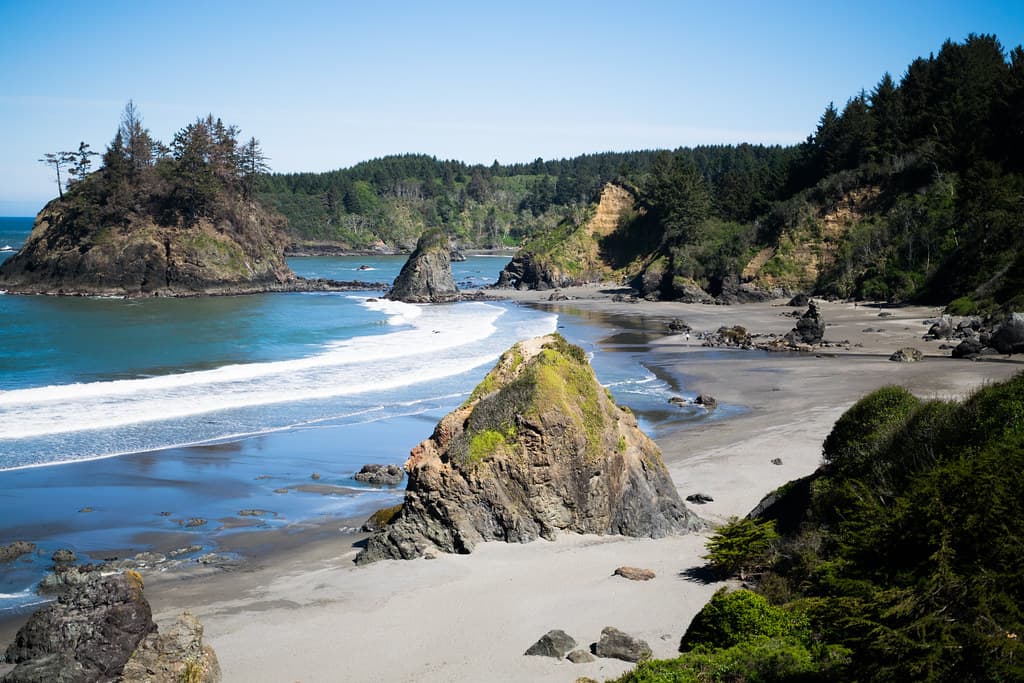
The staircase deposits you onto coarse sand studded with polished stones and kelp ribbons still damp from the last tide. To your left, Trinidad Head rises steep and green; to your right, Pewetole Island and its smaller companions break the swells into white collars of foam. The beach curves no more than a quarter mile, but every square foot earns its reputation—this is the postcard shot that defines California's North Coast, the image that appears on calendars and highway rest-stop brochures. You'll share the sand with beachcombers hunting agates, photographers timing the light, and couples tucked against driftwood logs the size of compact cars. The water stays frigid year-round, mid-fifties even in summer, but wetsuited locals paddle out to the point break. Low tide reveals sculpted sandstone shelves where anemones retract at your shadow and hermit crabs scramble between purple sea stars. Above the beach, the hamlet of Trinidad—population under 400—clings to the headland with a white-steepled memorial lighthouse, a working pier where trawlers unload Dungeness crab, and a handful of weathered motels where you fall asleep to fog horns. The town exists because of this cove, and the cove feels untouched because the town never grew past it.
Places, rentals, tours and events within walking and driving distance of Trinidad State Beach.
Photos
Swimming at Trinidad State Beach requires caution due to cold water temperatures year-round (typically 50-55°F), strong currents, and occasional sneaker waves. The beach is better suited for wading, tidepooling, and beachcombing rather than swimming. There are no lifeguards on duty. The protected cove offers calmer conditions than exposed Northern California beaches, but always watch children closely near the water. Check tide tables before visiting, as high tides can significantly reduce beach access and create hazardous conditions near rocks.
Trinidad State Beach can be visited year-round, with each season offering unique appeal. Summer (June-August) brings warmer temperatures and less fog, ideal for picnicking and exploring, though coastal fog can still appear. Spring and fall offer excellent whale-watching opportunities and fewer crowds. Winter provides dramatic storm-watching from the bluffs. Mornings typically have clearer skies before afternoon fog rolls in. The beach faces west, making it spectacular for sunset viewing throughout the year. Arrive during low tide for best tidepooling and beach exploration.
Trinidad State Beach is located off Highway 101, about 25 miles north of Eureka. Take the Trinidad exit and follow Trinidad Scenic Drive into town. The main parking area is a small lot near the Trinidad Memorial Lighthouse, which provides beach access via a steep stairway. Parking is free but limited to approximately 20 spaces, filling quickly on summer weekends. Arrive early or consider visiting on weekdays. Additional street parking may be available in Trinidad village, a short walk away.
Trinidad village, walking distance from the beach, offers several dining options including the Lighthouse Grill, Trinidad Bay Eatery & Gallery, and seafood markets. Larrupin' Café, known for fine dining, is nearby. Accommodation options include Trinidad Inn, Bishop Pine Lodge, Turtle Rocks Oceanfront Inn, and Trinidad Bay Bed & Breakfast, most offering ocean views. The beach itself has no facilities—no restrooms, food vendors, or water fountains—so plan accordingly. Patrick's Point State Park, five miles north, offers camping with full amenities.
The Trinidad Memorial Lighthouse is a prominent landmark perched on the bluff above Trinidad State Beach. This replica lighthouse (the original was built in 1871) serves as a memorial and houses a fog bell. While the lighthouse itself is not open for interior tours, visitors can walk around the exterior and enjoy interpretive displays. The area around the lighthouse offers spectacular coastal views and photo opportunities. The adjacent bluff path provides excellent vantage points for viewing the beach, Trinidad Head, and surrounding rocky coastline.