Counting the waves…
Counting the waves…

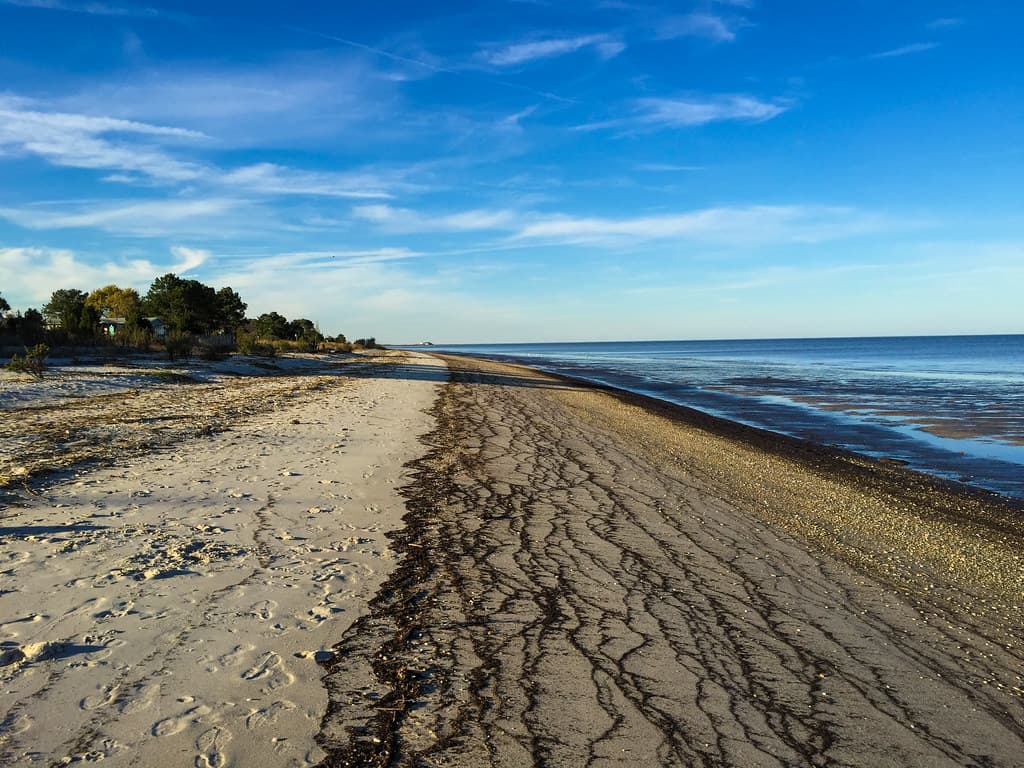
The boardwalk groans under your feet—a weathered pier stretching over tidal marsh toward open water. Woodland Beach doesn't pretend to be anything but itself: a working waterfront where crabbers still check pots at dawn and the beach smells of brine, marsh mud, and the particular funk of horseshoe crabs making their annual pilgrimage. The sand runs coarse and shell-flecked, better for hunting treasures than spreading towels, while the bay laps gently at the shore with none of the Atlantic's drama. You'll share this stretch with fishermen casting into the channel and birders training binoculars on the marsh edge, where egrets and ibis wade through cordgrass. The water stays shallow for fifty yards out, warming to bathwater temperatures by July, though most locals come for the view rather than the swim. An old lighthouse—red-roofed, white-sided—stands sentry at the pier's end, its beacon dark now but its silhouette defining every sunset photograph. Come at high tide when the bay swallows the mudflats, or at low when you can walk out to sandbars and watch fiddler crabs scatter. The beach operates on bay time here, governed by lunar cycles and seasonal migrations rather than lifeguard whistles. Pack your own shade, your own lunch, and expect to leave with sand in unexpected places and the particular peace that comes from shores the tourism brochures forgot.
Places, rentals, tours and events within walking and driving distance of Woodland Beach.
Photos
Woodland Beach is primarily known for scenic views rather than swimming. The Delaware Bay waters here are shallow with muddy bottoms and can have strong currents. There are no lifeguards on duty, and swimming is not actively encouraged due to water quality and safety concerns. Most visitors come for fishing, birdwatching, and enjoying the peaceful boardwalk atmosphere. If you're seeking swimming opportunities, consider heading to Delaware's Atlantic Ocean beaches like Rehoboth or Dewey Beach instead, which offer guarded swimming areas and clearer waters.
Woodland Beach offers year-round appeal depending on your interests. Spring and fall are ideal for birdwatching, as the area sits along important migratory routes. Summer brings warm weather perfect for fishing and boardwalk strolls, though it can be humid. Sunrise and sunset visits are particularly rewarding for photography enthusiasts. Weekdays tend to be quieter than weekends. Winter offers a serene, uncrowded experience, though facilities may be limited. The beach is generally accessible throughout the year, making it a flexible destination for those seeking a peaceful Delaware Bay retreat.
Woodland Beach is located about 10 miles east of Dover, Delaware. From Route 13, take Route 8 east toward Little Creek, then follow signs to Woodland Beach Road. The drive takes approximately 20 minutes from downtown Dover. Free parking is available near the boardwalk and beach area, with several small lots accommodating visitors. The area is accessible by car only, as public transportation options are limited in this rural coastal region. Roads are well-maintained and suitable for all vehicles year-round.
Woodland Beach has limited on-site amenities. The seasonal Woodland Beach Tavern offers casual dining when open, but hours can be limited. For more dining options, Dover (10 miles west) provides numerous restaurants and fast-food chains. Accommodations are not available directly at Woodland Beach. Visitors typically stay in Dover, which offers various hotels, motels, and bed-and-breakfasts. Some visitors come for day trips only. It's advisable to bring snacks and drinks, especially during off-season months when local facilities may be closed.
Woodland Beach sits along the Delaware Bay, a critical stopover point on the Atlantic Flyway migration route. During spring migration (May-June), thousands of shorebirds, including red knots, ruddy turnstones, and sanderlings, arrive to feed on horseshoe crab eggs. The area's tidal flats, marshes, and shallow waters create ideal habitat for both migratory and resident species. Visitors can spot egrets, herons, and various waterfowl throughout the year. The quiet boardwalk and observation areas provide excellent vantage points without disturbing wildlife, making it popular among birding enthusiasts.