Counting the waves…
Counting the waves…

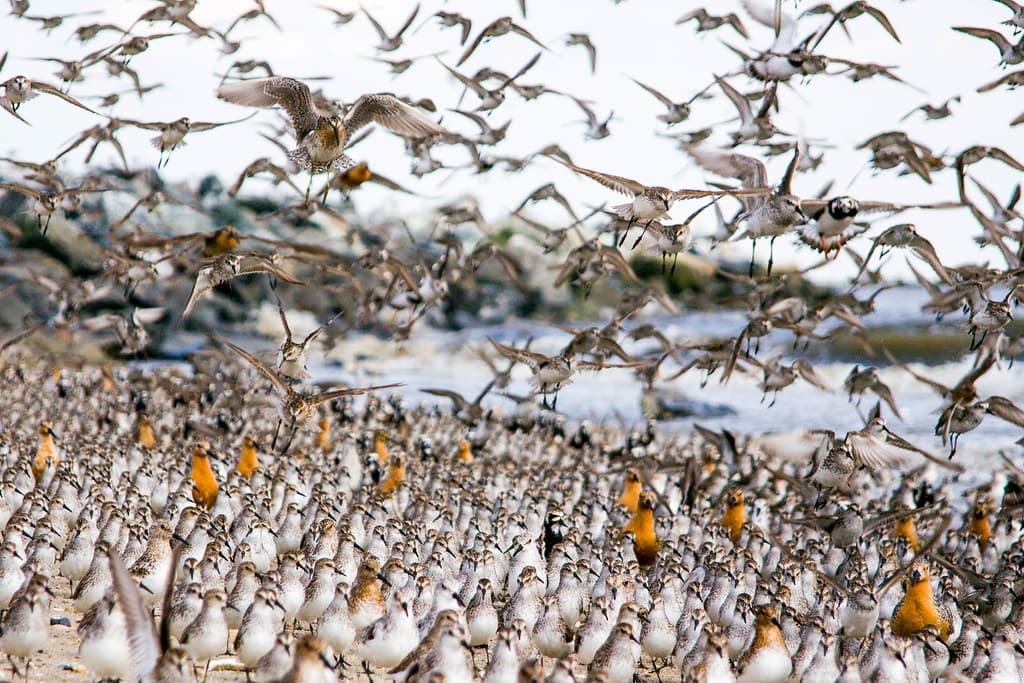
Prime Hook Beach sits tucked inside Prime Hook National Wildlife Refuge, a 10,000-acre patchwork of tidal marsh and scrubby dune where the Delaware Bay laps quietly against a strand that feels more estuary than ocean. You reach it via a two-mile gravel-and-sand track that winds past phragmites stands and osprey platforms, emerging at a small parking area where the pavement gives way to a narrow beach littered with driftwood, horseshoe crab molts, and the occasional rusted crab pot buoy. The water here is tea-colored from tannins, warm and shallow enough to wade fifty yards out without reaching your waist. Sandbars shift with the tides, creating temporary islands where gulls rest and fiddler crabs skitter across the wet flats. In late spring, the beach transforms into a nursery: horseshoe crabs arrive to spawn, drawing clouds of red knots, ruddy turnstones, and sanderlings that fuel up on eggs before continuing north to the Arctic. You won't find lifeguards, bathhouses, or boardwalk fries here—just a weathered picnic table, a porta-potty, and miles of uninterrupted shoreline stretching toward the hazy smudge of New Jersey across the bay. Bring binoculars, pack out your trash, and time your visit for the falling tide when the mud flats reveal their full, fecund abundance.
Places, rentals, tours and events within walking and driving distance of Prime Hook Beach.
Photos
Prime Hook Beach is part of Prime Hook National Wildlife Refuge and is primarily known as a nature observation area rather than a swimming beach. The waters can have strong currents and there are no lifeguards on duty. The beach is better suited for beachcombing, birdwatching, and walking rather than swimming. If you do enter the water, exercise extreme caution and never swim alone. Always check local conditions before visiting, as the beach's remote location means emergency services may take longer to arrive.
Prime Hook Beach can be visited year-round, with each season offering something different. Spring and fall are ideal for birdwatching, as the refuge is along the Atlantic Flyway migration route. Summer offers warmer weather for beach walks and nature observation, though it can be humid. Winter provides solitude and opportunities to see overwintering waterfowl. The beach is generally less crowded than Delaware's resort beaches. Visit early morning or late afternoon for the best wildlife viewing and photography opportunities throughout the year.
Prime Hook Beach is accessed through Prime Hook National Wildlife Refuge, located off Route 1 between Milford and Lewes, Delaware. From Route 1, take Route 16 east toward Broadkill Beach, then follow signs to the refuge headquarters. The beach access road can be rough and may require a high-clearance vehicle. There is limited parking at the beach access point. The refuge is open from sunrise to sunset. Check current access conditions before visiting, as some areas may occasionally close for wildlife protection or weather conditions.
Prime Hook Beach has no amenities—no restrooms, food vendors, or facilities. It's a remote, undeveloped beach within a wildlife refuge. Visitors should bring everything they need, including water, snacks, and sun protection. The nearest towns with restaurants and shops are Milford (about 10 miles) and Lewes (about 12 miles). For overnight stays, you'll find lodging options in these towns or in nearby Rehoboth Beach. Plan ahead and use facilities at the refuge headquarters before heading to the beach itself.
Prime Hook Beach stands out as one of Delaware's few undeveloped, natural beaches within a wildlife refuge. Unlike the busy resort beaches at Rehoboth or Dewey, you'll find solitude and pristine shoreline here. The beach is renowned for exceptional birdwatching—over 300 species have been recorded in the refuge. You'll see horseshoe crabs, shorebirds, and possibly harbor seals in winter. The beach offers a wilderness experience with dunes, salt marshes, and maritime forest nearby, making it perfect for nature enthusiasts seeking an authentic coastal ecosystem.