Counting the waves…
Counting the waves…

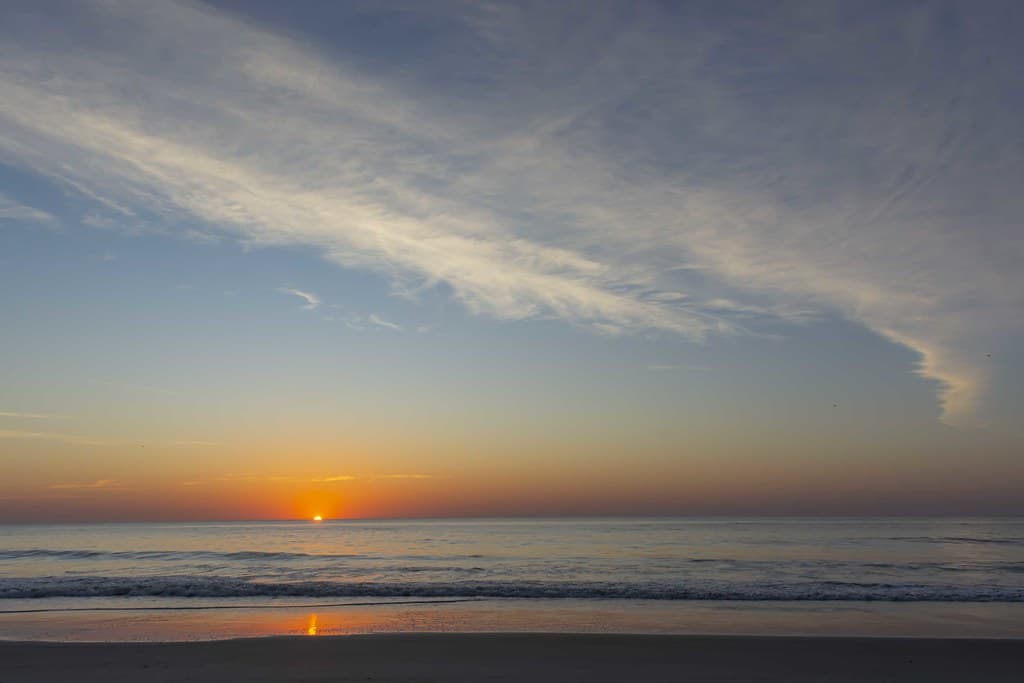
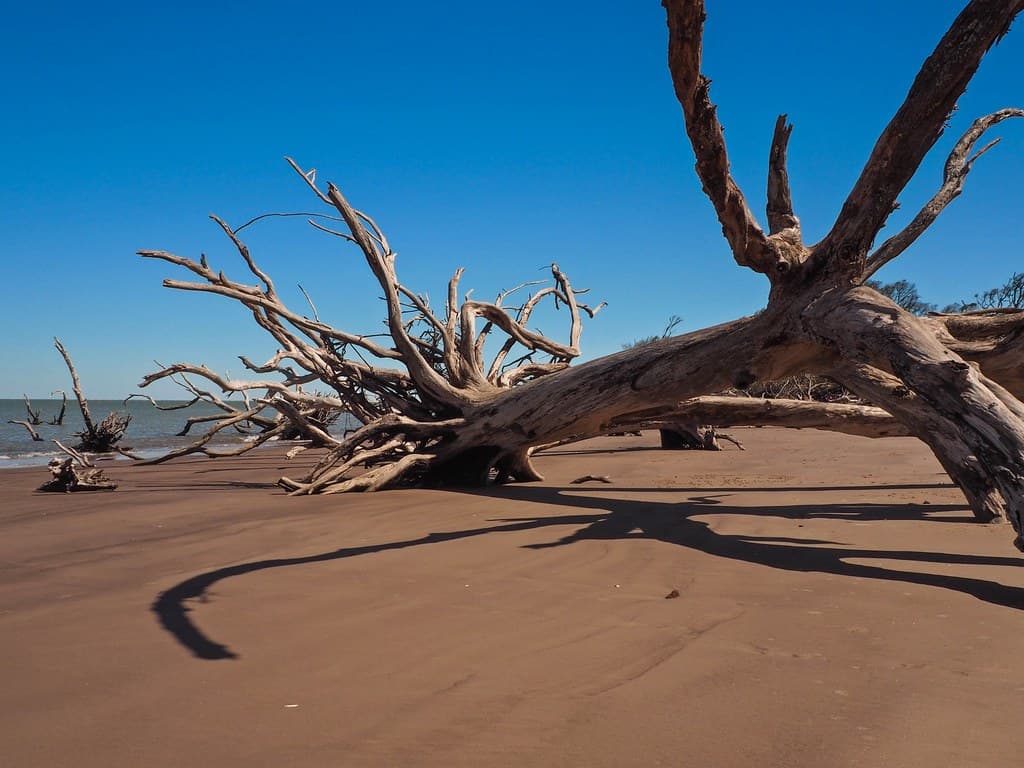
The beach at Amelia Island State Park stretches for more than a mile along the island's southern tip, where Cumberland Sound meets the ocean and tidal currents carve channels that shift with the moon. You'll arrive through tunnels of live oak draped in Spanish moss, emerging onto a strand that remains stubbornly undeveloped—no boardwalk, no vendors, just dunes anchored by sea oats that rattle in the offshore breeze. The sand here is firm underfoot, compacted by tides that retreat hundreds of yards twice daily, revealing sandbars dotted with ghost crabs and whelk shells the size of your fist. The light changes by the hour: morning sun illuminates pods of dolphins feeding just beyond the surf line; afternoon heat shimmers off the sand flats; dusk paints the marsh grasses in shades of copper and gold. Horseback riders from nearby stables occasionally pass at the waterline, their hoofprints disappearing into the foam. You'll share this space with serious birders clutching field guides, scanning for endangered piping plovers and reddish egrets that stalk the shallows. This is not a beach for umbrellas and cabanas. You carry in what you need, stake your claim near a driftwood log silvered by sun and salt, and watch the tides erase your footprints. The park closes at sundown, but that final hour before the gates shut is when the sky performs: horizontal bands of rose and violet stretching across the entire western horizon, silhouetting the distant smokestacks of the paper mill that's been part of this landscape for generations.
Places, rentals, tours and events within walking and driving distance of Amelia Island State Park Beach.
Photos
Swimming is generally safe at Amelia Island State Park Beach, though conditions vary with weather and tides. The beach has no lifeguards on duty, so swim at your own risk and stay alert to currents and wave conditions. Check local advisories before entering the water, especially after storms. The park's natural, undeveloped character means fewer safety amenities than commercial beaches. Strong currents can occur, particularly during tidal changes. Always supervise children closely and avoid swimming alone in remote areas of the beach.
Amelia Island State Park Beach is accessible year-round, with each season offering distinct experiences. Spring (March-May) and fall (September-November) provide comfortable temperatures, fewer crowds, and excellent wildlife viewing. Summer brings warm water and long days but higher humidity and afternoon thunderstorms. Winter offers mild weather, though water temperatures are cooler and occasional cold fronts occur. Sunrise visits are spectacular any time of year, while the beach is particularly known for stunning sunset views across the marshes and waterways.
Amelia Island State Park is located on State Road A1A, approximately 5 miles south of Fernandina Beach's historic downtown. The park entrance is clearly marked along the coastal highway. A designated parking area is available at the park, with a small entrance fee per vehicle (typically $2-5). Parking is limited compared to larger state parks, and spaces can fill during peak season weekends. The lot provides direct beach access via a short walk. No reservations are needed for day use.
Amelia Island State Park Beach has minimal on-site amenities—restrooms are available, but there are no food concessions, showers, or lodging within the park itself. This undeveloped beach emphasizes natural preservation. For restaurants, shops, and accommodations, head to Fernandina Beach, about 5 miles north, which offers diverse dining from casual seafood to upscale options, plus hotels, resorts, and vacation rentals. Several beach access points with more amenities exist along A1A between the park and town. Bring your own food and water for park visits.
While Amelia Island has a rich history of wild horses, you will not see wild horses at Amelia Island State Park Beach today. The island's feral horse population was removed decades ago. However, the park offers excellent opportunities to observe other wildlife, including shorebirds, dolphins offshore, and various coastal species in the dunes and maritime forest. The natural, undeveloped setting provides pristine habitat for nature observation. For horseback riding experiences, several local outfitters offer guided beach rides on other sections of Amelia Island's coastline.